




Edwardian Silver Collar
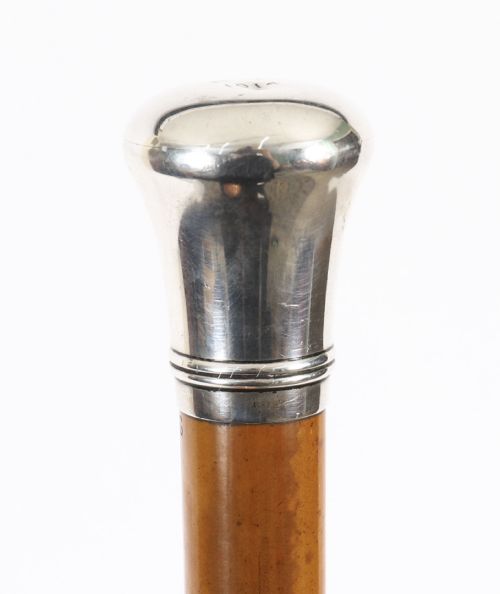
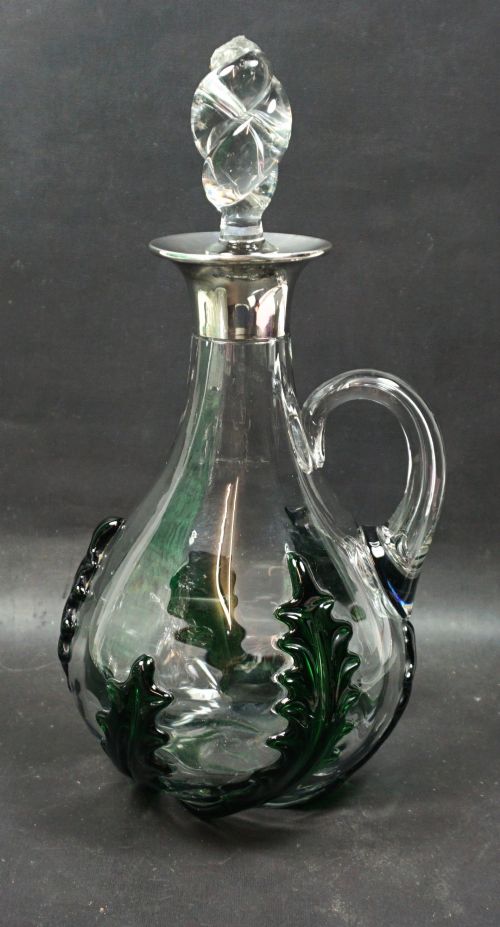
An edwardian silver collar usually marks the neck of a cut glass decanter or a gentleman's walking cane from the early twentieth century.
Edwardian Silver Collar
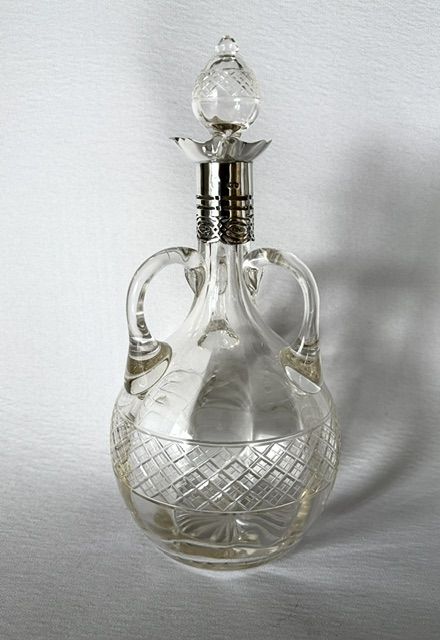
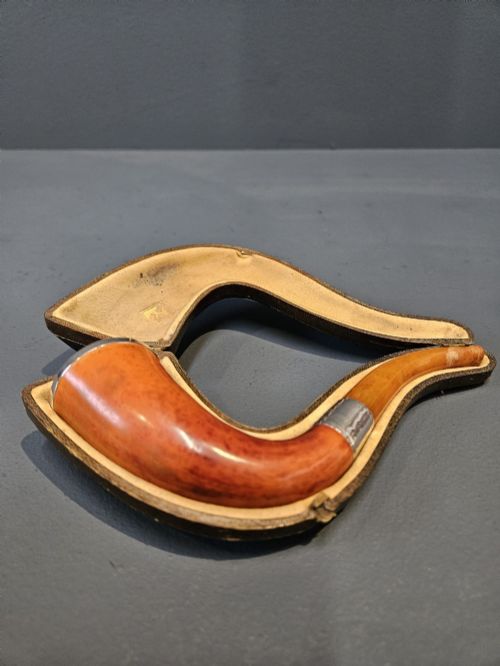
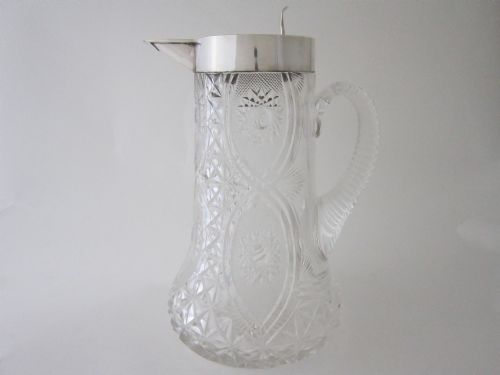
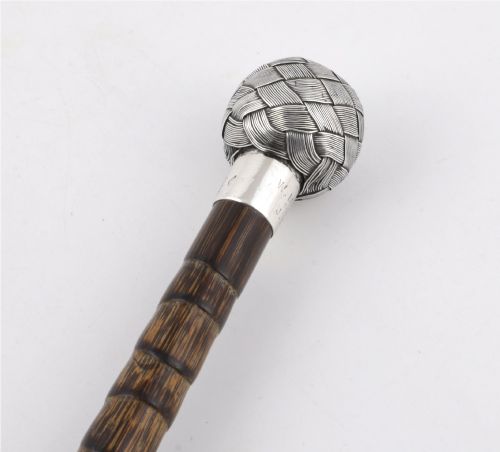
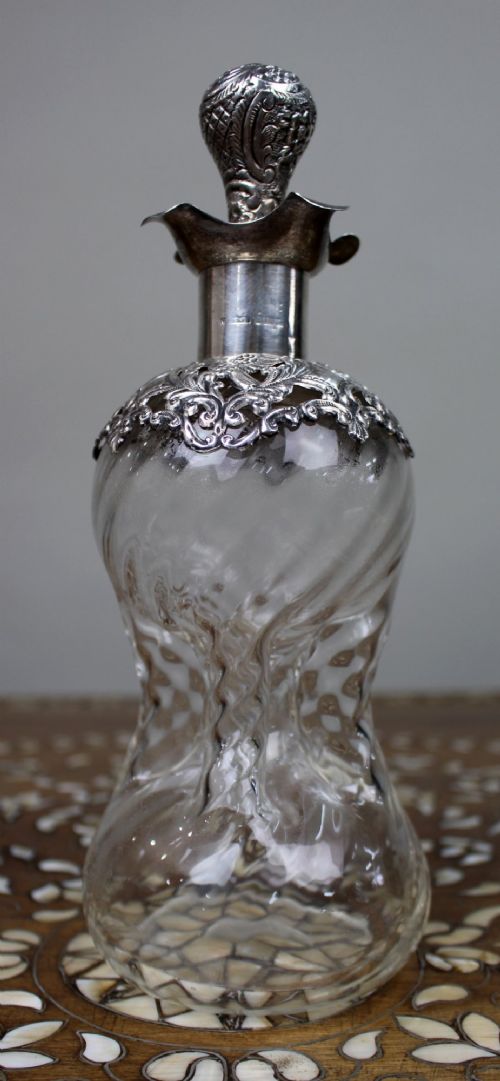
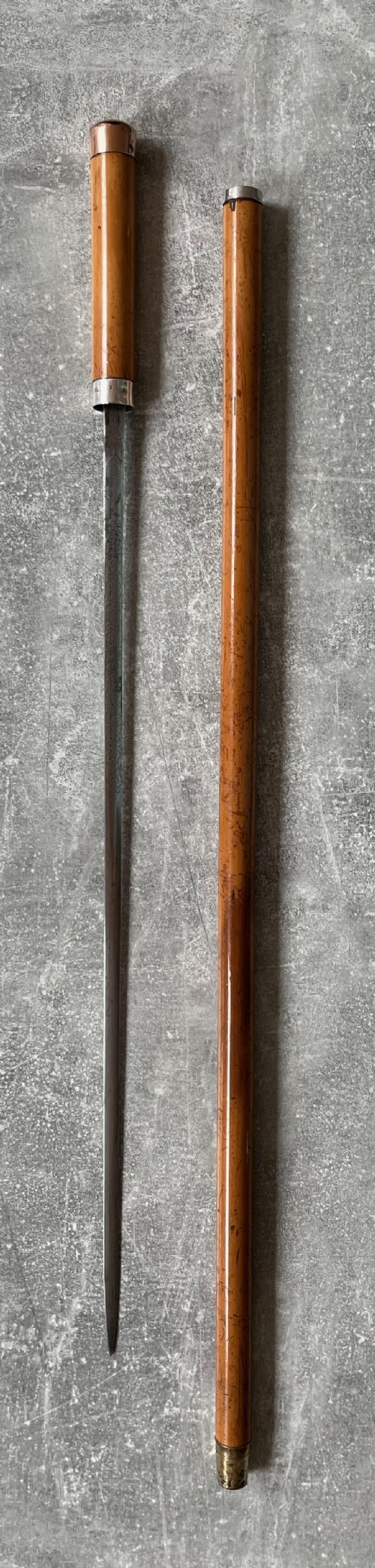
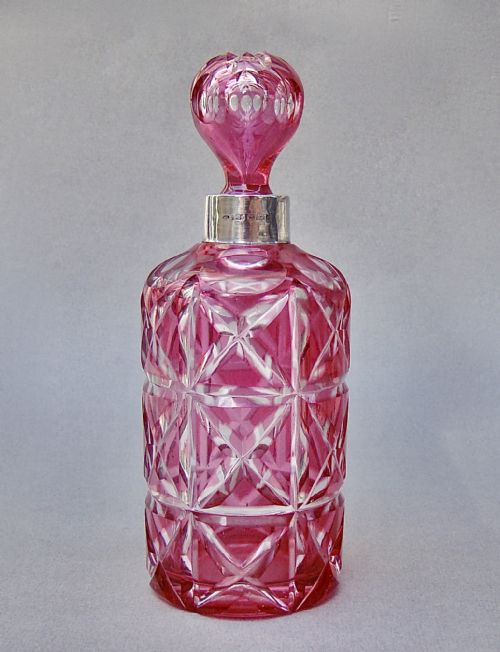
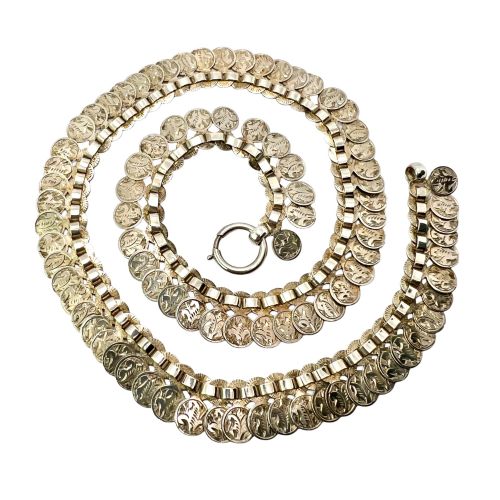
When you search for an edwardian silver collar, you find functional objects finished with British hallmarked metalwork from the early decades of the twentieth century. These pieces encompass decanters, spirit jugs, scent bottles, and walking sticks.
The selections on this page lean heavily towards cut glass glassware and turned wood or bamboo walking canes. Makers applied silver mounts to reinforce rims, secure handles, and provide a decorative accent to everyday utensils.
While the dominant period is Edwardian, the listings extend across Victorian and George V eras, capturing the transition from nineteenth-century ornamentation into cleaner twentieth-century designs.
Materials and Technique
The objects combine heavy lead crystal glass, moulded glass, or dense hardwoods with sterling silver sheet and wire. Silversmiths formed the collars by cutting, shaping, and soldering sheet metal to fit snugly around bottle necks or cane shafts.
Makers then stamped these collars with assay office hallmarks, recording the standard of the metal, the year of manufacture, and the maker's mark. Glass bodies feature deep wheel-cutting, hobnail patterns, or applied glass details like leaves and handles.
Edwardian Silver Collar Retail Price Guide 2026
Typical asking prices for edwardian silver collar among the pieces listed under this phrase on Sellingantiques today, from the lower quarter to the upper quarter. They describe what is for sale here now, not the wider market.
Listings feature sterling silver combined with cut crystal, malacca wood, briar, and cranberry glass across the Edwardian, Victorian, and George V periods.
Quality and Finish
The distinction between standard utility items and finer workshop pieces lies in the crispness of the glass cutting and the weight of the silver mount. Heavy crystal with sharp, clean facets outlasts lighter moulded glass.
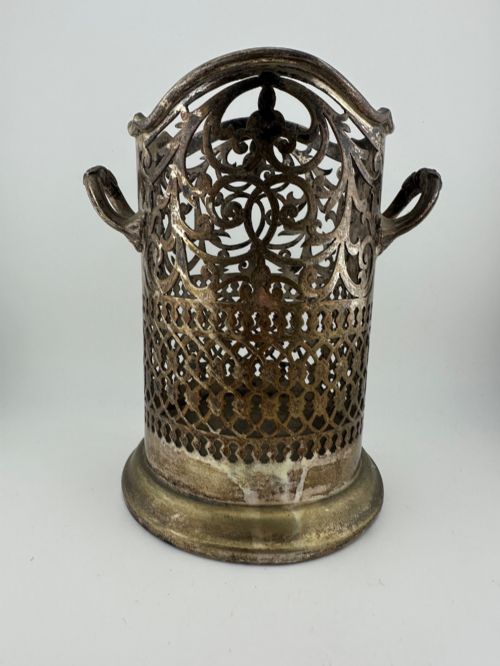
Subtlety in the silver work also defines the upper tier, seen in pierced designs, engraved monograms, or distinct maker marks from noted workshops. The integration between the collar and the underlying material demonstrates the maker's precision.
William Comyns·Harold Bushell & Co·Archibald Knox for Liberty·Barnsley & Co·William Davenport·Hukin & Heath·Mappin & Webb
The Edwardian Silver Collar Glossary
- Hallmark
- A series of official marks stamped on precious metals indicating the standard of purity, the assay office, and the date letter.
- Collar
- A metal band fitted around the neck of a decanter, bottle, or the upper shaft of a walking stick.
- Claret jug
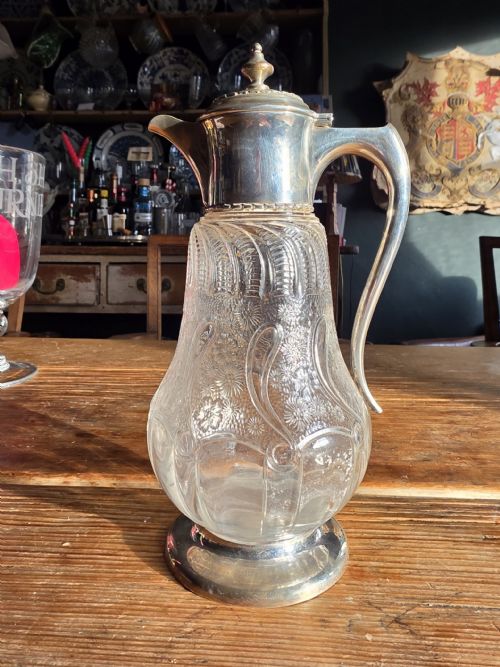
- A pouring vessel designed for wine, typically constructed from cut glass with a hinged silver lid and collar.
- Malacca
- A type of mottled brown rattan cane imported from Southeast Asia, commonly used for walking stick shafts.
- Cut glass
- Glassware decorated by grinding facets or patterns into the surface using a rotating wheel.
Edwardian Silver Collar: Frequently Asked Questions
What is an edwardian silver collar?
An edwardian silver collar is a shaped metal band fitted to the neck of a glass decanter, perfume bottle, or walking cane during the early twentieth century.
These collars served both to strengthen the rim against knocks and to add a decorative metallic finish to household and personal items.
How do I read the hallmarks?
British hallmarks typically show a lion passant for sterling silver, an assay office symbol such as an anchor for Birmingham or leopard head for London, and a specific letter denoting the year.
Matching these stamps against standard assay tables reveals the exact year the silver mount was tested and registered.
Are these decanters meant for daily use?
Most glass decanters with silver collars remain fully functional for holding wine, whisky, or water on a dining table or sideboard.
Care should be taken during washing to protect older glass and avoid submerging certain historic cane mounts in water.
How do walking sticks feature silver?
Walking canes often incorporate silver collars immediately below the handle to join the grip securely to the wooden shaft.
Some pieces also feature engraved monograms, intricate wire work, or conceal blades beneath the mounted collar.