



Edwardian Silver Candle Stands
Edwardian silver candle stands bring steady light to a table, combining solid sterling or plated surfaces with the balanced forms of the early twentieth century.
Edwardian Silver Candle Stands
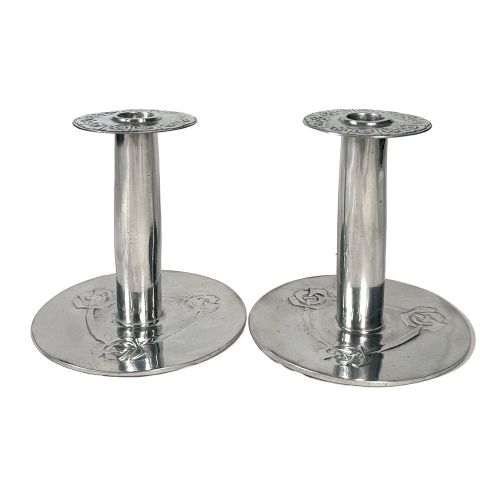
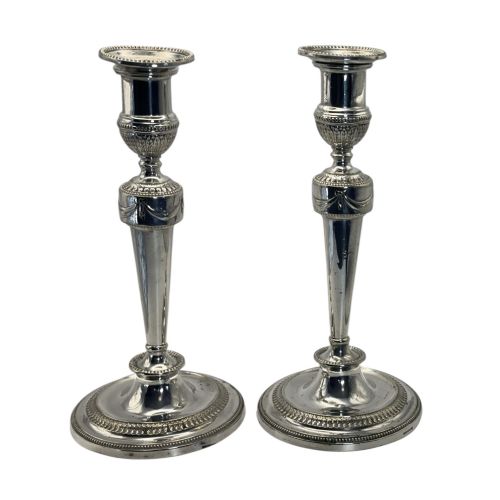
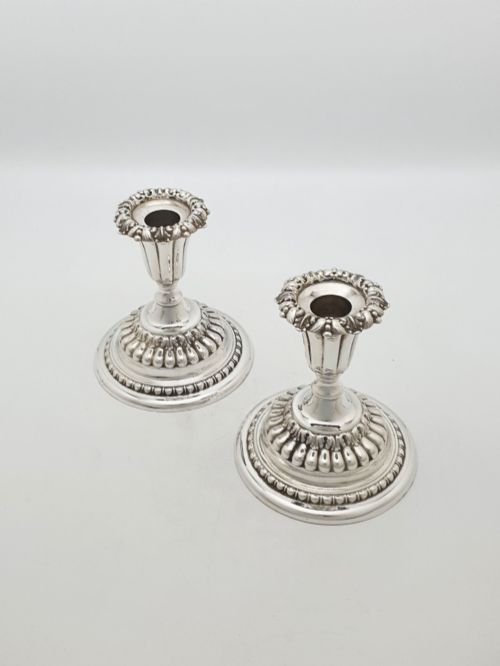
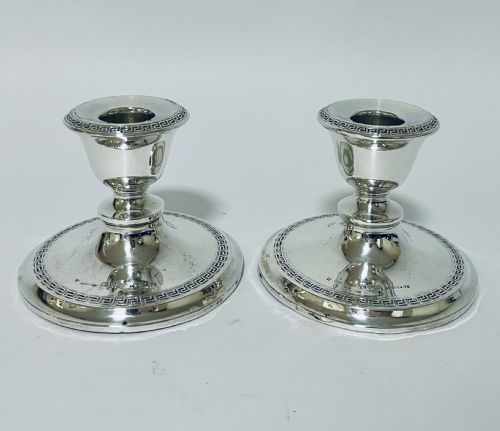
Edwardian silver candle stands encompass both single candlesticks and multi-light candelabra produced around the turn of the twentieth century, alongside related examples from the late Victorian and George V periods. Buyers searching for edwardian silver candle stands frequently encounter pairs designed for mantelpieces, desks, or dining tables, shaped in styles ranging from restrained Neoclassical columns to flowing Art Nouveau curves.
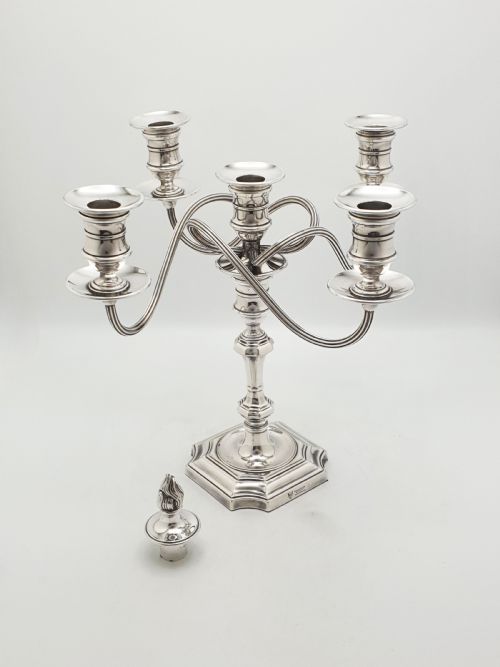
The selection on this page demonstrates how domestic lighting developed during the Edwardian era, featuring standard candlesticks alongside low desk models and monumental five-light candelabra. While many pieces date directly to the nineteen-hundreds, the inventory also stretches to include Arts and Crafts copper and silver combinations and nineteenth-century pewter alternatives.
Methods and Materials
Makers utilised sterling silver and various plated bases, including electroplated nickel silver and standard silver plate over Britannia metal or copper cores. Pewter also appears, frequently treated with silvered finishes to mimic higher-cost metalwork while adopting organic Art Nouveau motifs.
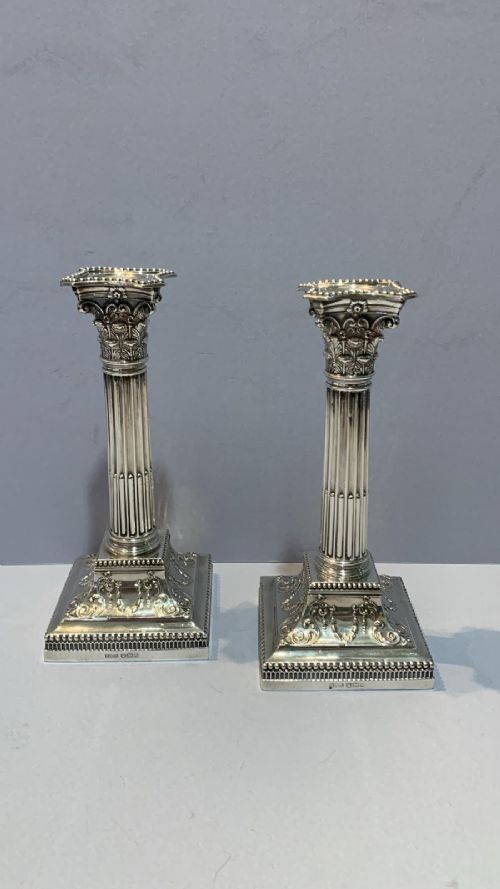
Construction techniques balanced decorative impact with functional stability, often employing weighted bases filled with resin or plaster to secure the upright shafts. Surface enrichment relied on cast and chased detailing, spanning classical fluting and Corinthian capitals to the whiplash lines typical of the Birmingham Guild style and continental manufacturers.
Some Edwardian desk candlesticks included tiny built-in matchbox holders so writers could ignite flames without leaving their paper.
Judging Quality and Execution
Quality rests primarily in the crispness of the casting and the structural integrity of the sconces and base plates. Superior examples display sharply defined ornament without excessive softening from polishing or wear to the underlying metal on plated wares.
Maker attribution and material weight further distinguish the tier of a piece, with heavyweight sterling silver and documented firms commanding greater attention than unmarked plated wares. The harmony of proportion between the nozzle, stem, and weighted foot remains a reliable indicator of thoughtful design.
Mappin and Webb·William Hutton and Sons·WMF
The Edwardian Silver Candle Stands Glossary
- Sterling silver
- A silver alloy containing ninety-two point five percent pure silver by mass, with the remainder consisting of copper or other metals for durability. This standard is frequently stamped with hallmarks indicating assay offices and maker marks.
- Silver plate
- A base metal such as copper, nickel, or Britannia metal coated with a thin layer of pure silver through chemical or electrochemical processes. Electroplated nickel silver forms a common foundation for many domestic items from the period.
- Candelabrum
- A branched candlestick holding multiple candles on separate arms radiating from a central stem. These larger fixtures often service dining tables and formal reception rooms.
- Corinthian
- A classical architectural order featuring capitals decorated with acanthus leaves and scrolls, frequently adapted for the shafts of tall candlesticks. This neoclassical motif remains popular across various decades of production.
- EPNS
- An abbreviation for electroplated nickel silver, designating a durable base metal core coated with silver via electrolysis. This material allowed manufacturers to produce substantial tableware at lower costs.
Edwardian Silver Candle Stands: Frequently Asked Questions
How do I clean tarnished silver candle stands?
Use a soft cloth and a dedicated silver polish designed to lift tarnish without removing the underlying plating or metal. Avoid harsh abrasives that scratch delicate surfaces or damage chased details.
For weighted candlesticks, keep moisture away from the baize or felt base to prevent water damage to the internal filling material.
Were these stands made for dining tables?
Many examples served on dining tables, while others functioned as desk accessories or mantelpiece ornaments. Low candlesticks suited writing surfaces and secondary tables where tall profiles obstructed conversation.
Pairs dominate the available forms, designed to create symmetrical arrangements on sideboards and central dining settings.
How do I tell sterling silver from silver plate?
Examine the piece for official hallmarks, which indicate solid sterling silver standards regulated by assay offices. Plated items usually bear maker initials or manufacturer marks that denote electroplate rather than solid precious metal.
Weight and wear patterns also offer clues, as plated surfaces may show base metal beneath worn edges over time.
What is the difference between Edwardian and Victorian styles?
Victorian designs often lean toward heavier, ornate revival styles including Rococo motifs and dense decoration. Edwardian pieces generally favor lighter, more restrained neoclassical proportions and clean decorative lines.
Art Nouveau currents also cross both periods, introducing organic, asymmetrical forms executed in pewter or silvered metals.