
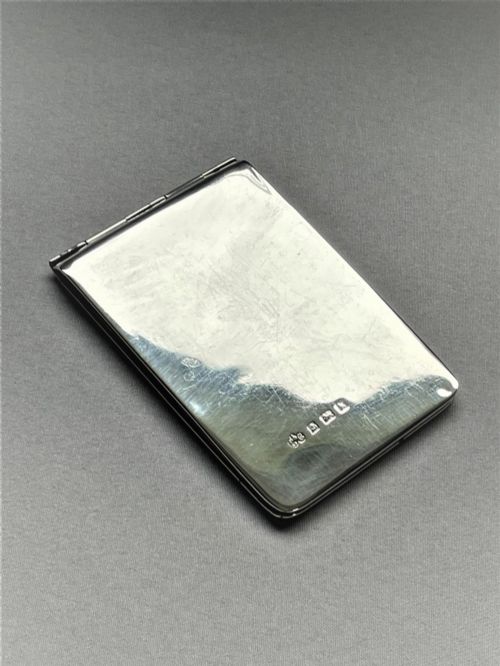
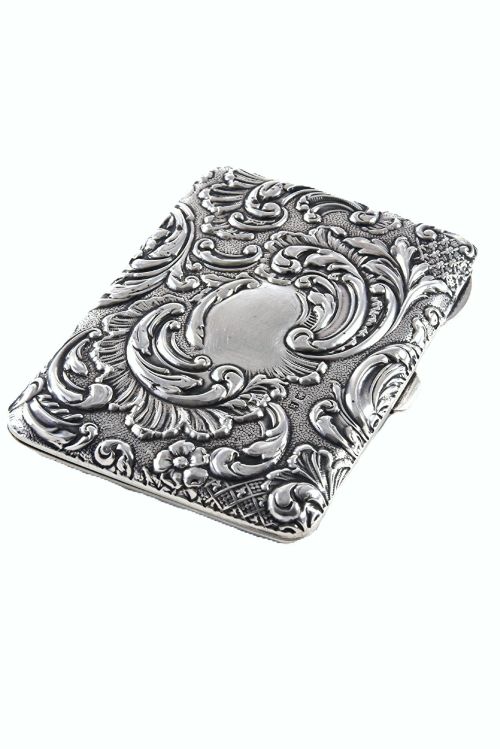
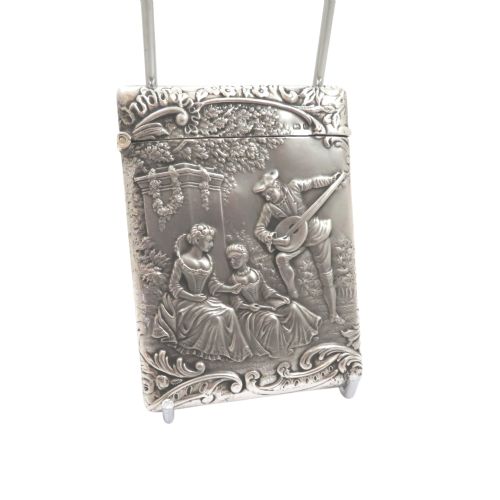

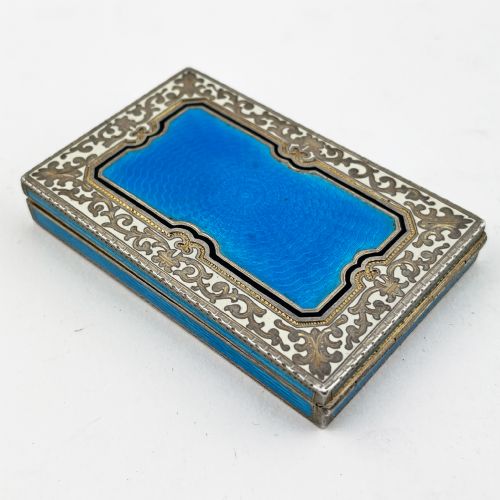


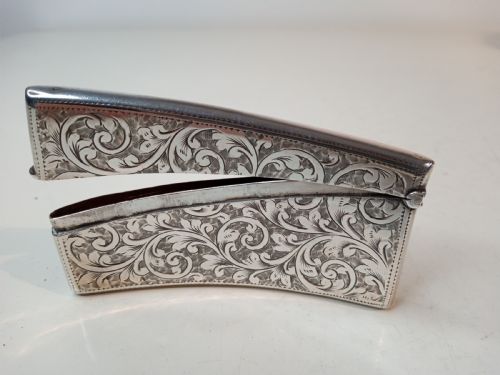
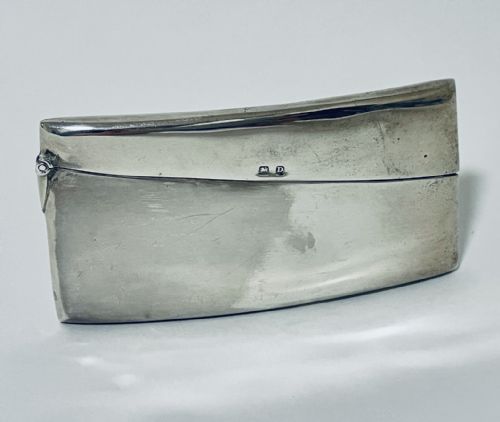


Edwardian Silver Calling Card Case
An Edwardian silver calling card case is a pocket accessory used for social exchanges, carrying visiting cards safely in style.
Edwardian Silver Calling Card Case
An edwardian silver calling card case sits comfortably in the hand, designed to hold delicate paper cards for polite social calls. These items appear chiefly from the Edwardian period, alongside occasional Victorian or later twentieth-century examples.
The assortment spans slimline containers, folding aide-memoires, and combined card and stamp cases. Some pieces incorporate hinged lids, while others feature integrated gilt linings or internal compartments.
Makers decorated the exterior surfaces with engraved scenes such as the music lesson, dog and stag motifs, crocodile skin designs, or added vitreous enamel and Connemara marble highlights.
Materials and Construction
Silversmiths constructed these cases primarily from sterling silver, shaping the metal through pressing, folding, and hinging. Certain interiors received a wash of silver gilt to enrich the appearance.
Artisans applied decorative techniques including surface engraving, texturing to mimic crocodile skin, and the addition of colourful vitreous enamel or inset Connemara marble panels.
Listings feature sterling silver, silver gilt, vitreous enamel, and Connemara marble across Victorian and Edwardian periods.
Factors of Quality
The crispness of the engraved decoration and the precision of the hinged mechanisms dictate the standard of execution. Hand-engraved pictorial scenes like the music lesson or animal motifs demand greater skill than plain polished surfaces.
The presence of specialised internal fittings, such as spring clips for stamps, silk-lined memo pads in aide-memoires, or contrasting silver gilt interiors, elevates the ambition of the piece.
Willian Aitken·Deakin & Francis·Joseph Gloster
The Edwardian Silver Calling Card Case Glossary
- Aide Memoire
- A small book or case with internal leaves for jotting down brief notes and engagements. These often include attached pencils and secure clasps.
- Silver Gilt
- Sterling silver that has been coated with a thin layer of gold on the surface. This technique protects the underlying metal and provides a warm interior glow.
- Vitreous Enamel
- A material made by fusing powdered glass to a metallic substrate through firing. It creates smooth, colourful decorative panels on the exterior of the case.
Edwardian Silver Calling Card Case: Frequently Asked Questions
What is an edwardian silver calling card case?
It is a small, rigid container fashioned from sterling silver, designed to hold paper visiting cards during the Edwardian era. These cases protected delicate cards from damage while callers made social visits.
Many examples feature hinged lids and detailed surface engraving, reflecting the social etiquette of the period.
How were these cases used?
Gentlemen and ladies carried them in pockets or reticules to exchange visiting cards upon arriving at a home. The cards served as formal notifications of a visit.
Some variations doubled as stamp holders or memo pads for daily organisation.
How do I identify an Edwardian piece?
Examination of hallmarks stamped on the silver provides the exact year and assay office, such as Birmingham or London. Stylistic clues include specific Edwardian motifs and slimline proportions.
Certain items also display registration numbers or maker marks corresponding to early twentieth-century production.
Are all cases made of solid silver?
Most instances utilise sterling silver, though some incorporate gilt metal or contrasting materials like Connemara marble and vitreous enamel. Interiors frequently feature silver gilt linings.
Hallmarks usually confirm the specific standard of the metal used in construction.