
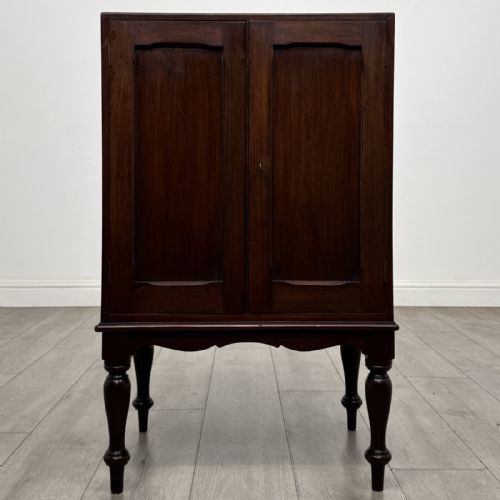
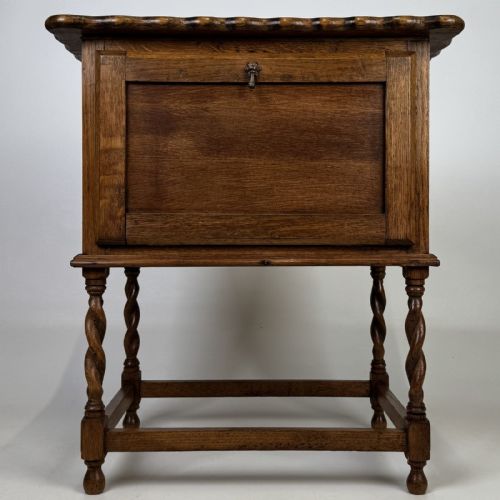
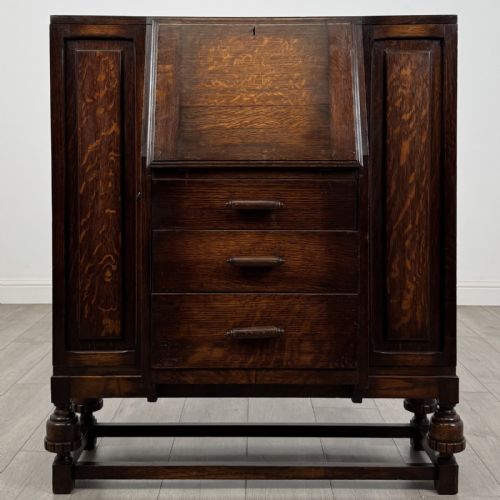
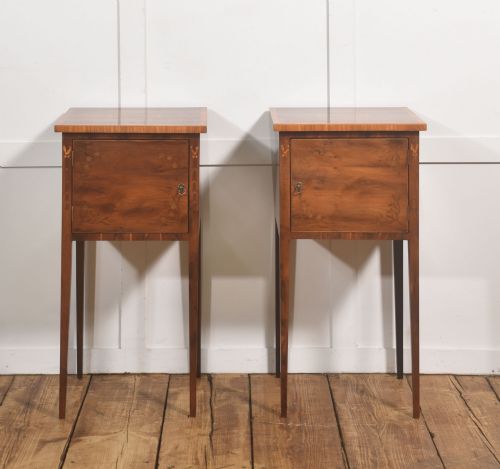
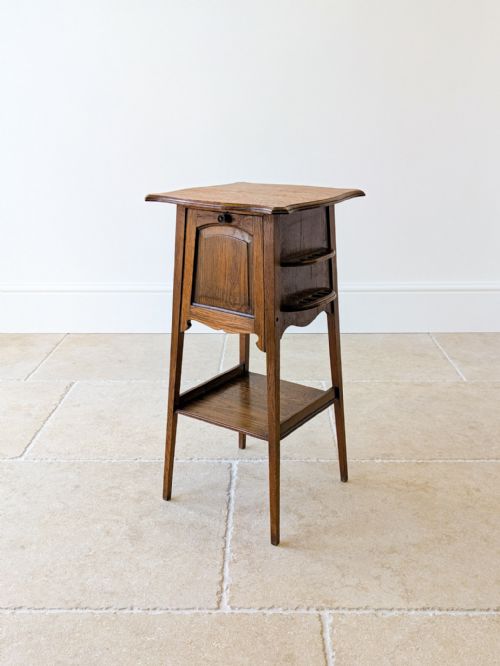
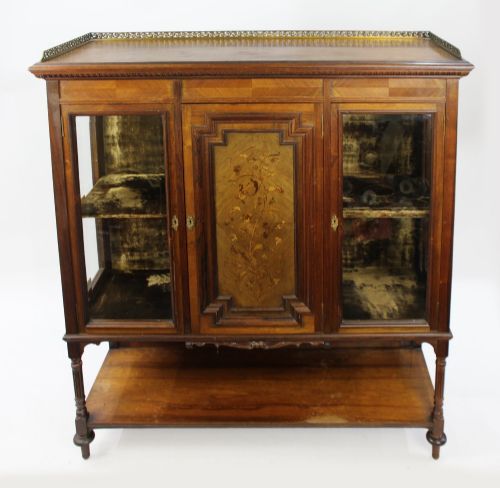
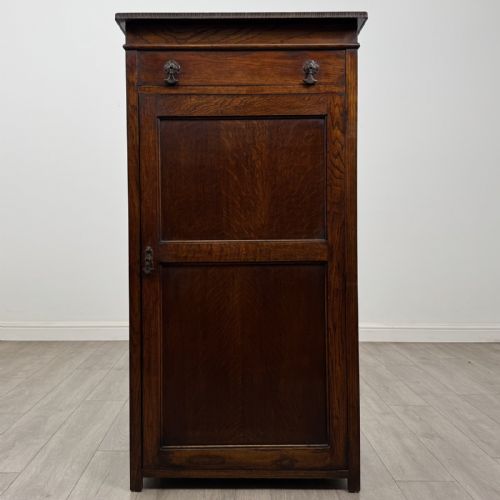
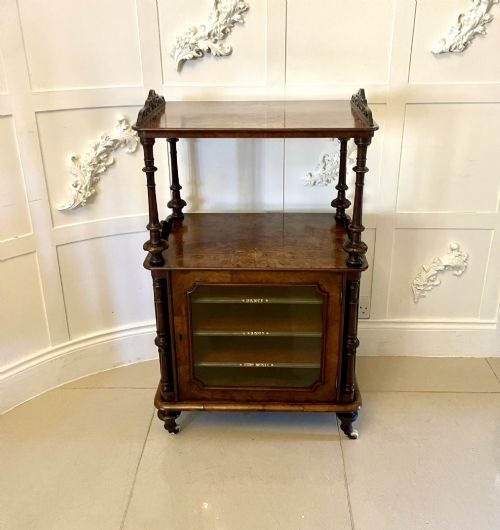
Edwardian Side Cupboard
When you search for an edwardian side cupboard, you meet compact and useful timber furniture made to store domestic necessities beside beds or in sitting rooms.
Edwardian Side Cupboard
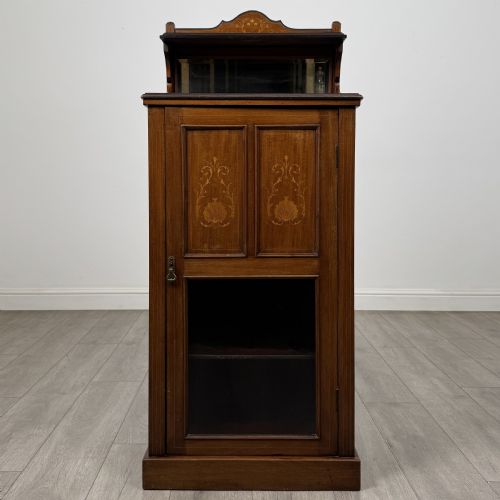
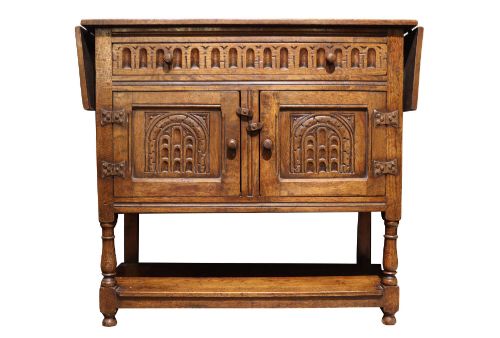
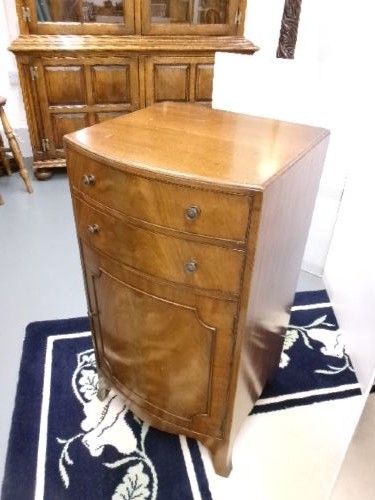
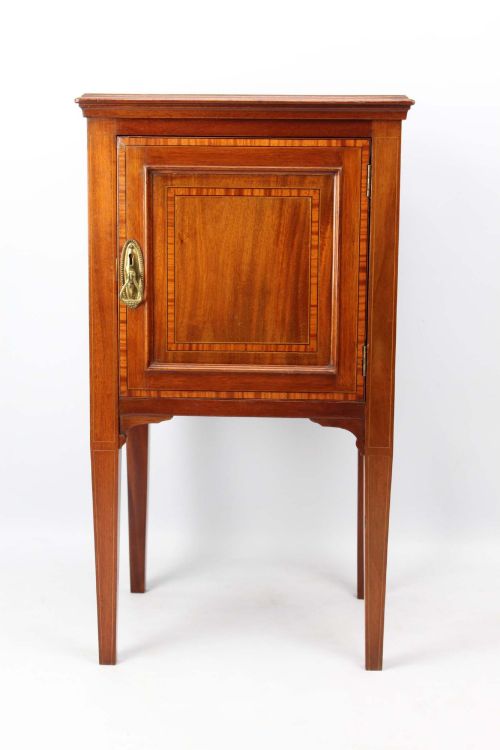
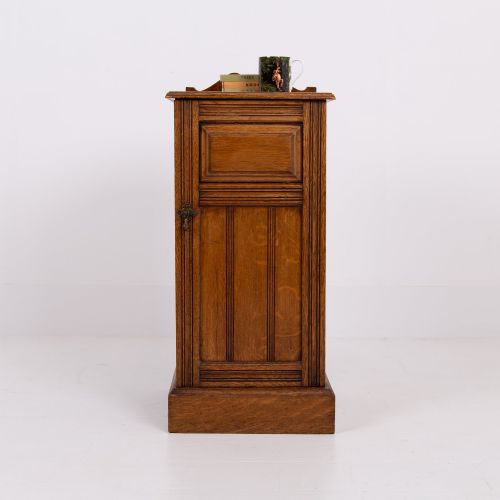
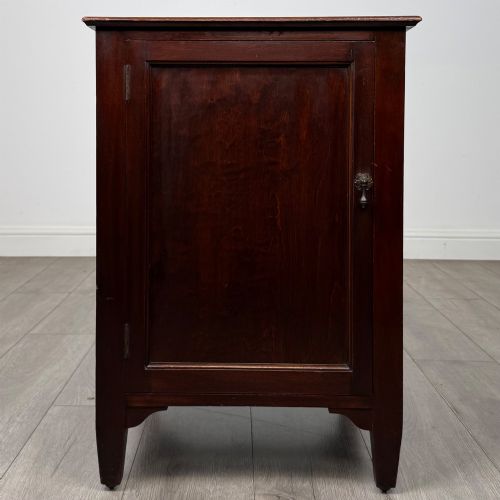
The edwardian side cupboard appears across domestic interiors primarily as bedside storage, pot cupboards, and smaller display cabinets. These pieces served to hide chamber pots or hold night-time reading and washware in bedrooms.
Most examples found in daily browsing date from the opening decades of the twentieth century, though older nineteenth-century Victorian forms and occasional eighteenth-century items share the aesthetic. Cabinet makers constructed these items in single units or symmetrical pairs to flank beds.
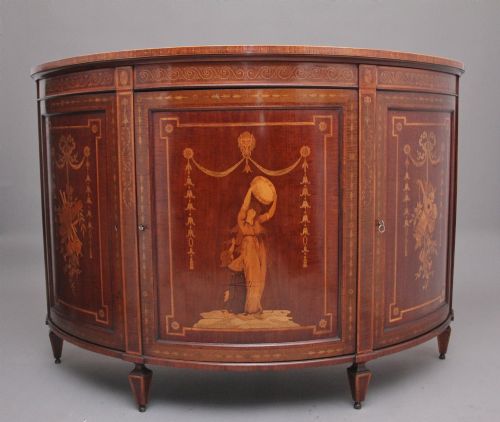
Forms range from simple single-door oak or mahogany bedside lockers to satinwood cabinets featuring painted details, mirrored backs, and inlaid banding. Buyers also encounter low sideboards, demi-lune shapes, and open shelf configurations.
How they were made
Cabinet makers built these pieces using solid timbers like mahogany, oak, and walnut, frequently applying fine veneers of satinwood, harewood, and burr walnut to visible surfaces. Carcasses relied on traditional joinery methods to ensure stability in daily use.
Surface enrichment often involved contrasting stringing and banding in boxwood, alongside hand-painted floral motifs and Chinoiserie japanning. Marble inserts appeared on top surfaces for practical water resistance, while brass handles and hinges completed the hardware.
Many of these tidy bedside lockers still carry the faint, comforting aroma of old cedar and beeswax.
What varies in quality
The standard of timber selection and veneer matching defines the upper tier of production, where grain patterns flow symmetrically across doors and drawers. Lesser examples rely on plain, unfigured boards with minimal decorative banding.
Refinement in carving, hand-painted artistry, and the integration of matching pairs dictate value among collectors. Superior items display crisp marquetry and substantial brass fixtures rather than pressed metal components.
Waring and Gillow·Liberty and Co·Maple and Co
The Edwardian Side Cupboard Glossary
- Pot cupboard
- A small bedside cabinet originally designed to enclose a chamber pot behind a single door. These compact units later transitioned to general nightstand storage.
- Marquetry
- The art of applying decorative veneer pieces in wood to form intricate geometric or pictorial designs. Craftsmen utilised contrasting timbers like boxwood and satinwood for visual depth.
- Demi-lune
- A half-moon shape used for tables and cabinets designed to sit flat against a wall. This profile allowed makers to save floor space in smaller Edwardian rooms.
- Japanning
- A European imitation of East Asian lacquerwork applied to furniture surfaces. Artisans built up layers of varnish and pigment to create dark glossy finishes with gilt scenes.
- Bandings
- Thin strips of contrasting wood inlaid around the edges of drawer fronts and tabletops. This technique created a neat border that highlighted the primary timber.
Edwardian Side Cupboard: Frequently Asked Questions
What is an edwardian side cupboard used for today?
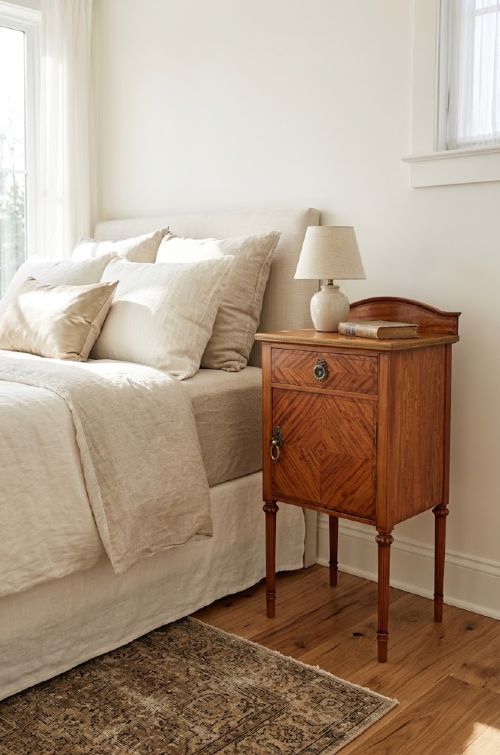
These versatile pieces function well as modern bedside tables, lamp stands, or small storage units in hallways and sitting rooms.
Their enclosed shelves conceal modern clutter while providing a sturdy surface for lamps and books.
How do I spot a true pair?
True pairs exhibit matching timber grain, identical dimensions, and mirrored hardware placement indicating they were constructed together for opposite sides of a bed.
Single cabinets assembled later often show subtle variations in colour, height, or inlay pattern.
Why do some cabinets have marble tops?
Marble inserts provided a durable, waterproof surface for washing stands and bedside cabinets holding water jugs and basins.
This stone protected the underlying timber from moisture damage during daily hygiene routines.
How do edwardian pieces differ from victorian ones?
Edwardian furniture generally exhibits lighter proportions, brighter satinwood veneers, and simpler neoclassical or Sheraton revival influences compared to heavier Victorian designs.
Victorian pieces often relied on darker rosewood, heavier carving, and more imposing silhouettes.