



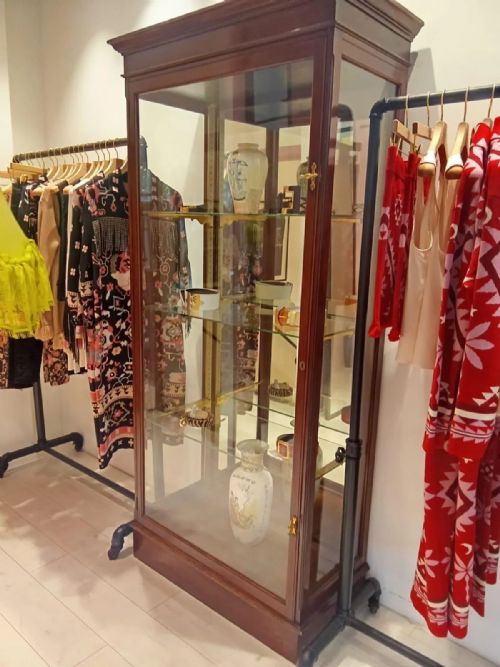
Edwardian Showcase
An edwardian showcase brings interior glass and timber together to present ornaments, collections and retail goods with clear visibility.
Edwardian Showcase
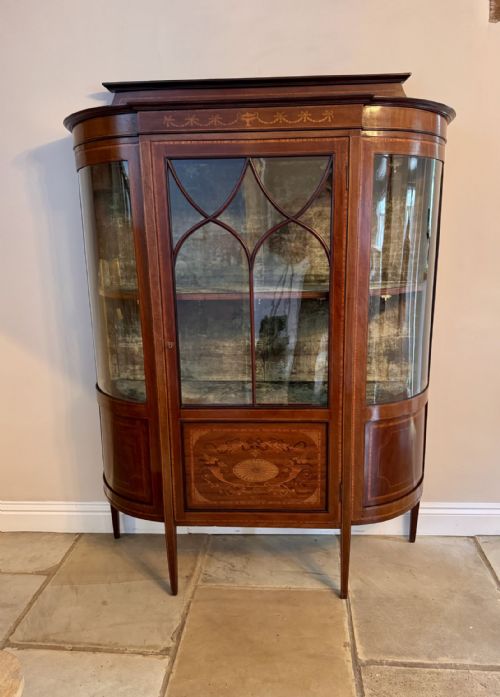
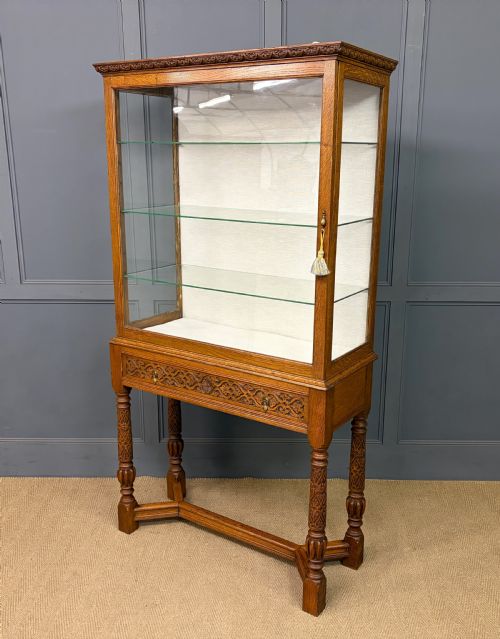
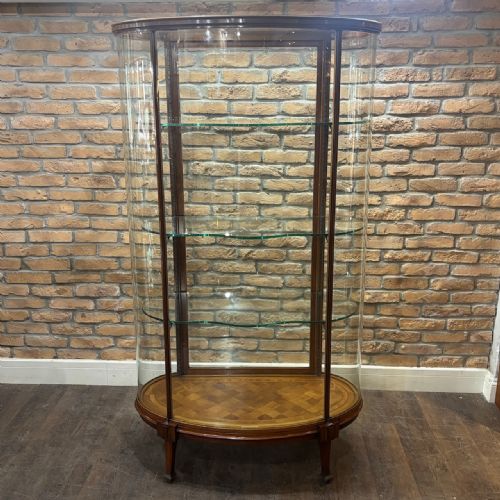
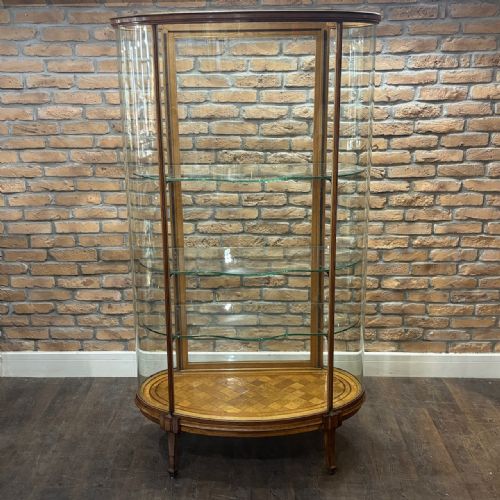
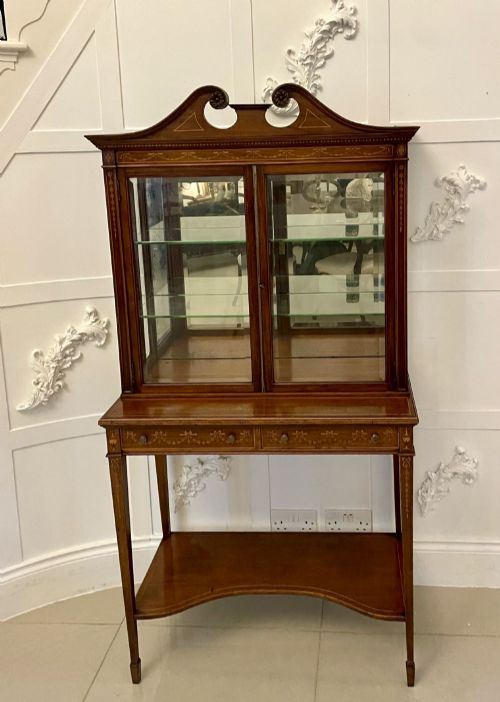
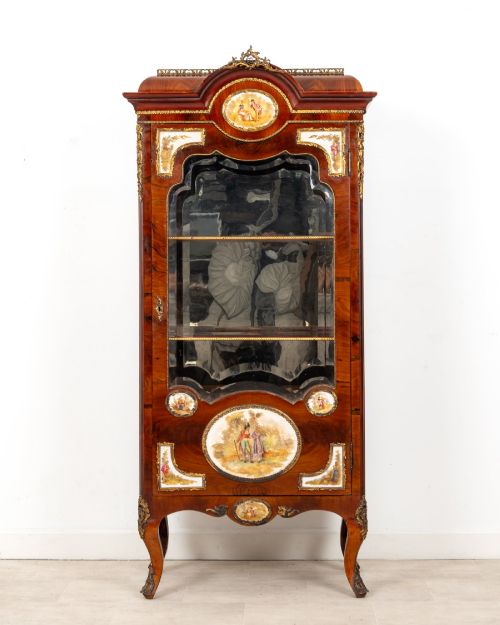
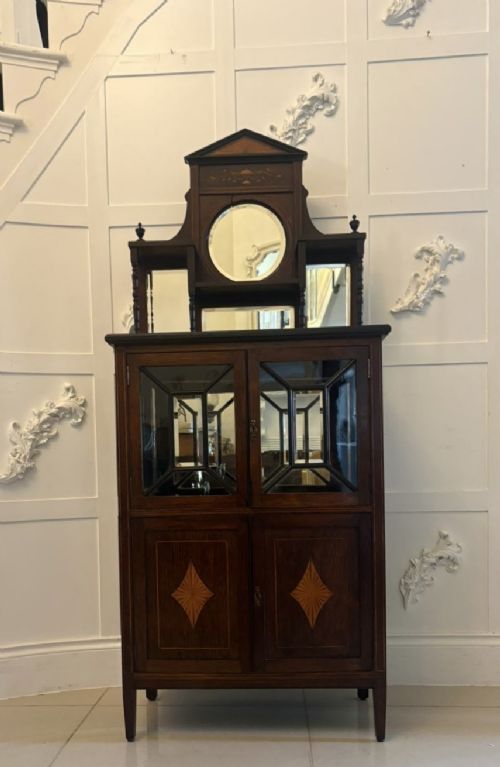
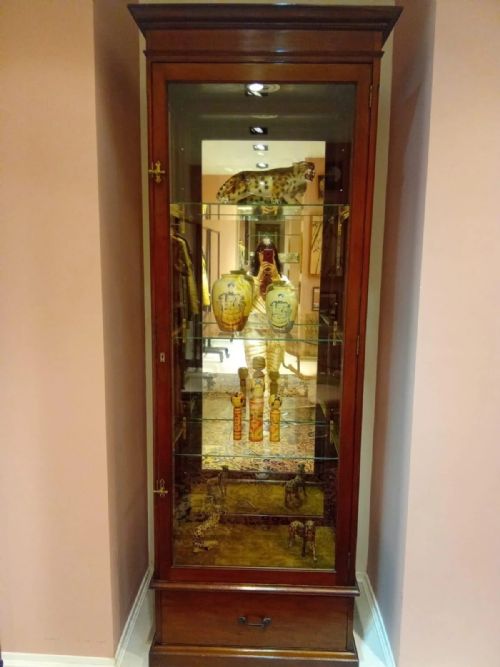
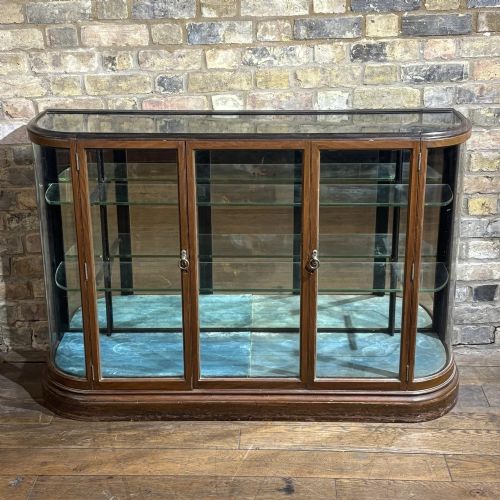
An edwardian showcase encompasses domestic display cabinets, vitrines, countertop shop cases and glass domes designed to protect prized objects while displaying them fully. The pieces on this page span freestanding domestic furniture alongside commercial shop counters and wall-mounted vitrines from the early twentieth century.
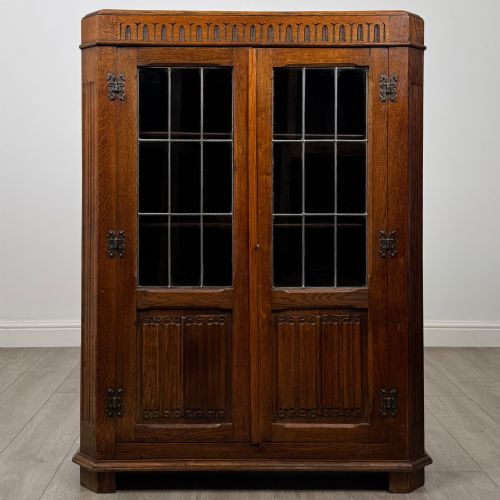
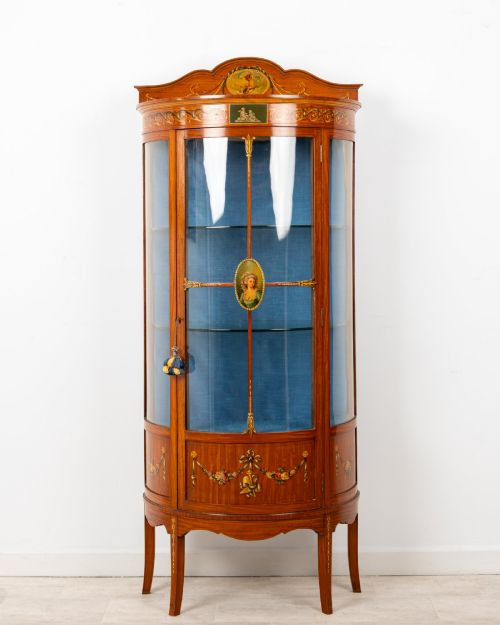
Domestic examples often utilise satinwood, mahogany or oak, frequently finished with marquetry inlay or painted decoration in the Sheraton Revival taste. Commercial iterations, including pieces by makers such as F. Sage and Co, deploy robust timber frames with extensive glazing to serve retail environments.
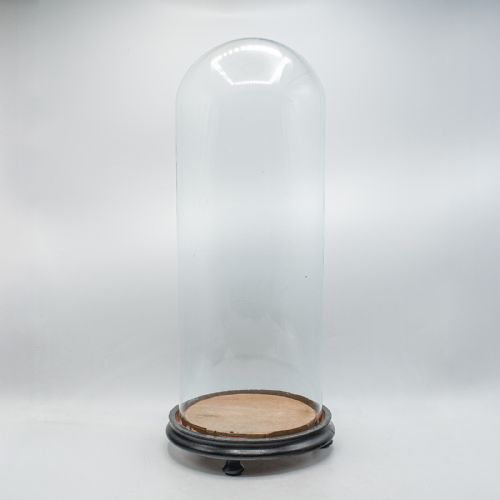
Smaller tabletop variants and display domes with beech or oak bases provide concentrated enclosures for taxidermy or delicate curiosities. These diverse forms share a common purpose of containment and clear optical access through glazed panels.
Materials and Construction
Makers built these pieces primarily using solid and veneered hardwoods like mahogany, oak, satinwood and walnut, often housing leaded or clear sheet glass within rebated frames. Brass hinges, locks and fittings secure the doors, while internal mirrored backs reflect light through adjustable glass shelves.
Decorative surfaces rely on intricate floral marquetry, contrasting stringing and hand-painted motifs integrated into the timber framework. Commercial shop cabinets utilise sturdy framing designed to withstand daily retail use, contrasting with the lighter joinery intended for domestic drawing rooms.
Edwardian Showcase Retail Price Guide 2026
Typical asking prices for edwardian showcase among the pieces listed under this phrase on Sellingantiques today, from the lower quarter to the upper quarter. They describe what is for sale here now, not the wider market.
Listings feature materials spanning glass, mahogany, brass, satinwood, oak, fabric, velvet, and mirror across multiple decades.
Distinctions in Quality
Quality rests in the precision of the timber selection, such as finely figured mahogany or rich satinwood, and the crispness of any inlaid marquetry. Finer domestic pieces display refined proportions and meticulous joinery in curved components like bow fronts.
Commercial cases demonstrate quality through robust framing and specialised hardware suited to heavy merchandising. The integration of mirrored interiors and adjustable shelving further separates standard utility pieces from exceptional examples.
F Sage and Co·James Hicks·Cadbury·Rowntree·Fry
The Edwardian Showcase Glossary
- Vitrine
- A glass-fronted cabinet or display case designed specifically for exhibiting fine porcelain, curiosities or objects of art. They typically feature glazed sides and doors to maximise light penetration.
- Bijouterie table
- A glass-topped display table intended for holding small valuable items, jewellery or trinkets. The glazed compartment sits at table height for close inspection.
- Marquetry
- Decorative woodwork where pieces of various coloured veneers are fitted into a ground to form geometric or floral designs. This technique embellishes the timber surfaces of formal Edwardian furniture.
- Linenfold
- A style of wood carving that imitates folded linen cloth, often seen on panels of oak cabinets. It provides architectural texture to domestic furniture.
- Cloche
- A bell-shaped glass cover used to protect and display delicate objects, taxidermy or curiosities. It rests upon a fitted timber or fabric-covered base.
Edwardian Showcase: Frequently Asked Questions
How do I care for timber and glass display cases?
Maintain the timber surfaces by applying appropriate wax polish sparingly to nourish the grain without building up heavy residues. Avoid placing furniture in direct sunlight or near heat sources to prevent timber shrinkage and veneer lifting.
Clean the glass panels using standard glass cleaner applied to a cloth rather than sprayed directly, preventing moisture from seeping into vulnerable wooden frames or fabric linings.
Where were countertop display cabinets used?
Countertop display cabinets and shop counters populated Edwardian retail spaces including confectioners, chemists, and general merchants. They sat upon counters to tempt buyers with sweets, pharmaceuticals, and small goods.
Commercial examples from makers like F. Sage and Co served high-street shops, while specialised confectionary cabinets marketed products from brands such as Cadbury, Rowntree, and Fry.
How are display domes and cloches utilised?
Display domes and cloches provide a sealed environment over a timber or fabric base to protect delicate items from dust and handling. They frequently housed taxidermy specimens, delicate artificial flowers, or ornamental curiosities.
The glass cover lifts away from the base to allow access to the interior display, keeping the contents clearly visible from every angle.