



Edwardian Serpentine Commode
An Edwardian serpentine commode brings curved fronts and rich timber to a room, offering both display surface and deep drawer storage.
Edwardian Serpentine Commode
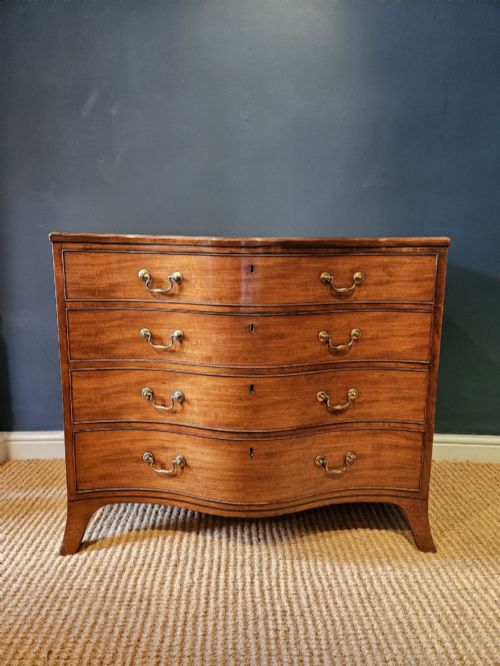
An edwardian serpentine commode presents a distinctive undulating front curve, taking form as a chest of drawers or a bedside side cabinet. The inventory spans pieces from the 18th century, Georgian, Victorian, and Edwardian periods, alongside 1900 and 1920 examples.
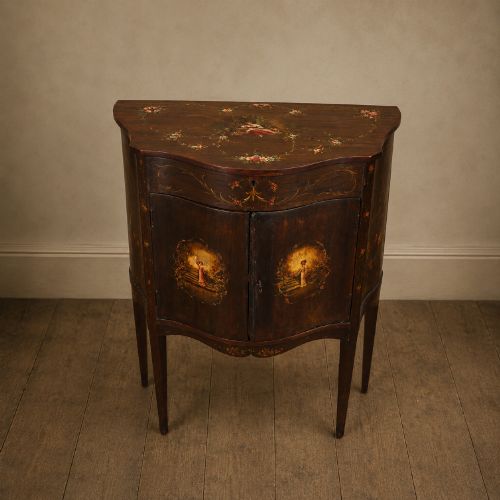
Most items you encounter follow the Sheraton Revival style or Georgian Revival taste, alongside original Georgian and Victorian pieces. These cabinets frequently utilise mahogany, satinwood, walnut, and painted finishes to achieve their decorative presence.
Makers and cabinetmakers of these periods employed serpentine shapes to catch light across polished timber surfaces in formal rooms. The resulting forms serve today as practical storage furniture with distinct historical character.
Materials and construction methods
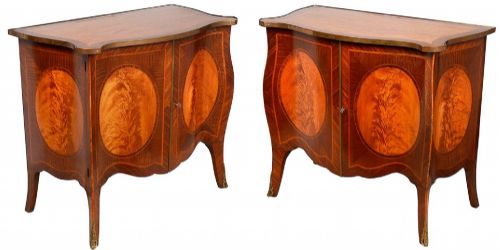
Makers constructed the primary carcase using solid timbers such as mahogany and oak, often applying decorative crossbanding to define the edges. Flame mahogany veneers and satinwood provide the striking grain patterns seen across the drawer fronts and cabinet doors.
The curved serpentine fronts required specialist woodworking skill to shape solid wood or bent laminations without splitting the grain. Cabinetmakers added cast brass handles and escutcheons to complete the drawer and door assemblies.
Edwardian Serpentine Commode Retail Price Guide 2026
Typical asking prices for edwardian serpentine commode among the pieces listed under this phrase on Sellingantiques today, from the lower quarter to the upper quarter. They describe what is for sale here now, not the wider market.
Cabinet forms include chests of drawers alongside side cabinets and bedside cupboards with painted or crossbanded finishes.
Judging the standard of execution
The refinement of the serpentine curve sets finer pieces apart, demanding precise joinery where the convex and concave sections meet. Timber selection dictates visual depth, particularly where figured mahogany or matched satinwood veneers wrap cleanly around the undulating angles.
Surface finish and secondary woods reveal the care taken during initial production, distinguishing standard commercial output from exceptional cabinet work. Original brass hardware and clean drawer linings further separate better examples from altered or heavily restored pieces.
The Edwardian Serpentine Commode Glossary
- Serpentine
- A front contour characterised by a convex centre flanked by two concave curves, creating a gentle undulating shape. This profile requires advanced woodworking skill to execute correctly across drawers and doors.
- Crossbanding
- A decorative border of veneer laid perpendicular to the grain of the primary surface. It frames the drawer fronts and top boards of formal case furniture.
- Sheraton Revival
- A late 19th and early 20th century design movement inspired by the neoclassical furniture of Thomas Sheraton. Pieces in this style utilise satinwood, delicate painted decoration, and classical proportions.
- Flame mahogany
- A veneer cut from the branch junction of a mahogany tree, displaying a swirling, flame-like grain pattern. Cabinetmakers reserved this timber for prominent drawer fronts and tabletops.
- Commode
- A low cabinet or chest of drawers designed for domestic storage. In British usage, the term often describes decorative chests placed in reception rooms and bedrooms.
Edwardian Serpentine Commode: Frequently Asked Questions
How do I spot a reproduction?
Examine the secondary woods inside the drawers and the construction methods used for the frame joints. Older pieces display hand-cut joinery and timber shrinkage appropriate to their stated period.
Check the uniformity of the veneer and the wear patterns around the brass handles. Machine-cut elements and modern adhesives point towards later revival pieces.
Where should I place it?
An edwardian serpentine commode works well in a hallway, bedroom, or living room where the curved front adds visual softness to straight architectural lines. The top surface provides a practical spot for lamps or decorative objects.
Ensure the room humidity remains stable to protect the mahogany or satinwood veneers from drying out. Keep the piece away from direct heat sources and strong sunlight.
What is the difference between styles?
Georgian pieces show structural honesty and heavy timber framing typical of 18th-century workshops. Revival items from the Edwardian era often incorporate lighter satinwood and painted details.
Compare the handles, leg forms, and inlay patterns to distinguish between original 18th-century construction and later 20th-century interpretations. Each era brought distinct preferences to the serpentine profile.