


Edwardian Scottish Jewellery
Edwardian scottish jewellery brings together silver, gold and natural hardstones in wearable pieces of regional craft.
Edwardian Scottish Jewellery
When you search for edwardian scottish jewellery, you are looking at items that bridge the late nineteenth century and the early decades of the twentieth century. These pieces encompass brooches, kilt pins, pendants, trinket boxes and small accessories rooted in Scottish traditions.
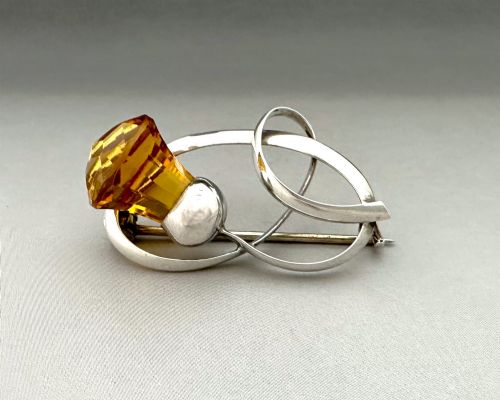
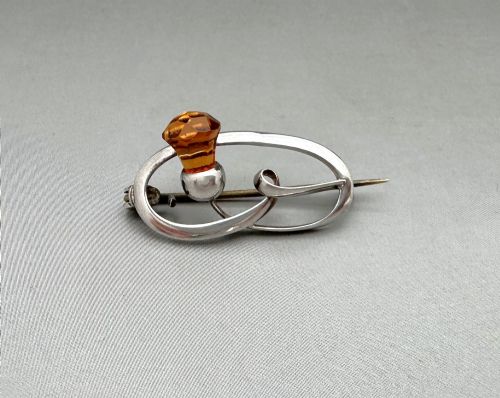
The objects you meet most often on this page take the form of silver brooches and pins set with patterned agates or citrines. Many pieces echo earlier Victorian revival styles while carrying the hallmarks of Edwardian making.
Materials and construction
Makers shaped sterling silver and gold into mountings designed to hold hardstones securely. Agate, jasper and citrine stones were cut, polished and fitted tightly into metal channels and bezels.
Many items incorporate detailed metalwork such as thistles, broadswords and Celtic knot motifs. Workshops relied on hand-setting techniques for both stones and functional components like pin stems.
A curling medal commemorates Scottish ice sports where players swept stones across frozen lochs.
Factors of quality
Quality rests on the precision of the stone cutting and the integration of the hardstones into the metal frame. Well-made examples display stones with distinct natural banding and a smooth, even polish across the entire surface.
The weight of the silver or gold and the crispness of chased details like leaves and thistles separate standard output from finer workshop production. Maker marks and clear hallmarks further distinguish pieces of note.
Charles Horner·David McGregor
The Edwardian Scottish Jewellery Glossary
- Agate
- A form of chalcedony showing distinct natural bands of colour. It forms the primary decorative stone in much Scottish pebble jewellery.
- Citrine
- A yellow variety of quartz found frequently in Scottish brooches and pins. It provides bright transparent colour alongside opaque agates.
- Kilt pin
- A large decorative fastener used traditionally to secure the plaid or kilt. These items often take the form of broadswords or elaborate swords set with stones.
- Jabot pin
- A long decorative pin used to fasten folds of fabric on garments. They often feature ornamental terminals made by notable silversmiths.
Edwardian Scottish Jewellery: Frequently Asked Questions
What is edwardian scottish jewellery?
These items are wearable accessories and small decorative containers made in Scotland or by Scottish makers during the early twentieth century and the preceding Victorian era.
They use native stones like agate and citrine mounted in silver or gold, often reflecting traditional regional symbols such as thistles and broadswords.
How do I wear a brooch?
Traditional brooches and kilt pins secure heavy woollens, scarves and structured jackets using sturdy pin stems and safety catches.
Smaller pins function well on lapels, hats or cravats where the weight of the silver and stone remains properly supported.
How do I care for silver and stone?
Keep silver clean with a soft dry cloth and avoid harsh chemical dips that can damage natural stones like agate and jasper.
Store pieces individually in lined boxes to prevent scratches between hard mineral surfaces and softer metal mounts.
How are periods identified?
Periods are determined through hallmarks, maker stamps, metal purity marks and stylistic traits specific to regional workshops.
Design elements such as Celtic Revival motifs or specific stone cuts help separate Victorian output from Edwardian and later twentieth-century pieces.