







Edwardian Satinwood Work Table
An edwardian satinwood work table brings refined veneer, delicate painted motifs and functional drop leaves together for sewing and needlework.
Edwardian Satinwood Work Table
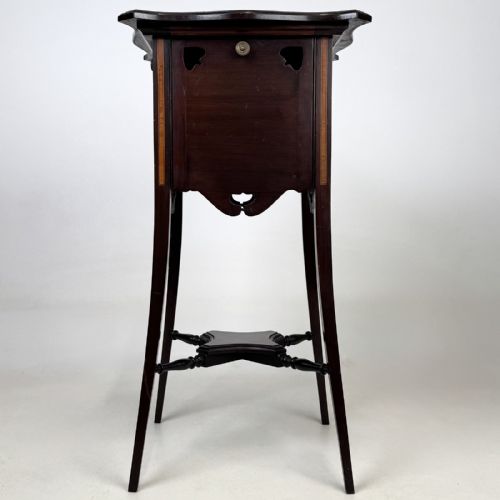
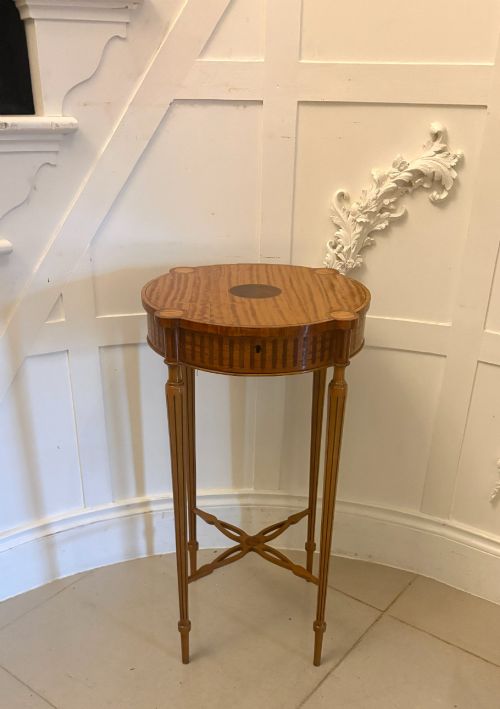
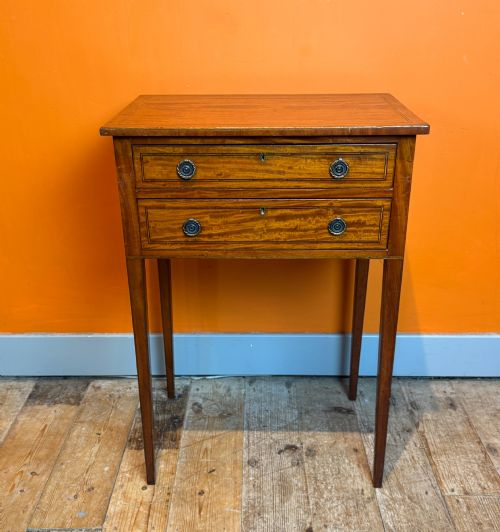
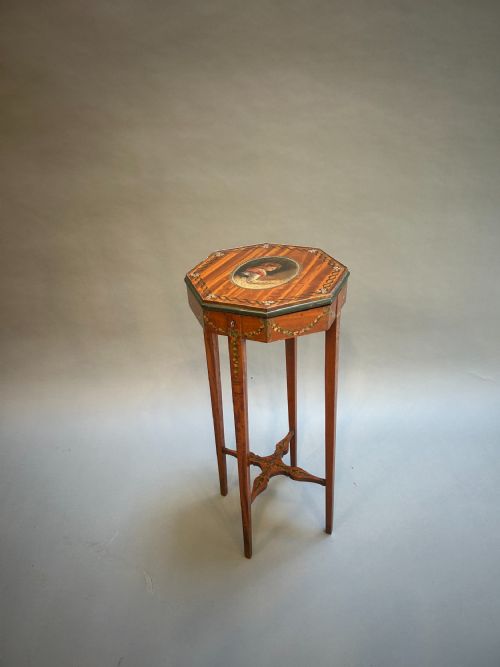
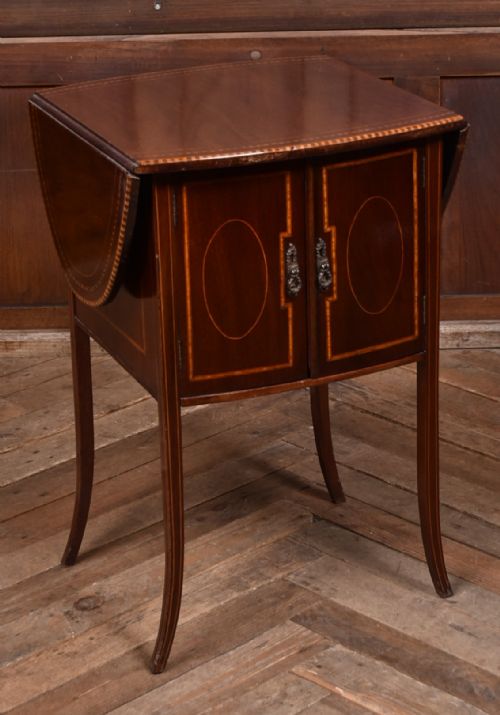
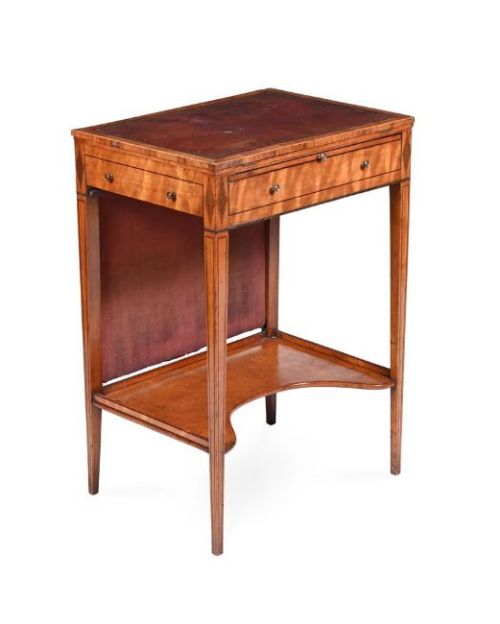
The edwardian satinwood work table sits within domestic spaces as a versatile piece of furniture designed primarily for sewing, needlework and light writing tasks. These tables typically combine a compact timber framework with internal compartments or hanging silk bags to store threads and implements. The forms appearing on this page span straightforward rectangular boxes to octagonal and drop-leaf variations, often supported on slender tapered legs.
Most examples originate from the Edwardian period and the broader Sheraton Revival movement, though the materials and forms draw inspiration from earlier 18th century and Regency traditions. Alongside purpose-built sewing and work tables, the selection includes related occasional, side and dressing tables that share similar marquetry and painted details. Satinwood dominates the surfaces, frequently paired with contrasting timbers and delicate stringing.
How they were made
Cabinet makers utilised light satinwood veneers applied over secondary timber carcases, often incorporating boxwood and harewood for contrasting stringing and geometric inlay. Surface decoration frequently involved hand-painted neoclassical motifs, floral swags or portrait panels directly onto the wood, protected by clear varnishes.
Internal compartments required precise joinery to organise small sewing tools, spools and writing materials within shallow drawers or lift-top boxes. Silk and fabric elements were gathered into hanging bags beneath the main surface, attached to sliding frames or drop leaves supported by pivoting wooden arms.
Edwardian Satinwood Work Table Retail Price Guide 2026
Typical asking prices for edwardian satinwood work table among the pieces listed under this phrase on Sellingantiques today, from the lower quarter to the upper quarter. They describe what is for sale here now, not the wider market.
Several tables manage to keep their original silk bags intact after more than a century of stray pins and tangled threads.
What varies in quality
The standard of an edwardian satinwood work table rests upon the crispness of the marquetry and the precision of the timber matching across the top. Finer pieces display hand-painted decoration with genuine artistic depth rather than stencilled transfers, alongside substantial brass hardware that fits flush to the wood.
Construction methods reveal the underlying grade through the neatness of the interior pigeonholes, the seamless movement of drawers and the stability of the leg joints. Superior examples maintain intact original silk work bags and retain the matching fitted internal trays intended for small accessories.
Mappin and Webb
The Edwardian Satinwood Work Table Glossary
- Satinwood
- A light-coloured tropical timber prized for its lustrous, reflective grain and smooth finish. It serves as the primary ground for high-style English furniture from the late 18th century onwards.
- Marquetry
- The art of applying decorative veneer pieces in various timbers to form pictorial or geometric patterns on furniture surfaces. This technique creates detailed floral motifs and borders.
- Stringing
- Thin inlaid lines of contrasting wood, such as boxwood or ebony, used to outline panels and drawers. It adds linear definition to geometric table tops.
- Drop-leaf
- A table top configuration featuring hinged side flaps that lift to extend surface area or drop down when space is restricted. These flaps frequently use pivoting wooden brackets for support.
Edwardian Satinwood Work Table: Frequently Asked Questions
What was an edwardian satinwood work table used for?
These tables served as functional furniture for ladies to store sewing gear, threads and needlework supplies within fitted internal compartments and hanging fabric bags. The lift-top lids and drop-leaf surfaces provided a stable platform for close handwork and writing.
Over time, they transitioned into decorative occasional pieces placed in drawing rooms to display small ornaments and lamps alongside their original utility.
How do I tell an edwardian piece from earlier styles?
Edwardian pieces often revive Sheraton and neoclassical designs from the 18th century, making style alone an unreliable guide to age. Look closely at the construction methods, secondary timbers, and the character of the painted decoration to establish the true period.
Satinwood work tables from the Edwardian era frequently combine machine-sawn veneers with hand-finished painted details, whereas genuine 18th century examples display older timber shrinkage and distinct joinery practices.
Where should I place a work table in a modern room?
A work table fits comfortably beside a sofa or armchair as a compact surface for lamps and books, echoing its traditional role as an occasional table. The narrow proportions allow it to sit within hallways or smaller alcoves without dominating the floor space.
Lifting the top lid reveals internal compartments that work well for storing modern stationery or small accessories out of sight.
How should I care for satinwood and painted surfaces?
Protect the polished satinwood and painted decoration by keeping the table away from direct sunlight and strong heat sources that can dry out the timber and varnish. Dust gently with a dry, soft cloth and avoid chemical sprays or excessive moisture.
Maintaining a stable indoor humidity prevents the delicate boxwood stringing and wood veneers from lifting away from the carcase.