





Edwardian Satinwood Carver Chair
An edwardian satinwood carver chair brings refined neoclassical elegance and practical armchair comfort to a traditional interior.
Edwardian Satinwood Carver Chair
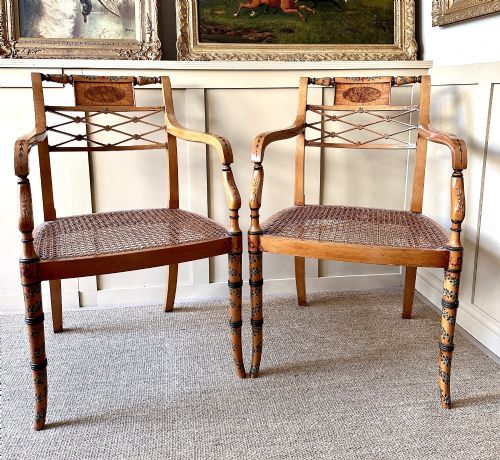
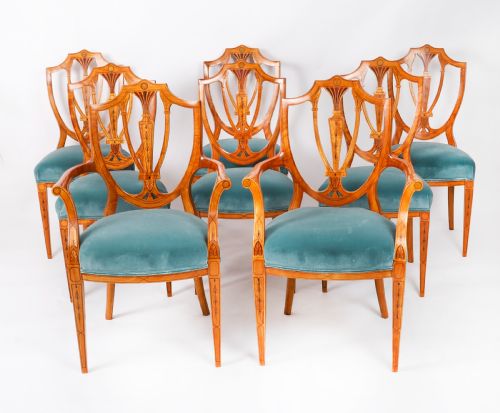
When you search for an edwardian satinwood carver chair, you are looking at substantial seating pieces designed with open arms, primarily originating from the Edwardian era and the late nineteenth century. These forms draw heavily on earlier eighteenth century revivals, notably the Sheraton and Hepplewhite styles, translated through the craftsmanship of later periods.
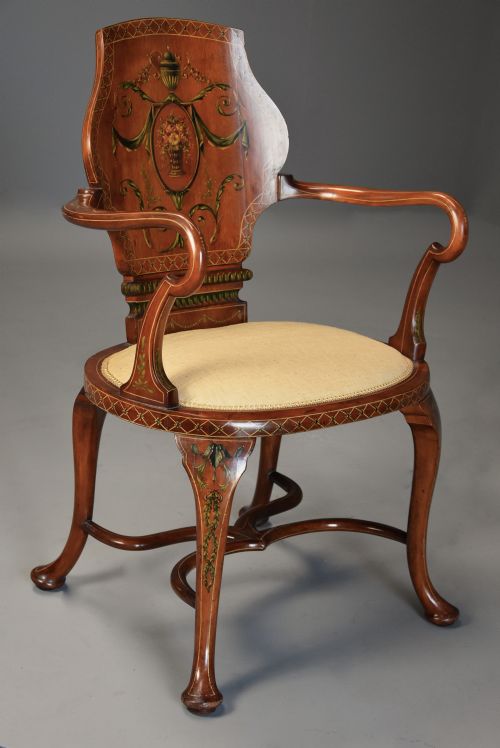
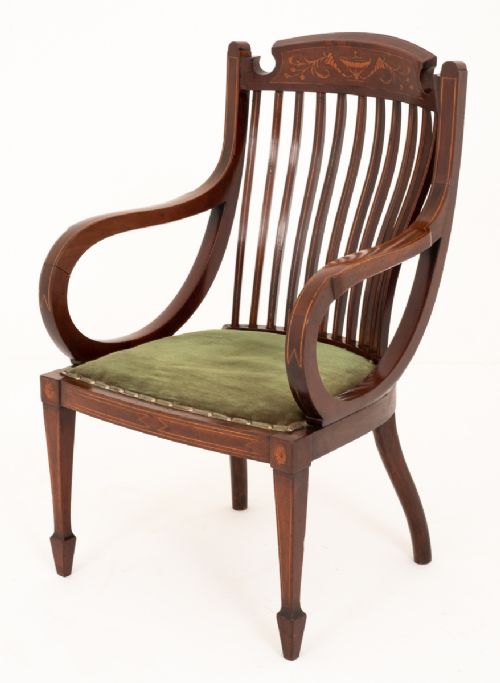
The pieces you are most likely to meet on this page include armchairs, salon chairs, and desk chairs executed in satinwood, mahogany, and walnut. Many feature delicate string inlay and painted decorative details, reflecting the lighter aesthetic favoured at the turn of the twentieth century.
Materials and construction
Makers utilised fine timbers such as satinwood and mahogany, often enhanced by contrasting string inlay to define the structural lines of the chair. Upholstered elements rely on traditional fabrics including velvet and various period textile coverings.
Surface decoration frequently incorporates hand painted motifs alongside intricate inlaid woodwork, combining structural joinery with delicate visual embellishment.
Edwardian Satinwood Carver Chair Retail Price Guide 2026
Typical asking prices for edwardian satinwood carver chair among the pieces listed under this phrase on Sellingantiques today, from the lower quarter to the upper quarter. They describe what is for sale here now, not the wider market.
Listings demonstrate that satinwood, mahogany, and walnut are the primary woods employed across these period armchairs.
Assessing quality
The distinction between standard examples and the finest pieces lies in the crispness of the inlay work and the execution of hand painted details. Superior chairs demonstrate greater precision in the cabinetmaking and a more harmonious balance of proportions.
Condition of the timber and the originality of the decorative surface significantly influence the standing of an individual piece. Examples retaining their untouched painted finishes command particular appreciation among collectors.
Cowtan & Sons·Shoolbred
The Edwardian Satinwood Carver Chair Glossary
- Carver chair
- An armchair, typically designed to sit at the head of a dining table or function as a refined desk seat. These pieces feature integral armrests for added support.
- Satinwood
- A lustrous hardwood native to Ceylon and the West Indies, prized for its golden sheen and smooth grain. It was frequently employed as a veneer or solid timber in high end cabinetmaking.
- Sheraton Revival
- A late nineteenth and early twentieth century design movement that reinterpreted the neoclassical furniture forms of Thomas Sheraton. It is characterised by straight tapered legs, delicate inlay, and classical ornamentation.
- String inlay
- A narrow strip of contrasting timber inserted into a shallow channel on the furniture surface. This technique creates fine linear borders that frame panels and structural members.
Edwardian Satinwood Carver Chair: Frequently Asked Questions
How do I style these chairs?
These chairs integrate well into both traditional period settings and eclectic modern interiors. Their lighter wood tones and refined proportions prevent them from dominating a room.
Use them as desk chairs, accent seating in a hallway, or paired at the ends of a dining table to introduce classic character.
Are painted chairs original?
Many Edwardian and late Victorian pieces were produced with hand painted decorative motifs directly onto the satinwood or mahogany ground. These embellishments reflect a revival of eighteenth century neoclassical taste.
Close examination of the pigment and surface wear helps distinguish period application from later embellishment.
How do I care for satinwood?
Satinwood requires gentle maintenance to preserve its distinctive golden lustre and prevent the timber from drying out. Keep pieces away from direct sunlight and sudden temperature fluctuations.
Apply a microcrystalline wax sparingly when the surface loses its sheen, buffing gently with a soft cloth.