




Edwardian Satinwood Armchairs
Edwardian satinwood armchairs bring light timber and refined revival styles into a room, offering both decorative presence and comfortable seating.
Edwardian Satinwood Armchairs
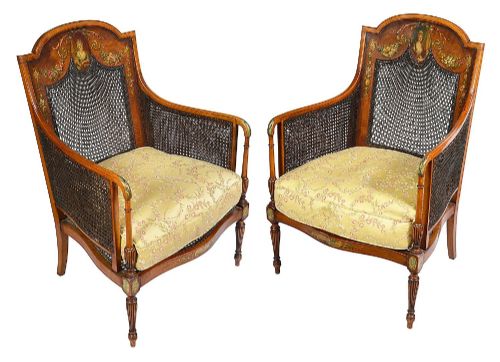
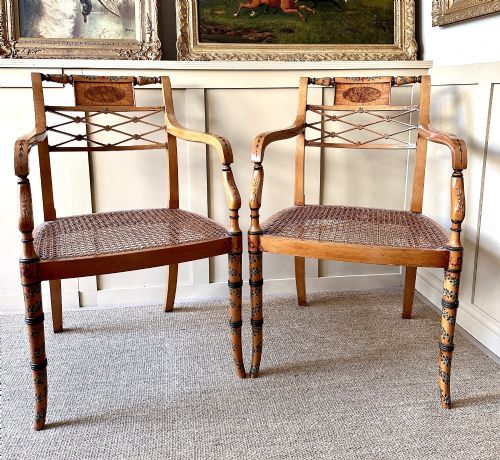
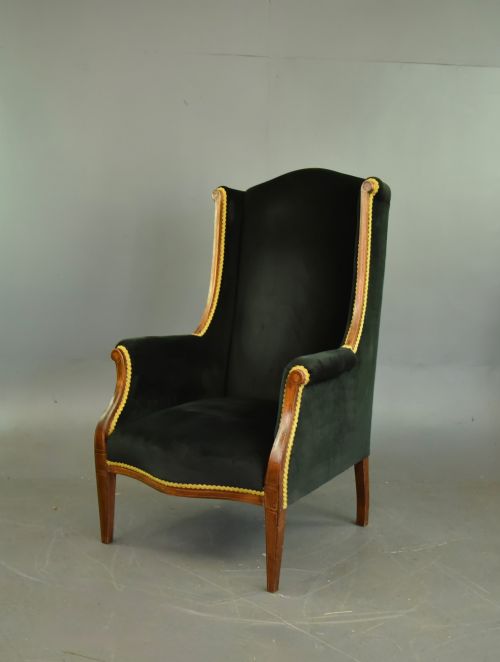
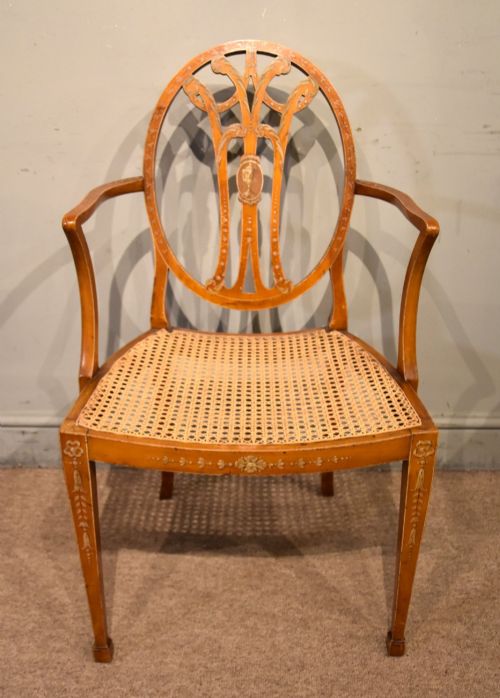
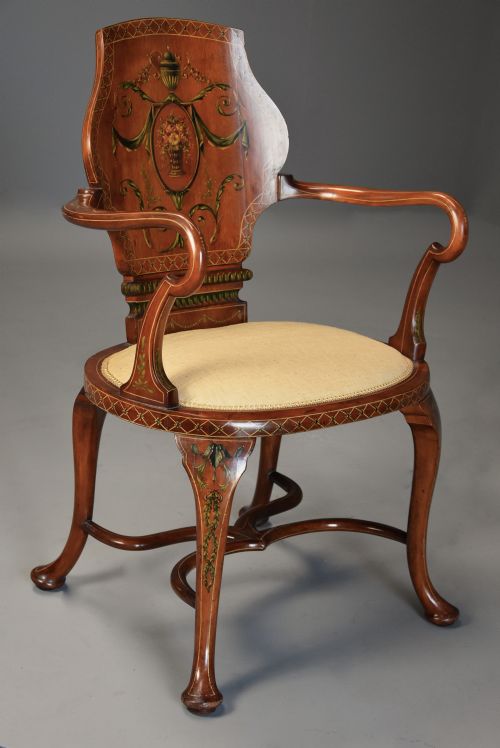
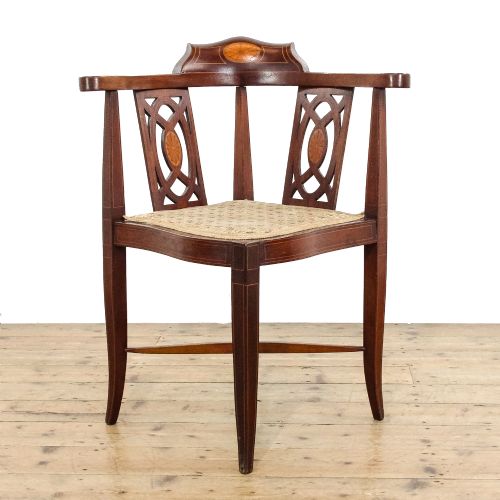
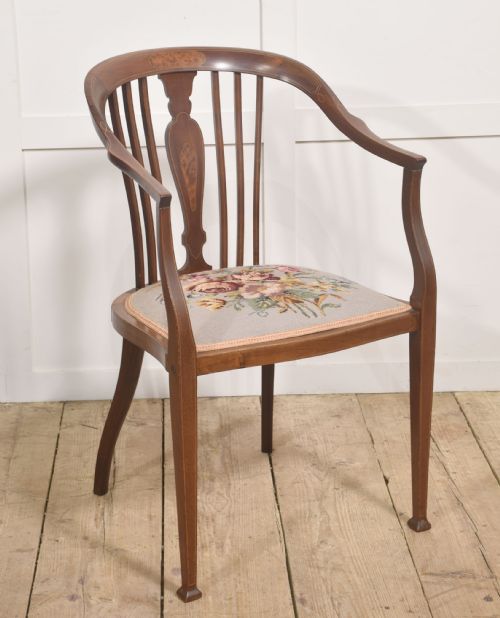
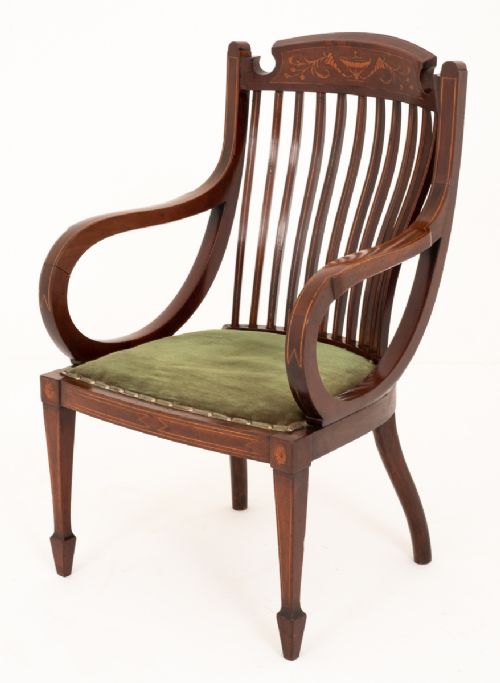
Edwardian satinwood armchairs encompass a variety of seating forms, including elbow chairs, occasional chairs, bergere library chairs, and painted salon pieces. These items emerge primarily from the Edwardian era, alongside pieces spanning the late nineteenth century and the early decades of the twentieth century.
The aesthetic leans heavily on Sheraton Revival designs and painted finishes, often combining satinwood with mahogany and delicate string inlay. Buyers frequently encounter open armchairs and corner seats designed for drawing rooms, libraries, and bedrooms.
Materials and Construction
Craftsmen built these chairs using solid wood carcasses veneered or banded in satinwood and mahogany, supplemented by cane panels, wood paint, and upholstered pads in leather, velvet, or fabric. Inlaid details utilise contrasting timbers to create geometric stringing and decorative motifs.
Structural methods involve traditional joinery adapted for lighter proportions, with frames supporting cane work in bergere panels or upholstered seats sprung for daily use.
Edwardian Satinwood Armchairs Retail Price Guide 2026
Typical asking prices for edwardian satinwood armchairs among the pieces listed under this phrase on Sellingantiques today, from the lower quarter to the upper quarter. They describe what is for sale here now, not the wider market.
Listings feature Edwardian, Victorian, and early twentieth-century periods, utilising satinwood, mahogany, cane, and paint across armchairs and salon seats.
Quality and Execution
The standard of a piece rests on the crispness of the hand-painted decoration, the precision of the wood inlay, and the integrity of the underlying timber frame. Finer examples display meticulous attention to detail in the grain selection and the hand-applied finish.
Proportion and decorative restraint set apart superior chairs, where revival styles follow classical lines accurately rather than relying on heavy industrial production methods.
Shoolbred
The Edwardian Satinwood Armchairs Glossary
- Satinwood
- A hard, yellow timber valued for its lustrous sheen and smooth grain, frequently used as a veneer on fine Edwardian furniture. It forms the primary visual surface on many revival pieces.
- Sheraton Revival
- A late nineteenth and early twentieth-century design movement inspired by the neoclassical furniture of eighteenth-century designer Thomas Sheraton. It relies on slender proportions and satinwood finishes.
- Bergere
- An enclosed upholstered armchair featuring cane work panels on the back and sides. This French style appears frequently in library and drawing room seating.
- String inlay
- A narrow strip of contrasting wood embedded flush into the surface of a panel or leg to create a delicate border. This technique defines much of the linear decoration on Edwardian seating.
- Elbow chair
- An armchair with relatively short arms, designed to fit easily beneath a desk or dining table. These frames provide sturdy support without bulk.
Edwardian Satinwood Armchairs: Frequently Asked Questions
How do I identify an Edwardian satinwood armchair?
These chairs typically combine light satinwood veneers with mahogany frames and delicate string inlay, reflecting the revival of eighteenth-century neoclassical tastes during the early twentieth century.
Look for slender proportions, hand-painted floral or classical motifs, and construction methods characteristic of the period between eighteen-ninety and nineteen-twenty.
Were these chairs meant for daily use?
Many of these pieces served as occasional, salon, or writing chairs intended for light domestic duties in drawing rooms and bedrooms rather than heavy lounge seating.
Their lighter frames and delicate painted or inlaid surfaces suggest they were placed where visual elegance mattered alongside practical comfort.
What is the difference between satinwood and mahogany frames?
Satinwood provides a pale, golden, light-reflecting surface that was often used for decorative veneers, while mahogany offers a darker, reddish-brown structural timber.
Many pieces use mahogany for the main frame while incorporating satinwood veneers and contrasting string inlay for the visible panels.
How should I care for a painted satinwood chair?
Keep the timber away from direct sunlight and steady heat sources to protect the delicate painted surfaces and prevent the wood veneers from drying out.
Dust gently with a dry, soft cloth and avoid chemical polishes that can damage the historical finish.