


Edwardian Rural Scene Artwork
These edwardian rural scene artwork pieces capture quiet agricultural life through brush and pigment, offering a window into traditional countryside living.
Edwardian Rural Scene Artwork
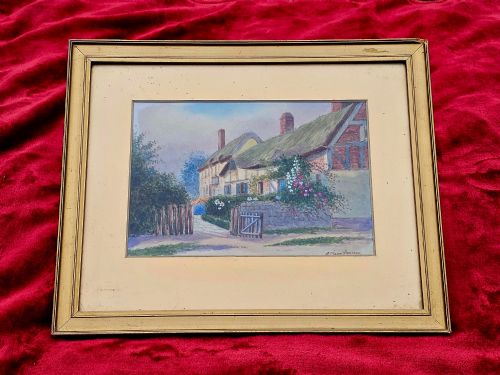
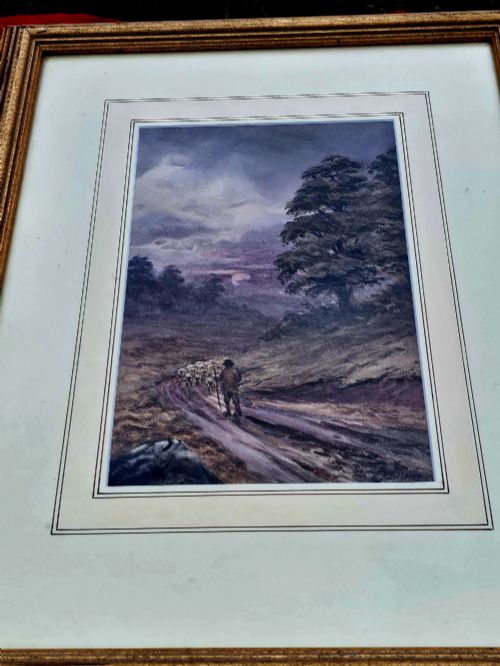
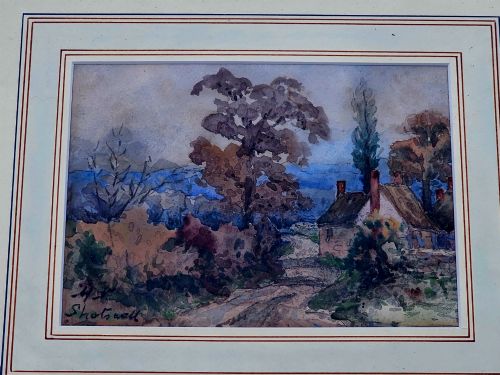
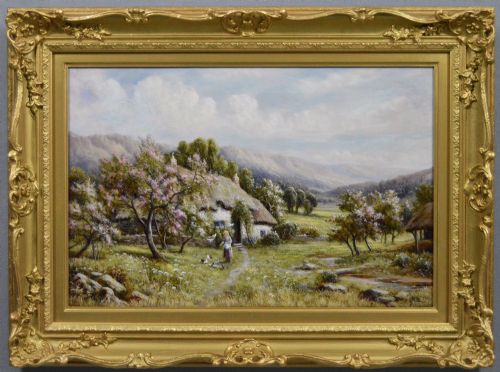
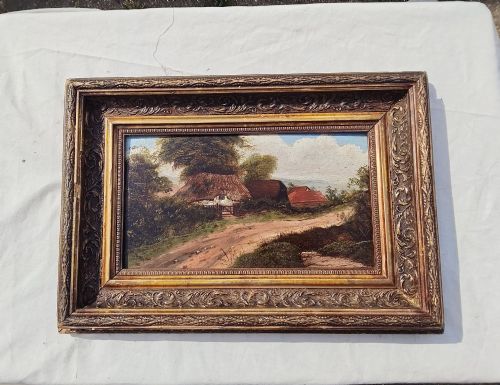
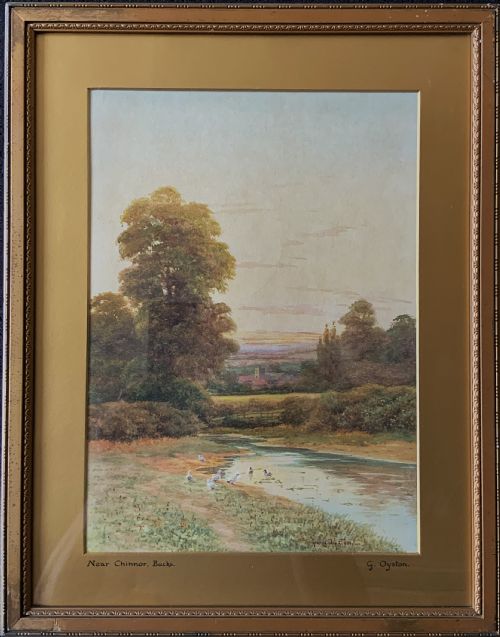
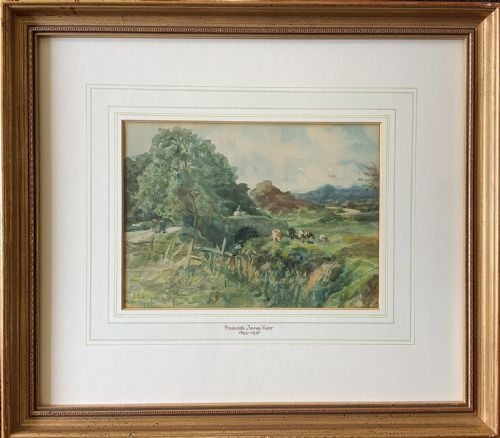
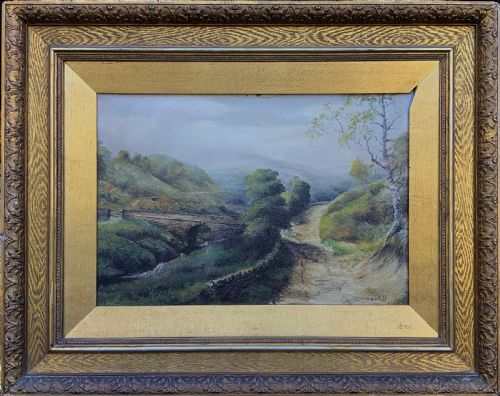
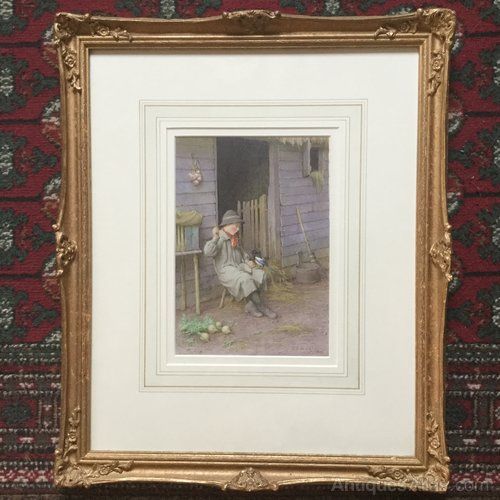
When you search for edwardian rural scene artwork, you encounter paintings that depict traditional country life, agricultural labour, and pastoral views. The pieces span periods from the nineteenth century into the early twentieth century, showing cottage exteriors, river valleys, and farming communities.
You are most likely to meet watercolours on paper and oil paintings on canvas depicting herds, harvest fields, and thatched cottages. These works capture the changing light across British landscapes from Yorkshire to Wales through the eyes of regional painters and Impressionist observers.
How They Were Made
Artists painted these scenes using oil on canvas, oil on card, or watercolour pigment on paper, often framing the finished pieces in wood and giltwood. The physical supports reflect standard studio practices of the period, utilising stretched canvas or heavy watercolour paper.
Makers applied pigments with brushwork ranging from tight academic detail to looser British Impressionist strokes. Works were frequently glazed and housed behind glass to protect the paper works, while oil paintings remained on open canvas or within wooden surrounds.
Listings feature works created using watercolour and oil on canvas, spanning the Victorian period through to the 1930s.
What Varies in Quality
The standard of an artwork depends upon the surety of the brushwork and the artist's ability to render atmospheric light and convincing depth. Stronger examples display confident handling of livestock, figures, and architectural elements within the landscape.
Conservation condition and original framing also influence the standing of a piece. Works retaining their period wooden surrounds and stable pigments without heavy fading or paper discolouration hold greater visual integrity.
A. Marie Parsons·EJ Letheren·Robert John Hammond·George Oyston·Frederick James Kerr·Edgar Hunt·Charles Edward Wilson·James William Booth·Owen Bowen·Ernest Pile Bucknall·M. C. Hider·Frederick James Knowles·John Atkinson·Ernest Higgins Rigg·George Soper·Lorenzo Headley·William Joseph Boyes·William Langley·Herbert Royle·Arthur Winter Shaw·Harry Sylvester Stannard·Robert Hollands Walker·Thomas James Lloyd·George Kilburne·B. Kaufmann
The Edwardian Rural Scene Artwork Glossary
- Watercolour
- A painting method where fine pigment is suspended in a water-based solution and applied to paper. It allows for translucent washes of colour.
- Oil on Canvas
- Pigment mixed with drying oil applied to a woven fabric stretched across a wooden frame. This medium permits rich textures and deep tones.
- British Impressionism
- A painting style focusing on light and everyday subjects using visible brush strokes. It emerged in the late nineteenth and early twentieth centuries.
- Giltwood
- Timber covered with a thin layer of gold leaf or gold paint. It frequently forms the decorative frame surrounding period paintings.
Edwardian Rural Scene Artwork: Frequently Asked Questions
What subjects appear in these works?
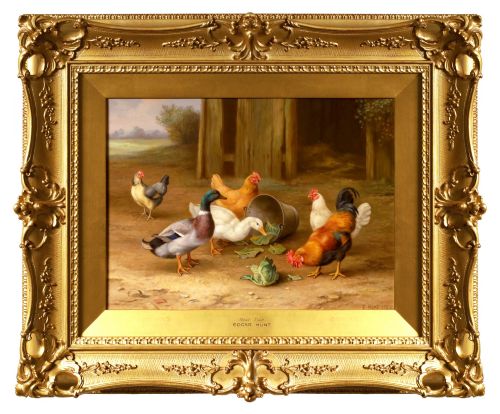
The compositions generally show agricultural labour, farm animals, river valleys, and rural cottages. Scenes of haymaking, herding sheep, and tending cattle are common.
These subjects reflect a romanticised view of the British countryside during a period of industrial change.
How do I date these paintings?
Dating relies on stylistic clues, artist signatures, and framing methods. Many works carry specific dates or reflect the working spans of named painters.
Period attire on the figures and the presence of Edwardian or late Victorian framing styles also help narrow the timeframe.
Where were these scenes painted?
The locations span various British regions, including Yorkshire, Wales, Sussex, and Warwickshire. Artists often inscribed specific place names onto the mounts or canvas backs.
These topographical details anchor the romantic pastoral views in actual rural communities of the era.
How should I display them?
Watercolours require hanging away from direct sunlight to prevent pigment fading and paper degradation. Oil paintings benefit from stable indoor humidity and gentle ambient lighting.
Keeping them in their period wooden frames helps preserve their historic character.