
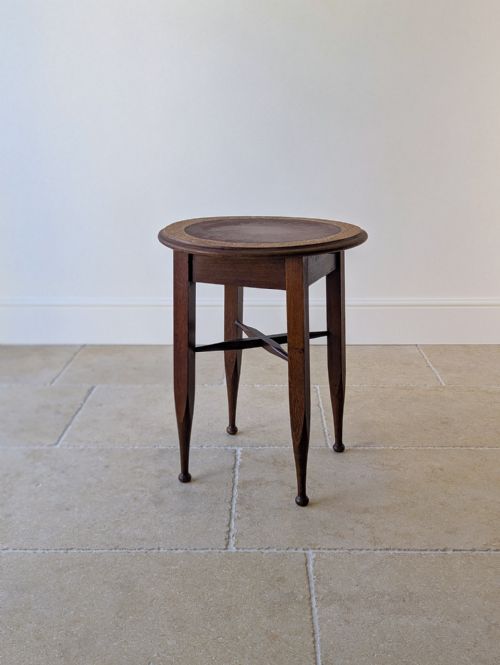
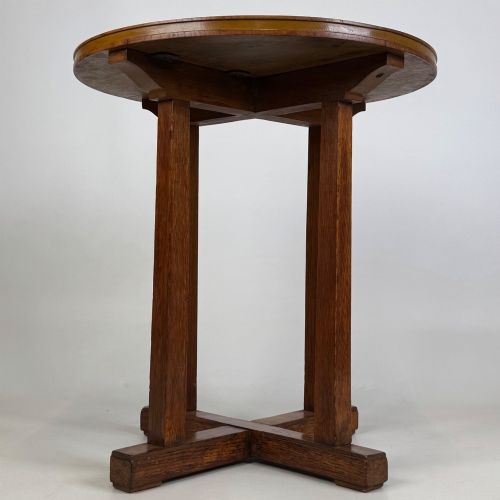
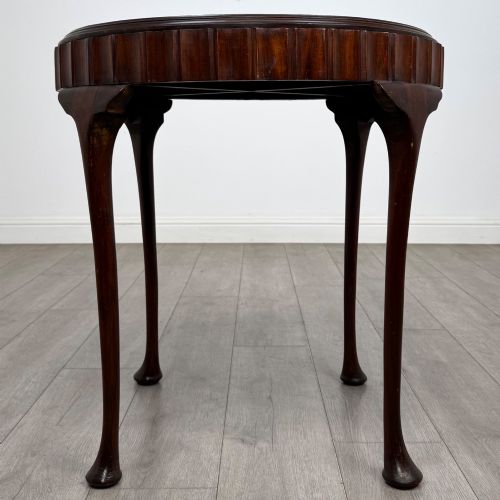
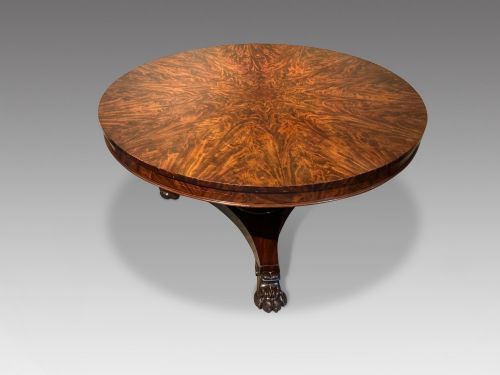
Edwardian Round Table
An edwardian round table offers compact elegance and surface utility, suiting domestic spaces from parlours to studies.
Edwardian Round Table
An edwardian round table appears primarily as an occasional, side, or centre table designed for everyday domestic use. These pieces emerge predominantly from the Edwardian period and the early twentieth century, alongside nineteenth-century precedents.
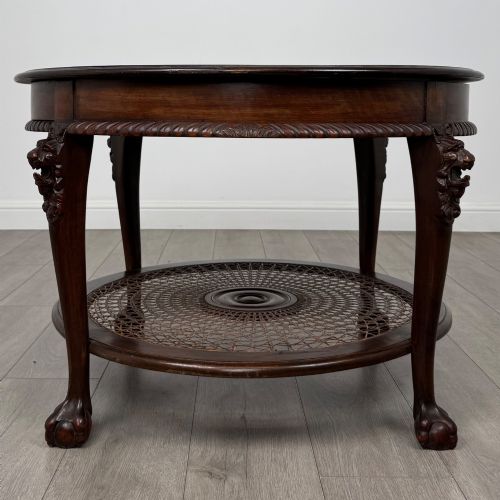
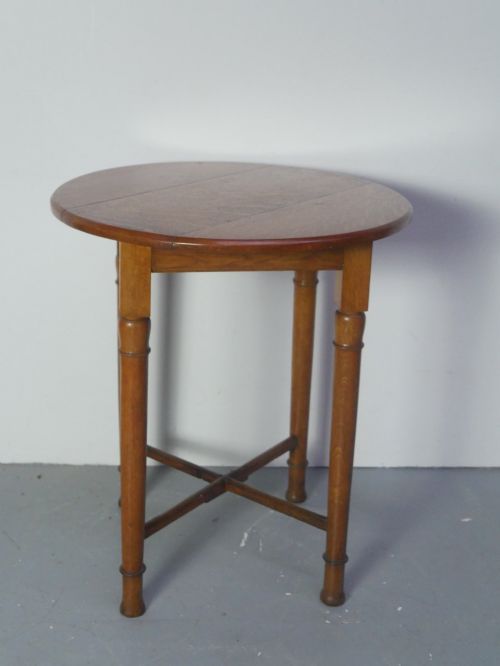
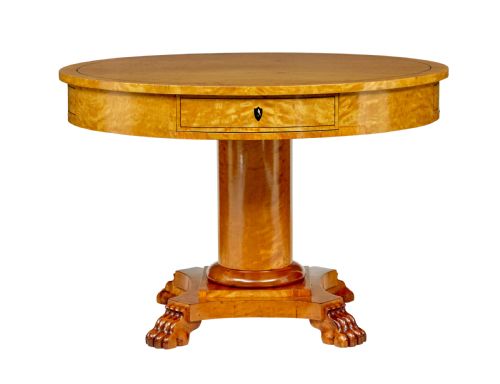
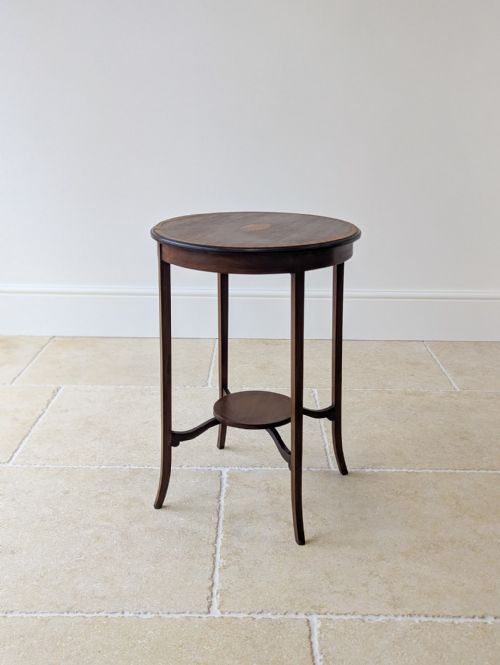
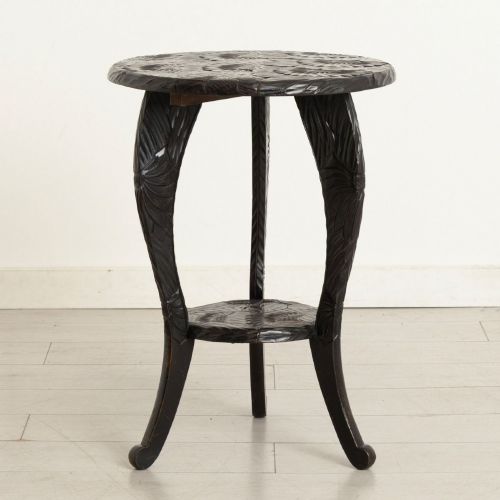
Makers construct these circular forms to function flexibly as lamp tables, wine tables, or coffee tables within a room. Many examples incorporate pedestals with tripod legs or simple four-leg configurations to support circular tops.
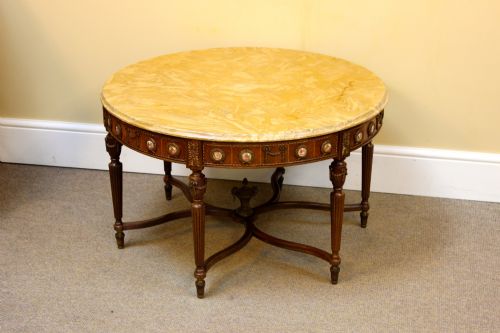
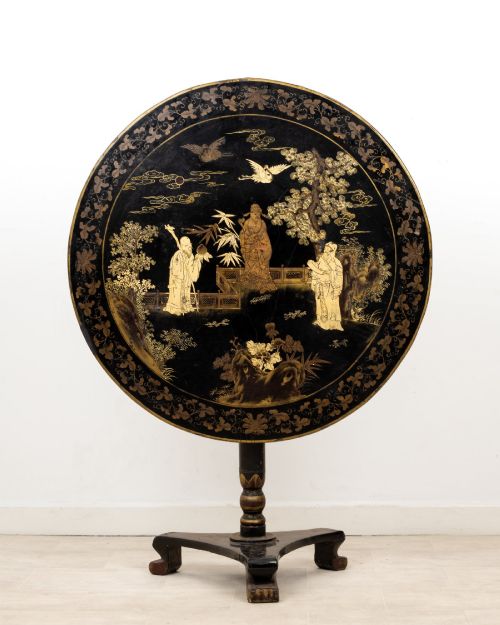
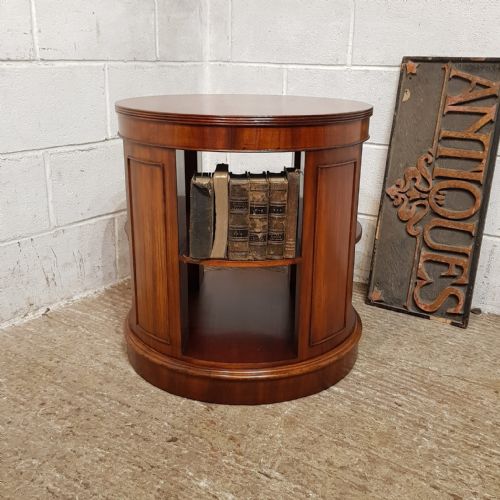
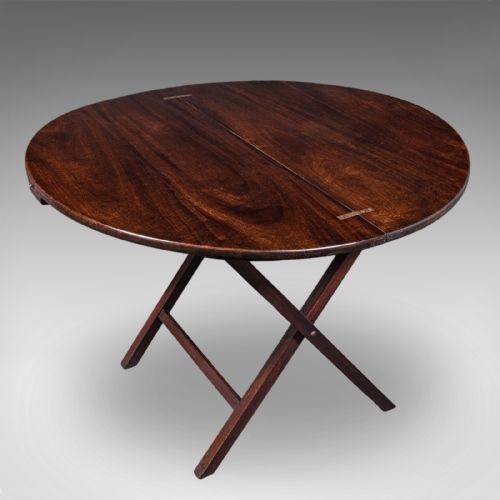
Beyond standard timber tables, the records show specialised variants including marble-topped coffee tables, revolving bookcases, and tilt-top designs. These diverse forms reflect the versatile requirements of period interiors.
Materials and Techniques
Cabinetmakers rely heavily on mahogany, oak, and walnut, frequently selecting these timbers for their durability and grain. Satinwood and rosewood appear alongside these primary woods, often utilised for contrasting borders or distinct surface finishes.
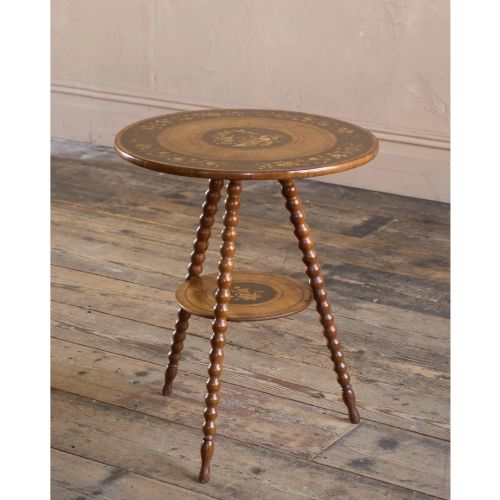
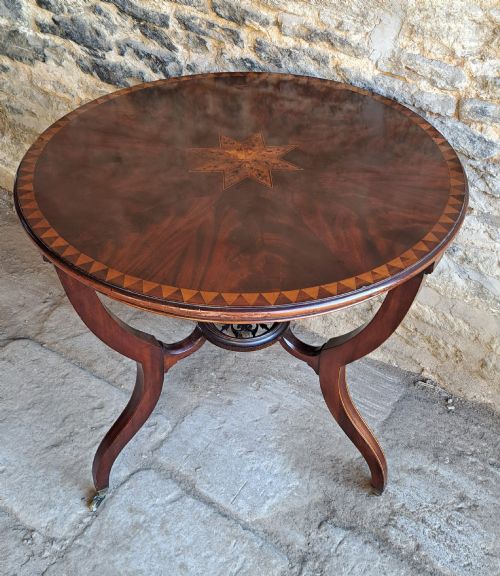
Craftsmen employ marquetry, inlay, and crossbanding to decorate table tops, adding visual depth with finer woods. Structural elements integrate brass mounts, ormolu, and copper to accent the primary timber framework.
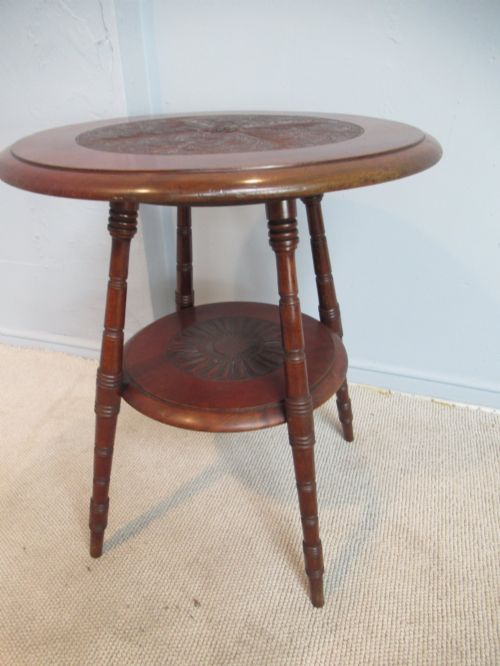
Turning techniques shape upright supports and legs into slender columns, bobbin legs, or barley twists. Joinery relies on traditional methods to secure circular tops to stable pedestals or folding frames.
Design styles range from minimalist Arts and Crafts oak to elaborate Sheraton Revival inlay and French Empire ormolu mounts.
Distinctions in Execution
The refinement of inlaid details and marquetry sets finer examples apart from plainer utilitarian pieces. Precision in the matching of timber veneers and the crispness of hand-carved elements indicate superior craftsmanship.
The choice of secondary materials, such as heavy brass mounts, solid marble inserts, or sterling silver components, elevates the standing of a piece. Structural stability in the central pillar and leg joints determines the enduring integrity of the circular top.
Liberty and Co·Liberty of London·Waring and Gillow·François Linke·Sir Robert Stoddart Lorimer
The Edwardian Round Table Glossary
- Occasional table
- A small, movable table designed for a specific, intermittent domestic use rather than a permanent central position.
- Centre table
- A freestanding table finished on all sides, intended to stand in the middle of a room rather than against a wall.
- Marquetry
- Decorative veneer work forming pictures or geometric patterns using various woods, shells, or ivory.
- Tilt-top
- A table mechanism allowing the circular top to hinge vertically for compact storage when not in use.
- Crossbanding
- A strip of veneer applied to the border of a table top with the grain running perpendicular to the main surface.
Edwardian Round Table: Frequently Asked Questions
What is an edwardian round table used for?
These tables serve primarily as moveable surfaces for lamps, drinks, or decorative items within domestic reception rooms. Their compact proportions allow them to fit easily beside seating or in central spaces.
The circular top provides balanced proportions that suit smaller corners just as well as open room layouts. Historically, variations functioned as wine tables, book repositories, or small dining surfaces.
How do I identify an edwardian round table?
Examination of the timber, construction methods, and decorative motifs helps determine the period of manufacture. Edwardian pieces often feature satinwood inlay, light mahogany veneers, or Arts and Crafts oak construction.
Looking beneath the top reveals the framing, joinery techniques, and potential maker marks or labels. Comparing the leg style, such as spade feet or tripod bases, against known period forms confirms the origin.
Where should I place a round table?
A circular table functions effectively as a freestanding centrepiece in a hallway or drawing room. It also anchors a seating group when placed between armchairs as a lamp or coffee table.
The absence of sharp corners makes these pieces suitable for high-traffic walkways where rectangular furniture might obstruct movement. Their versatile footprint adapts readily to changing interior layouts.
How do I care for timber table tops?
Routine maintenance involves dusting with a soft, dry cloth to prevent surface grime from accumulating on the polish. Avoiding direct sunlight and excessive heat protects the underlying wood veneers from warping or fading.
Occasional application of appropriate wax polish maintains the lustre of mahogany, walnut, and oak surfaces. Using coasters safeguards delicate finishes against moisture rings from glasses or cups.