


Edwardian Roll Top
When searching for an edwardian roll top, a buyer discovers functional writing furniture designed with tambour shutters or cylindrical covers to conceal papers.
Edwardian Roll Top
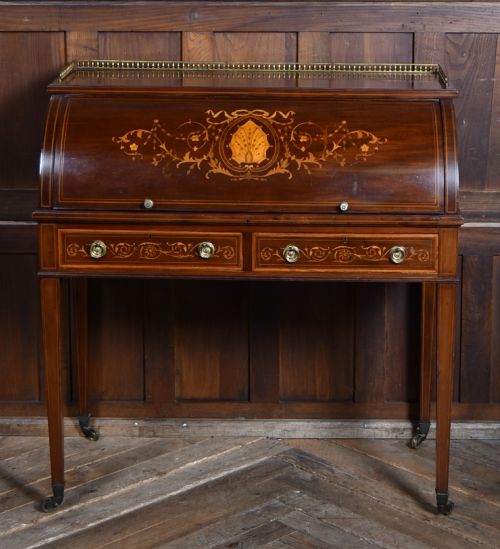
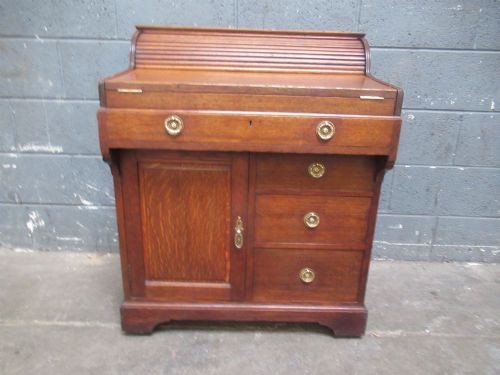
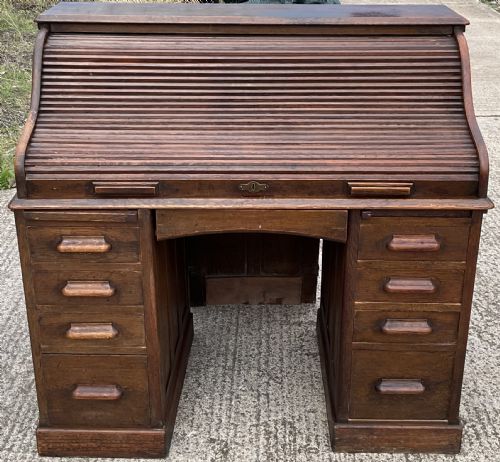
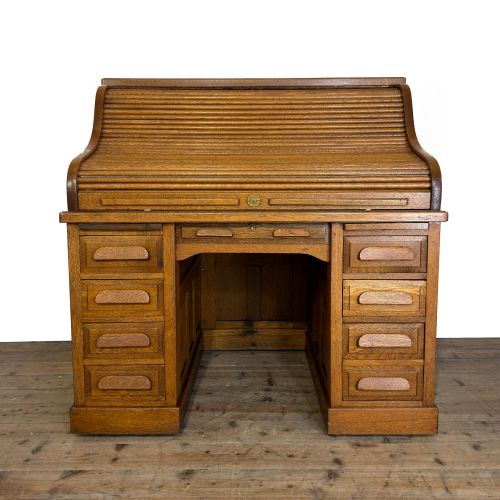
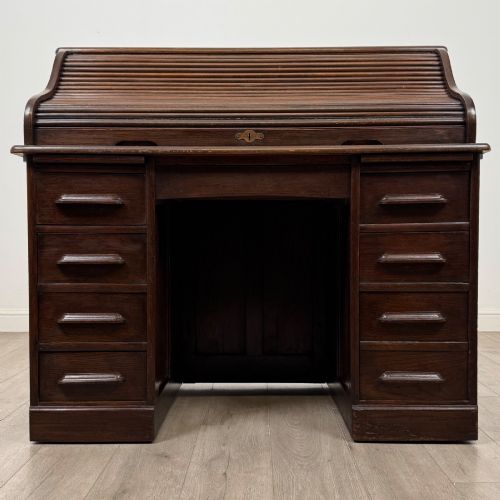
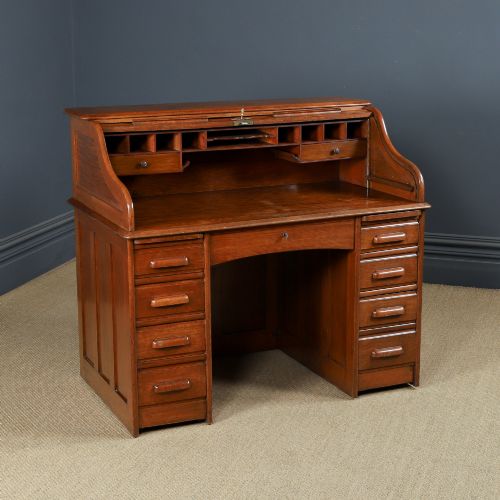
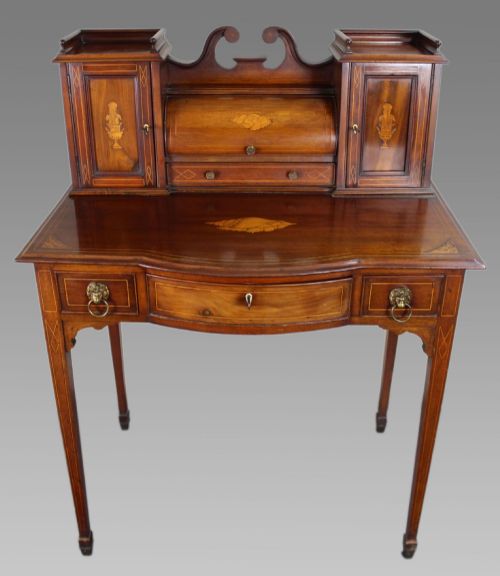
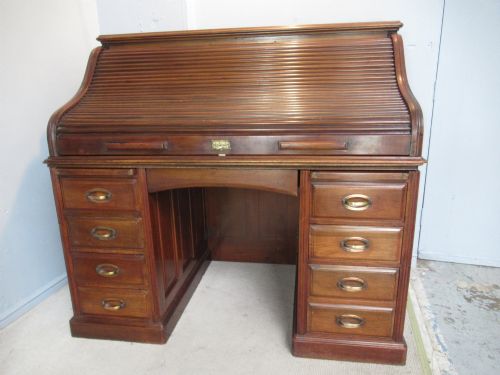
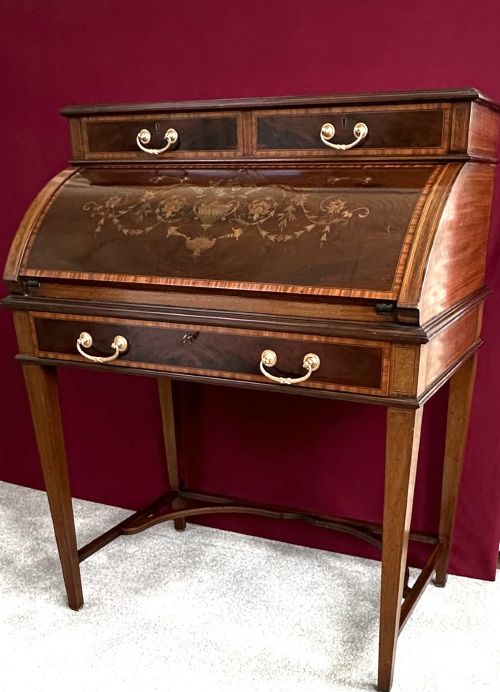
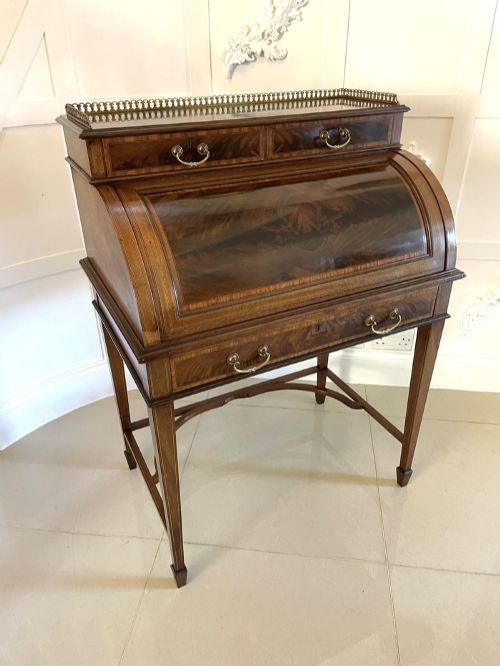
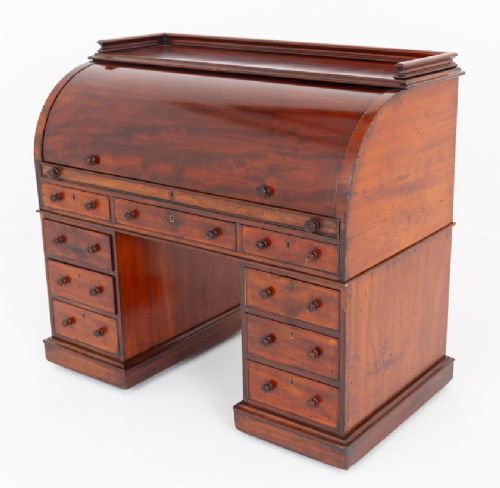
The edwardian roll top search phrase covers a practical group of office and library furniture, most frequently seen as solid or panelled oak pedestal desks from the early twentieth century. These pieces feature flexible tambour shutters or solid cylinder fronts that slide down to secure the writing surface and internal pigeonholes. Alongside standard office models, lighter mahogany and walnut variations appear, sometimes influenced by Sheraton Revival styles.
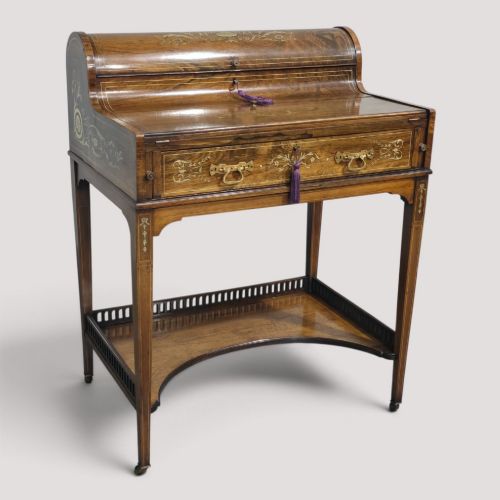
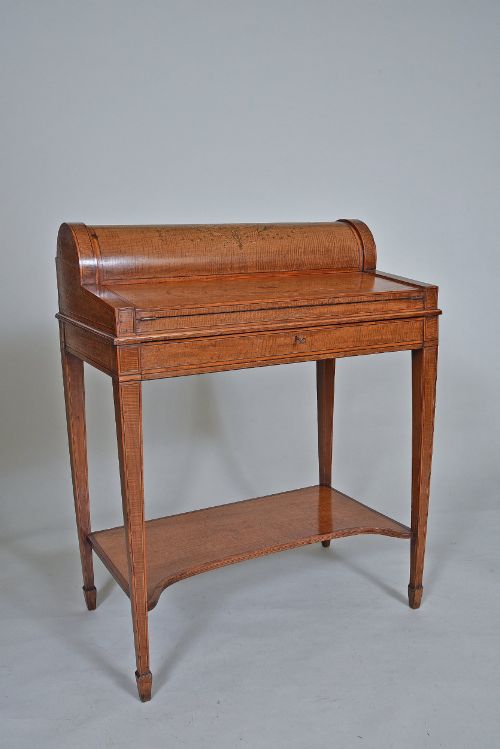
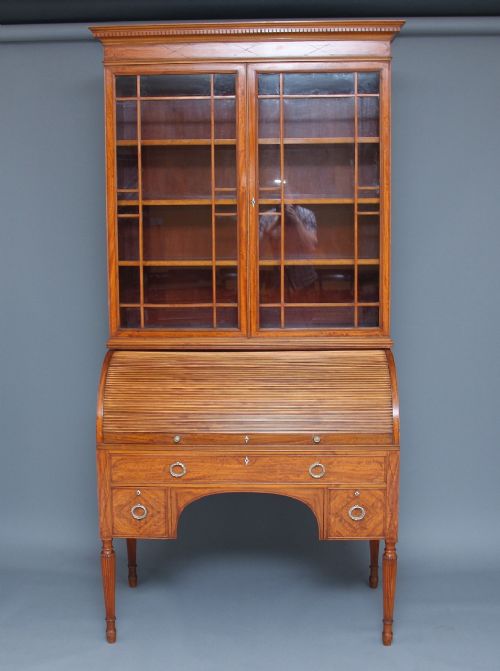
Beyond large twin pedestal office desks, the selection includes compact ladies desks, cylinder bureaus, and matching tambour front filing cabinets. The proportions range from small writing tables to substantial six-foot workspaces designed for commercial or domestic studies. Most examples date from the Edwardian period and the early twentieth century, though nineteenth-century Victorian and Georgian precursors also emerge in walnut and mahogany.
Construction and materials
Makers utilised solid timbers alongside veneered surfaces, with oak and mahogany dominating the construction of these desks and filing cabinets. Interiors frequently incorporate lesser-used secondary woods for drawer linings while employing brass hardware for handles, locks, and handles.
The defining mechanical feature relies on tambour construction, where narrow strips of wood are glued to a canvas or leather backing to allow the shutter to curve smoothly around a track. Cylinder fronts differ by employing a solid curved panel that rotates on pivot arms rather than sliding through a recessed track.
Edwardian Roll Top Retail Price Guide 2026
Typical asking prices for edwardian roll top among the pieces listed under this phrase on Sellingantiques today, from the lower quarter to the upper quarter. They describe what is for sale here now, not the wider market.
Many surviving office desks still retain decades-old ink stains and stray paper clips hidden deep within the stationery compartments.
Distinctions in quality
Superior examples reveal themselves through the smooth operation of the tambour mechanism and the precision of internal pigeonhole joinery. Well-made pieces use dense, figured oak or finely grained mahogany with robust internal framing that prevents the pedestal sides from shifting.
The presence of maker stamps from recognised firms indicates workshop standards, while integrated pull-out writing slides and secondary locking systems elevate the utility of the desk. Poorer variations rely on lightweight veneers that chip easily and tracks that bind during operation.
Maple & Co·Angus of London·Lebus·Edwards & Roberts·Tudor & Burrey
The Edwardian Roll Top Glossary
- Tambour
- A flexible shutter formed of narrow wooden slats attached to a fabric backing. This allows the cover to follow a curved track and conceal the desk interior.
- Cylinder top
- A solid curved wooden panel that rotates on a horizontal axis to cover the writing surface. It differs from a tambour by using a rigid single piece rather than individual slats.
- Pedestal desk
- A freestanding desk comprising two supporting banks of drawers beneath the main writing surface. The central space is left open for seating.
- Sheraton Revival
- A design style popular in the late nineteenth and early twentieth centuries that reinterprets eighteenth-century neoclassical motifs. Pieces often feature delicate satinwood inlay and mahogany frames.
- Pigeonhole
- A small compartment built into the upper interior of a desk for sorting letters and papers. These sections are frequently accompanied by small internal drawers.
Edwardian Roll Top: Frequently Asked Questions
How do I maintain the tambour mechanism?
Keep the wooden tracks clean and free from dust by using a soft brush periodically. Avoid heavy oils or silicones that attract grit into the sliding grooves.
Ensure the room humidity remains stable to prevent the wood from expanding and binding the slats within their tracks.
Are these desks easy to dismantle?
Many pedestal versions separate into three distinct sections consisting of the two drawer banks and the top writing module. This modular construction was intended to facilitate transport through doorways.
Care should be taken with older fixings and internal alignment pins when reassembling the units.
What is the difference between a cylinder desk and a roll top?
A roll top utilises a flexible tambour shutter made of multiple wooden strips that bend around a curved track. A cylinder desk employs a single rigid curved panel that rotates on a pivot.
Both styles serve the same function of securing the working area without requiring the removal of papers.
Where were these pieces typically used?
These desks were manufactured for professional offices, legal practices, and private home libraries. Larger pedestal variants served commercial environments requiring secure storage for ledgers.
Smaller satinwood and mahogany versions were designed for domestic studies and drawing rooms.