
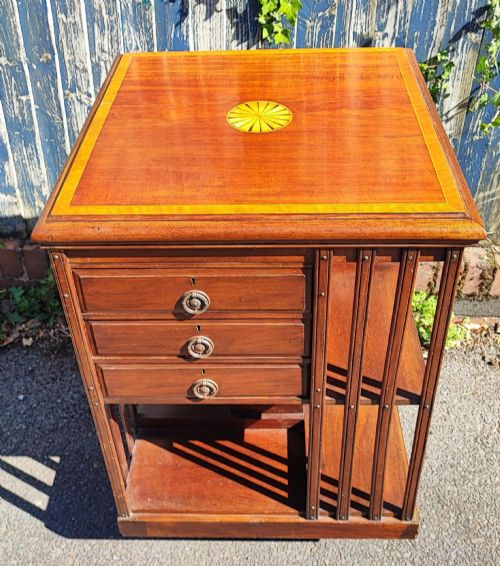
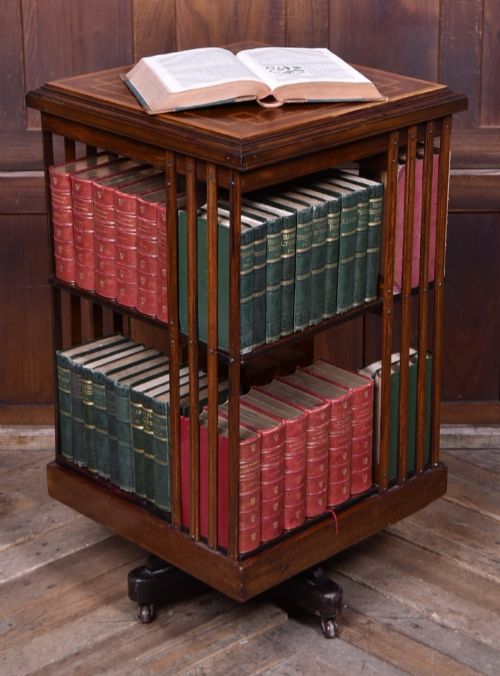
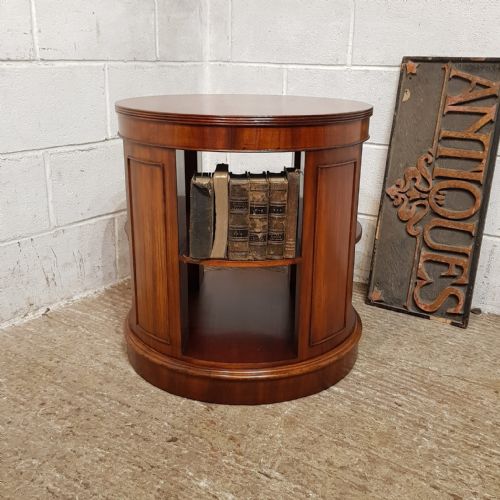


Edwardian Revolving Side Table
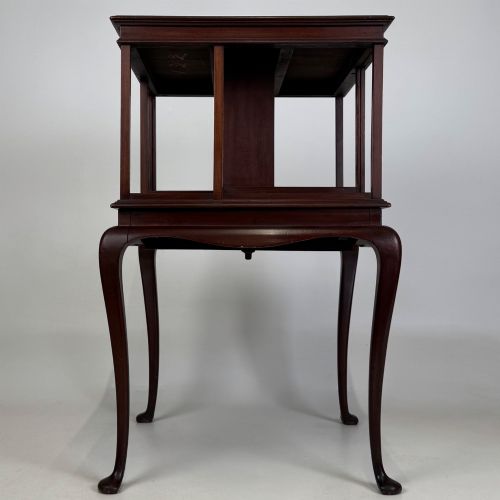
An Edwardian revolving side table is a rotating wooden piece designed for keeping books close at hand.
Edwardian Revolving Side Table
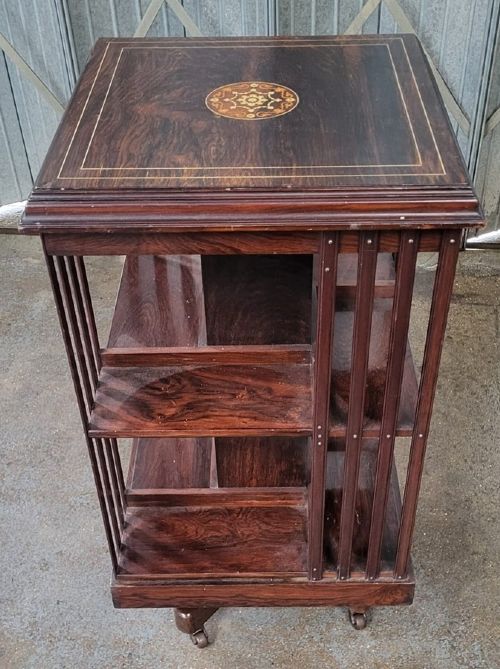
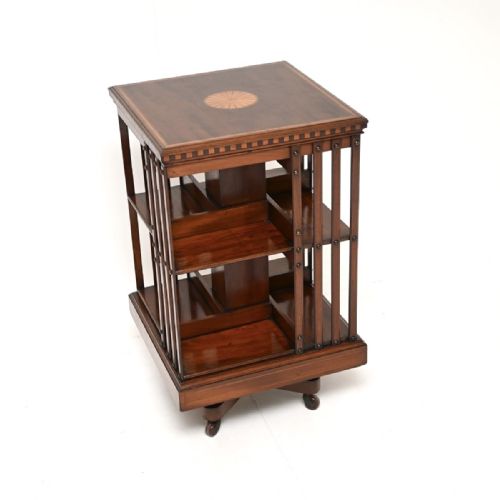
An edwardian revolving side table typically takes the form of a rotating bookcase or small table designed to sit beside a chair or desk. These compact wooden pieces allow a selection of volumes to be turned smoothly towards the reader without moving the furniture itself.
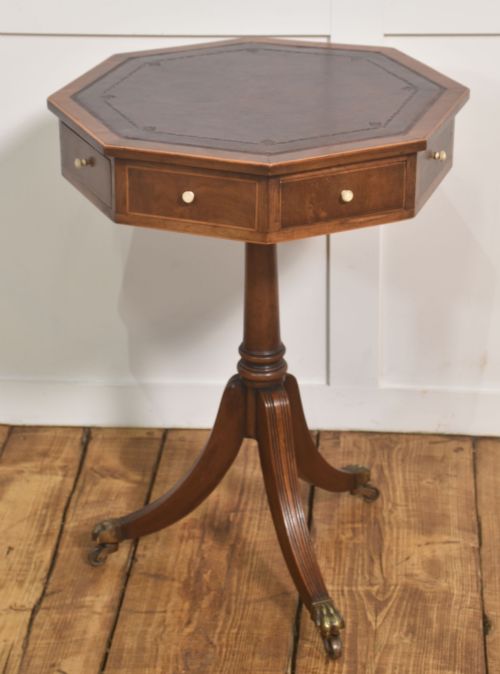
The versions most commonly found here belong to the Edwardian period or date from around nineteen hundred, though related Victorian and later examples also appear. Alongside standard square or round rotating bookcases, the selection includes drum tables and occasional tables with similar revolving mechanisms.
Makers of this era favoured timbers such as mahogany, walnut, oak, and rosewood, frequently incorporating satinwood inlays or brass details. While some remain plain and practical, others reflect Revival styles including Queen Anne, Regency, and Sheraton influences.
How they were made
Cabinet makers constructed these tables using solid hardwoods and veneered panels over sturdy carcases. Mahogany and walnut provide the primary structure for the majority of pieces, complemented by contrasting satinwood banding and stringing.
The defining mechanical feature relies on a concealed internal pivot and bearing system hidden beneath the top. This allows the upper tiers to spin freely while maintaining a stable base supported on feet or castors.
Listings for this phrase feature pieces in mahogany, walnut, oak, rosewood, and satinwood, spanning the Edwardian and Victorian eras.
What varies in quality
Quality reveals itself primarily in the crispness of the woodwork and the smoothness of the internal turning mechanism. Better examples feature finely figured timber veneers, precise marquetry inlay, and robust joints that keep the tiers level.
The weight and action of the revolving movement also separate standard pieces from superior work. A well-made table turns silently and evenly without listing or wobbling on its base.
The Edwardian Revolving Side Table Glossary
- Revolving bookcase
- A rotating wooden unit fitted with vertical partitions to hold books on multiple sides. It sits on a concealed central pivot allowing it to spin.
- Drum table
- A circular library table with a deep skirt containing drawers, often mounted on a central pillar with spreading legs. These sometimes incorporate rotating tops.
- Inlay
- A technique where pieces of contrasting wood, such as satinwood, are inserted into recessed portions of the primary timber to create decorative patterns.
Edwardian Revolving Side Table: Frequently Asked Questions
What is an edwardian revolving side table?
An edwardian revolving side table is a compact rotating piece of furniture designed to hold books and small objects within easy reach. They usually feature square or round tiers that spin on a central pivot.
These pieces were popular in studies and libraries where space was at a premium. The rotating action allowed users to access a small reference library from a single seated position.
How do I care for mahogany furniture?
Mahogany surfaces respond best to regular dusting with a dry, soft cloth to prevent grit from scratching the polish. Avoid using silicone-based sprays that build up residue over time.
Keep the wood away from direct sunlight and strong heat sources such as radiators to prevent the timber from drying out and splitting. Occasional applications of traditional beeswax help maintain the natural sheen.
How does the rotating mechanism work?
The rotating mechanism typically consists of a concealed wooden or metal pivot housed between the upper structure and the base. Ball bearings or wooden rollers reduce friction to allow smooth turning.
Over decades of use, dust can accumulate inside the pivot housing. Careful cleaning and light lubrication of the moving parts will restore a smooth rotation if the action feels stiff.
Are these tables suitable for modern rooms?
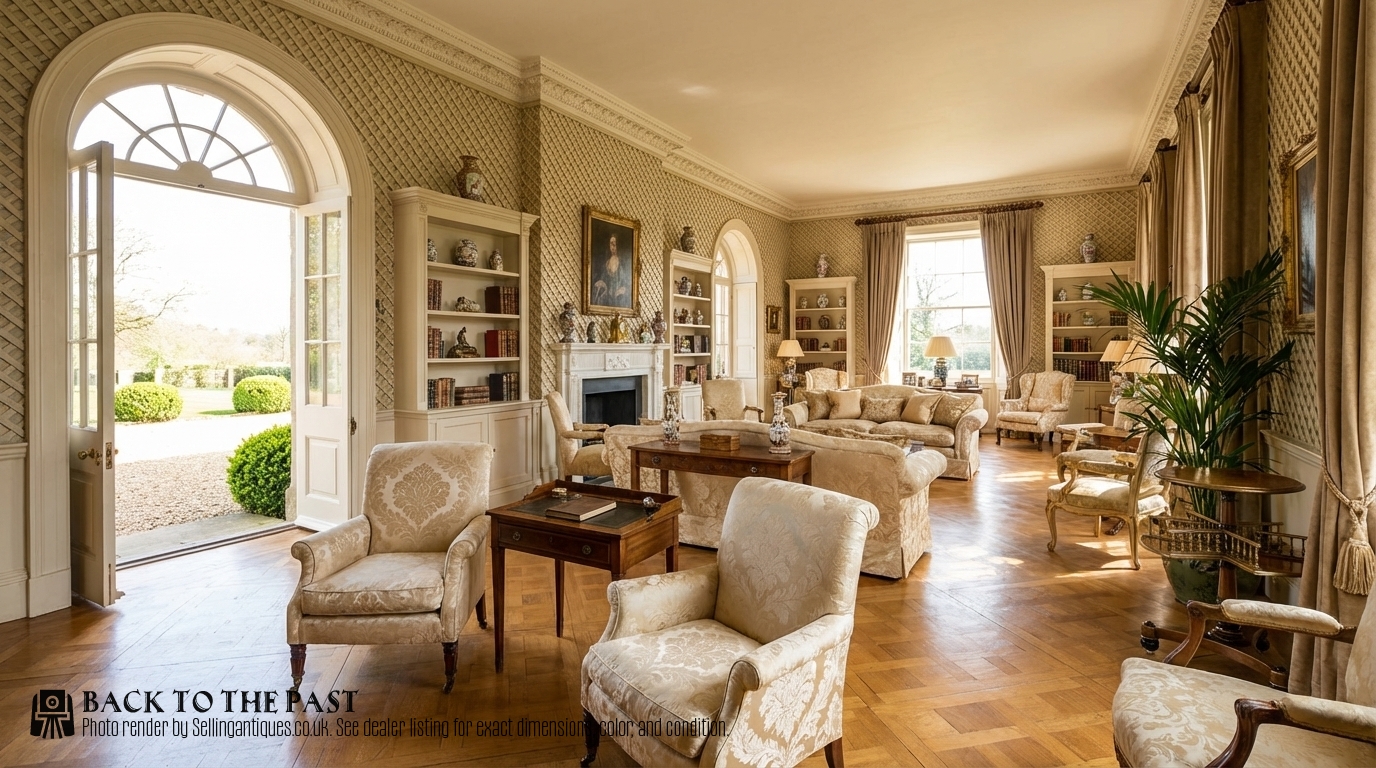
These tables function well in modern interiors due to their compact footprint and practical storage capacity. They fit easily beside sofas or armchairs as lamp tables or book repositories.
The warm tones of mahogany, walnut, and oak blend readily with various decorating schemes while offering a functional surface for everyday use.