

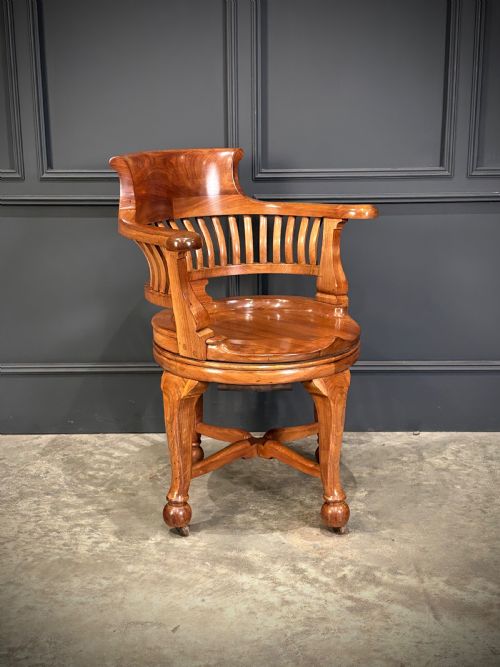


Edwardian Revolving Desk Chair
An edwardian revolving desk chair brings functional timber work and smooth mechanical motion together for the modern study.
Edwardian Revolving Desk Chair
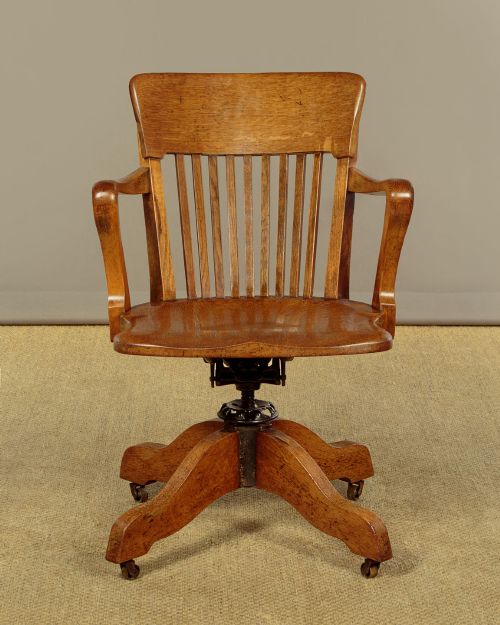
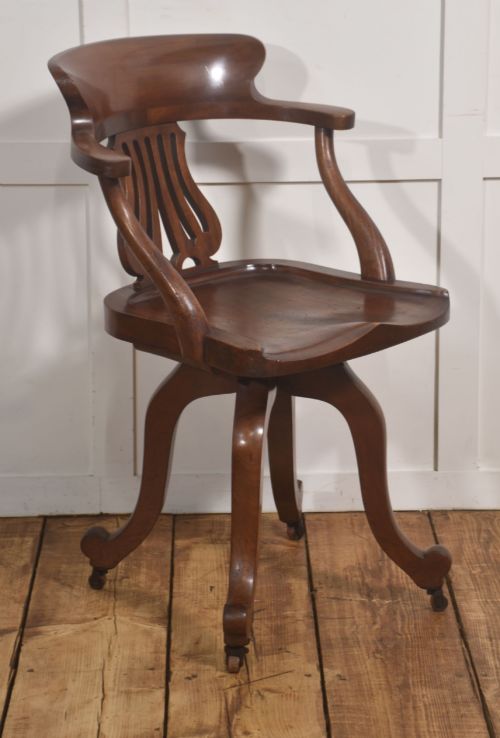
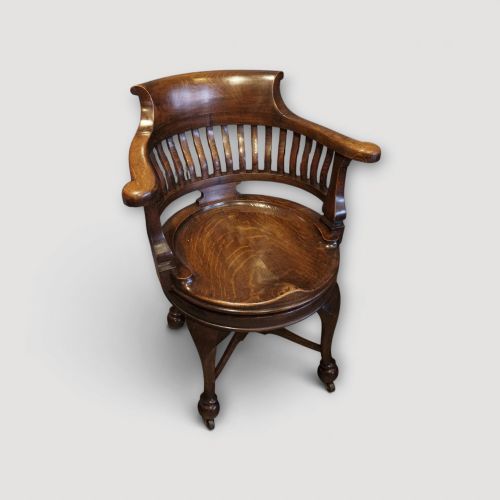
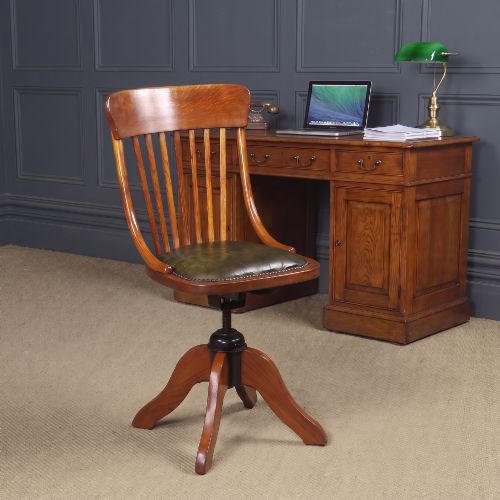
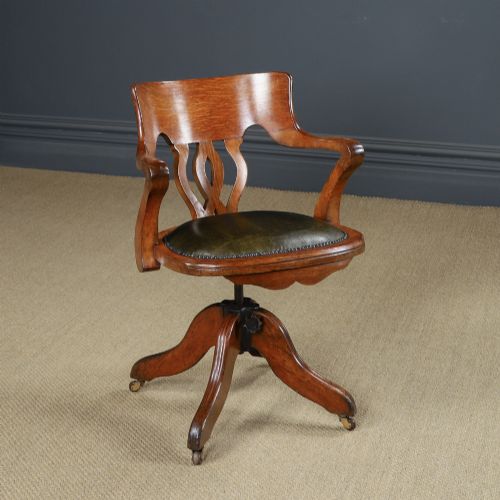
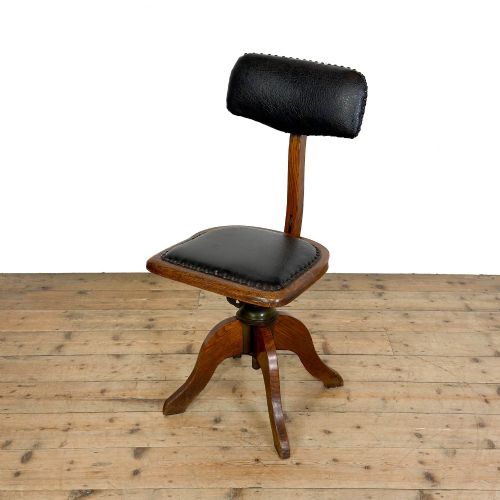
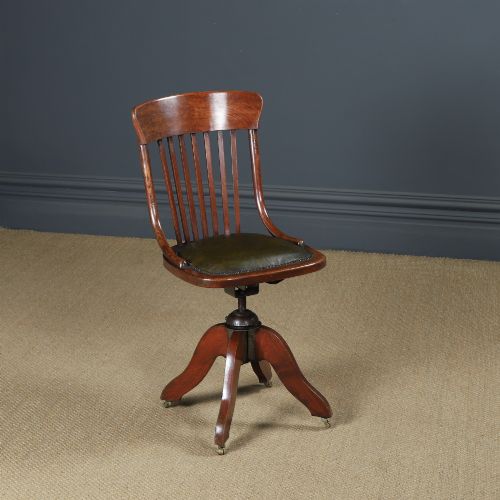
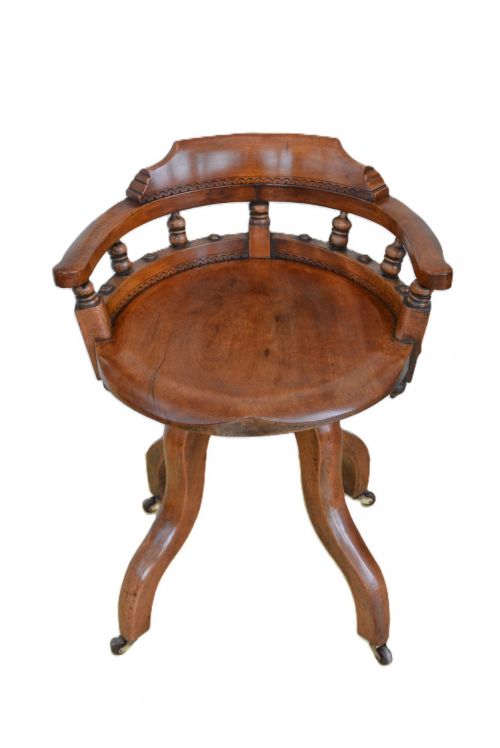
An edwardian revolving desk chair combines the heavy practical demands of a nineteenth century office with domestic comfort. The pieces on this page appear in forms such as desk chairs, armchairs, office chairs, and library chairs.
Most examples emerge from the Edwardian period alongside pieces from the Victorian and George V eras. Construction styles span from simple utilitarian swivel seats to elaborate aesthetic movement and arts and crafts interpretations.
Materials and construction
Timbers such as oak, mahogany, walnut, beech, ash, and satinwood form the solid frames of these seats. Joinery relies on traditional methods to support the stress of constant turning and tilting.
Metal mechanisms including iron, cast iron, and brass provide the revolving and adjustable height functions. Leather upholstery frequently pads the seats, secured by metal tacks.
Edwardian Revolving Desk Chair Retail Price Guide 2026
Typical asking prices for edwardian revolving desk chair among the pieces listed under this phrase on Sellingantiques today, from the lower quarter to the upper quarter. They describe what is for sale here now, not the wider market.
Some models were built heavy enough to survive a storm at sea.
Distinctions in construction and design
The sophistication of the timber carving and the complexity of the swivel and tilt mechanism separate standard office seating from finer domestic library chairs. Detailed woodwork, such as inlaid satinwood or heavily carved frames, indicates a higher grade of manufacture.
The integrity of the central iron or brass spindle and the quality of the leather hide determine the durability of the seat. Original mechanisms that move smoothly without excessive wobble distinguish better preserved pieces.
Kendrick & Jefferson·Edward William Godwin·Shoolbred
The Edwardian Revolving Desk Chair Glossary
- Swivel
- A mechanical fitting beneath the seat that allows the chair to rotate fully on its base. This function became standard for office and library seating in the nineteenth century.
- Rise and fall
- An adjustable height mechanism operated by a central screw thread or threaded column. This allows the user to raise or lower the seating position.
- Tilt mechanism
- An arrangement of springs or pivots that permits the backrest to lean backward slightly under pressure. It provides ergonomic flexibility for the seated worker.
- Bergere
- A type of upholstered armchair featuring woven cane panels on the back or sides. The technique lightens the visual weight of heavy timber frames.
- Aesthetic movement
- A late nineteenth century design style emphasising visual beauty over narrative subject matter. Pieces in this style often display simple geometric lines or oriental influences.
Edwardian Revolving Desk Chair: Frequently Asked Questions
How do I adjust the height on these chairs?
Many models utilise a central threaded column beneath the seat, allowing the user to spin the entire upper section to raise or lower the height.
Other examples rely on metal lever mechanisms or spring-loaded tilt systems introduced during the early twentieth century.
Were these used in homes or offices?
These seats served both commercial offices and private domestic libraries, studies, and ships' cabins. Sturdier models catered to clerks and administrators, while polished mahogany and inlaid variants suited private home writing desks.
Maritime examples often featured weighted or secured bases designed to handle movement at sea.
How do I care for the leather seat?
Leather upholstery requires regular dusting and occasional treatment with suitable leather balms to prevent drying and cracking.
Keeping the hide away from direct sunlight and excessive heat sources preserves the natural flexibility of the material.
How do I distinguish Victorian from Edwardian models?
Victorian models often feature heavier proportions, darker wood finishes, and dense carved ornamentation typical of the nineteenth century. Edwardian pieces tend to display lighter framing, simpler lines, and influences from the arts and crafts movement.
Cross-over periods like the George V era blend these heavy functional forms with restrained decorative details.