


Edwardian Revival Oak Server
An edwardian revival oak server brings solid timber construction and historic styling into a modern dining room or hallway.
Edwardian Revival Oak Server
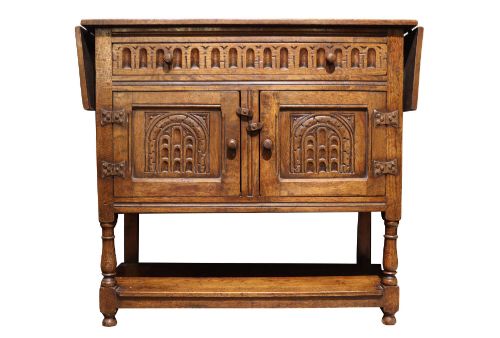
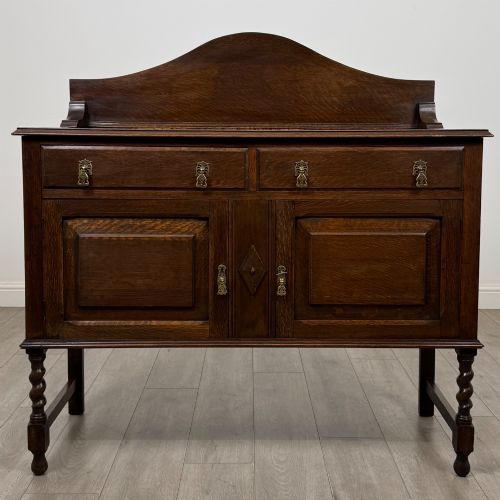
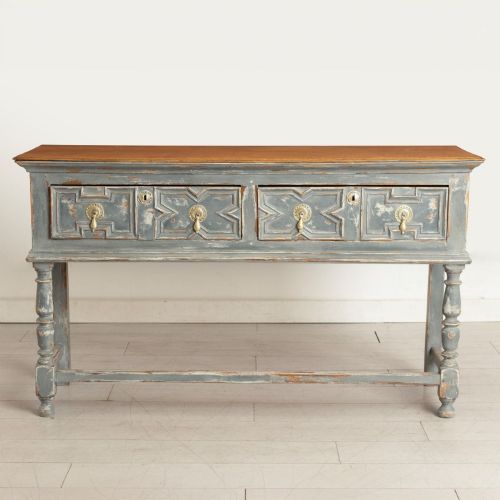
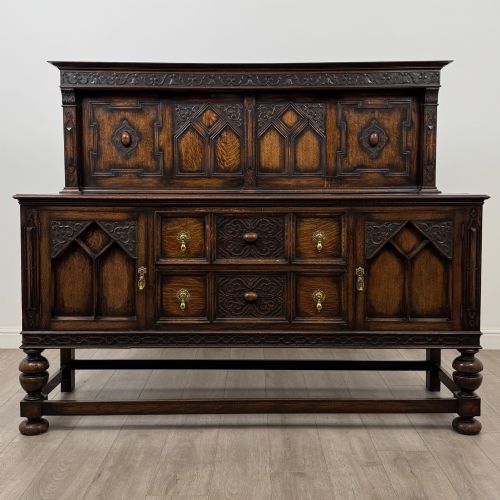
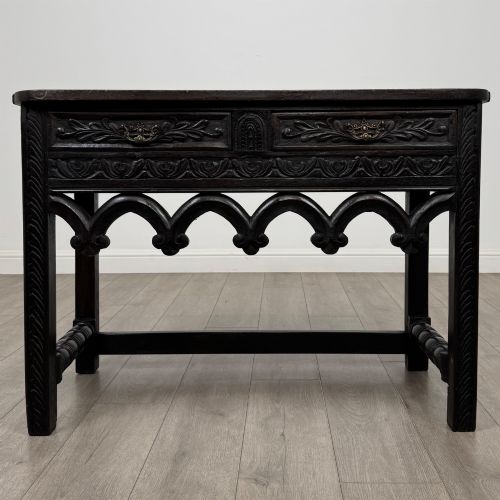
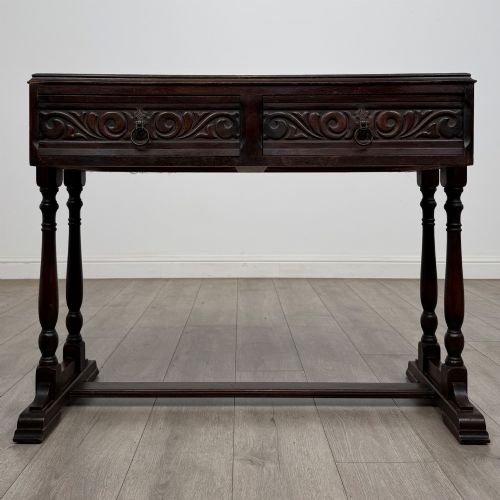
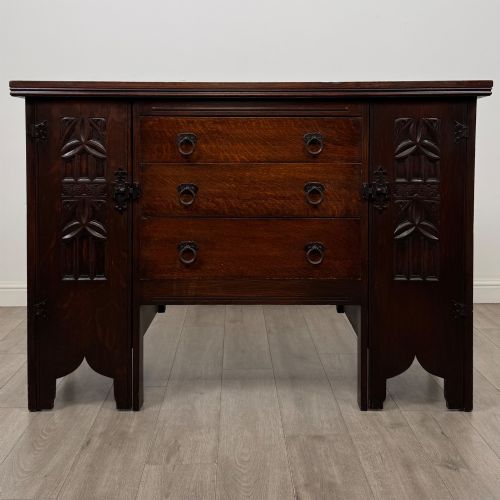
When searching for an edwardian revival oak server, buyers encounter robust storage furniture spanning sideboard forms, dresser bases, and console tables. These pieces draw on earlier design idioms such as Jacobean, Gothic, and Georgian revivals, translating heavy historic proportions into domestic furniture for the home.
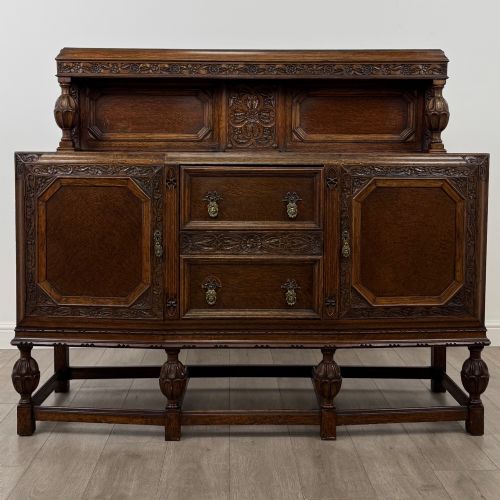
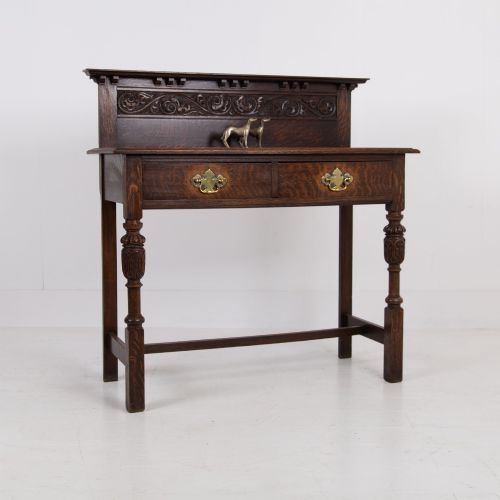
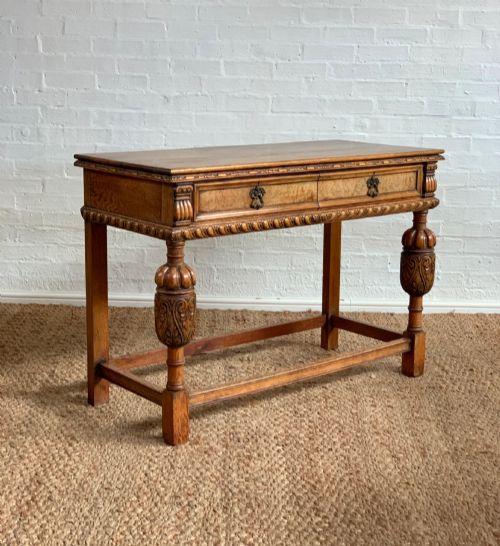
The most common formats on this page include practical sideboards, side tables, and hall tables constructed from oak. They frequently incorporate functional surfaces, drawers, and lower pot boards designed to meet everyday household storage requirements while maintaining a traditional aesthetic.
What varies in quality
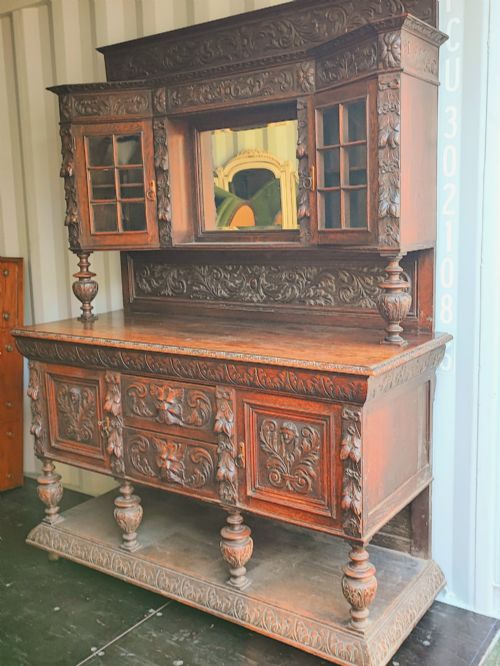
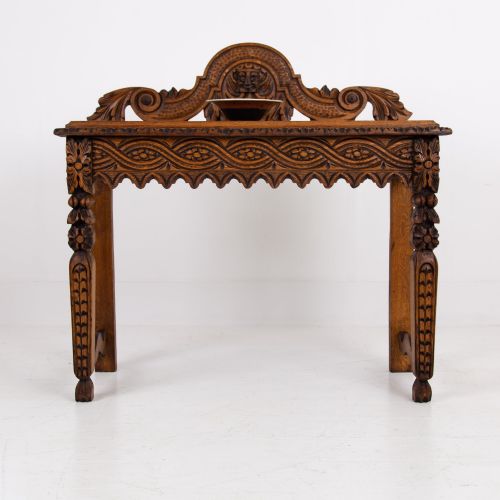
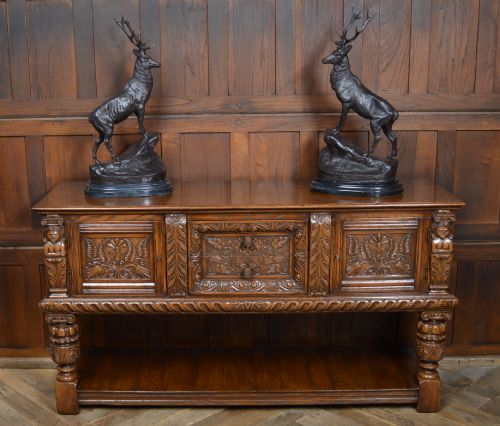
The standard of carving and joinery separates standard production items from finer workshop pieces. Crisp, deeply undercut relief work on motifs such as Green Man carvings or geometric panels demonstrates superior craftsmanship compared to shallow, machine-routed decoration.
Proportion and material selection also define the grade of the piece. Selected quarter-sawn oak timbers displaying strong medullary rays provide greater structural stability and visual depth than plain, utility-grade timber boards.
Edwardian Revival Oak Server Retail Price Guide 2026
Typical asking prices for edwardian revival oak server among the pieces listed under this phrase on Sellingantiques today, from the lower quarter to the upper quarter. They describe what is for sale here now, not the wider market.
Several heavy sideboards conceal fierce carved Green Man faces staring out from the woodwork to ward off bad spirits.
Beresford and Hicks London·Liberty·Leonard Wyburd·Maple and Co
The Edwardian Revival Oak Server Glossary
- Dresser base
- A low wooden storage unit featuring drawers and sometimes an open pot board beneath the main surface. It served as a traditional precursor to the modern sideboard.
- Barley twist
- A decorative turning technique resembling a spiral helix shape. This detail appears frequently on the vertical support legs of tables and sideboards.
- Pot board
- An open lower shelf built into a sideboard or dresser base. Historically, it provided storage for heavy ceramic pots and kitchen vessels.
- Gothic revival
- An architectural and decorative style inspired by medieval design. It incorporates pointed arches, tracery, and heavy carved woodwork into domestic furniture.
- Mirror back
- An upright wooden superstructure containing an integrated mirror plate mounted behind a serving surface. It visually expands the room and reflects light.
Edwardian Revival Oak Server: Frequently Asked Questions
What is an edwardian revival oak server?
An edwardian revival oak server is a heavy timber storage piece designed in the early twentieth century using historical revival styles. These items typically function as sideboards, buffet tables, or console units in dining rooms.
They reflect an interest in traditional craftsmanship, utilising dark oak, barley twist supports, and carved panels to emulate older antique furniture.
How do I use a server in a modern home?
These servers provide practical storage surfaces for dining rooms, hallways, or living spaces. The deep drawers and cupboards accommodate tableware, linens, or household items.
The top surface works well for displaying decorative objects, serving food during gatherings, or holding lamps in an entrance hall.
How do I identify a revival style?
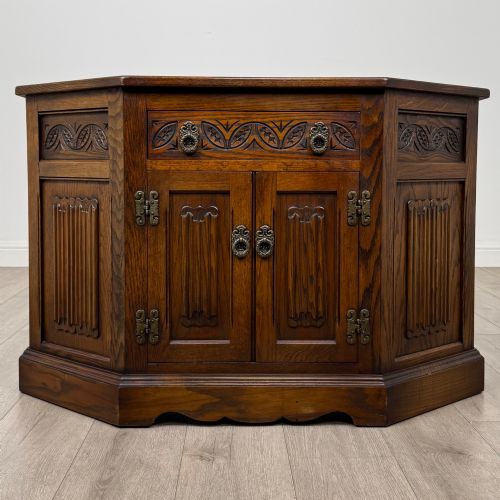
Revival furniture borrows decorative elements from earlier periods such as the Jacobean, Gothic, or Georgian eras. Look for specific motifs like carved strapwork, linenfold panels, or pointed arches.
While the styling mimics centuries past, the construction methods, interior drawer linings, and hardware generally align with early twentieth-century manufacturing standards.
What wood is used in these servers?
Oak serves as the primary material for these pieces, chosen for its durability and strong grain pattern. Workshops sometimes combined solid oak with oak veneers on larger flat panels to prevent warping.
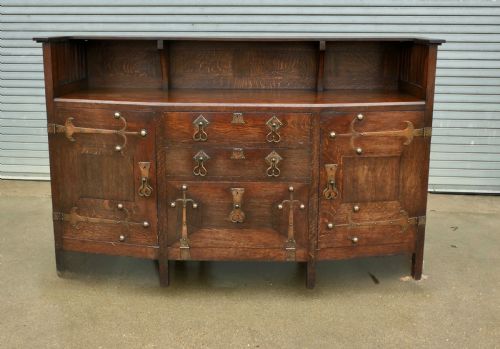
Hardware components such as hinges, handles, and pulls are typically made from cast brass, iron, or copper.