



Edwardian Queen Anne Bureau
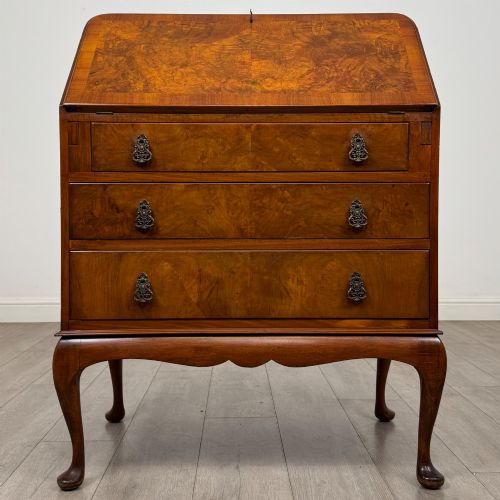
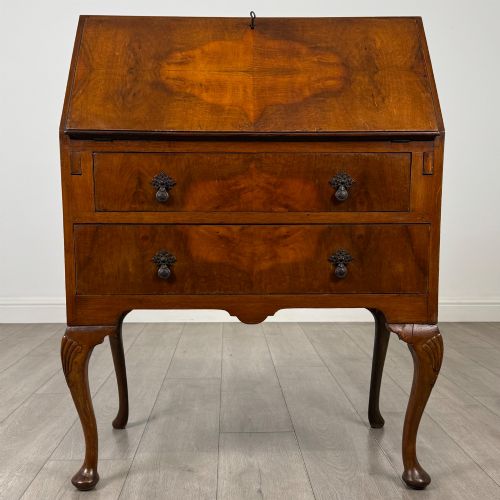
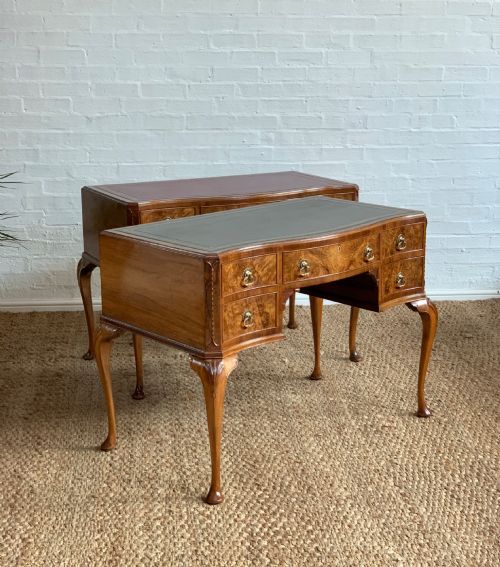
An edwardian queen anne bureau brings together graceful cabriole legs and fitted writing compartments in rich walnut or mahogany.
Edwardian Queen Anne Bureau
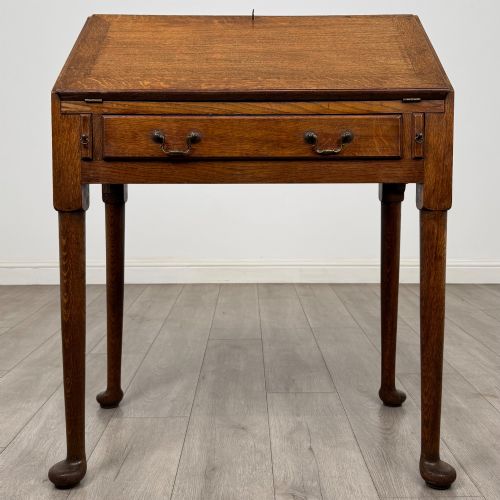
The edwardian queen anne bureau is a practical writing cabinet drawing on early eighteenth-century forms, typically combining a sloping fall-front desk with internal pigeonholes and drawers.
Most pieces seen here belong to the Edwardian period or the early twentieth century, though examples stretch from the late nineteenth century to the 1930s in styles such as Queen Anne Revival.
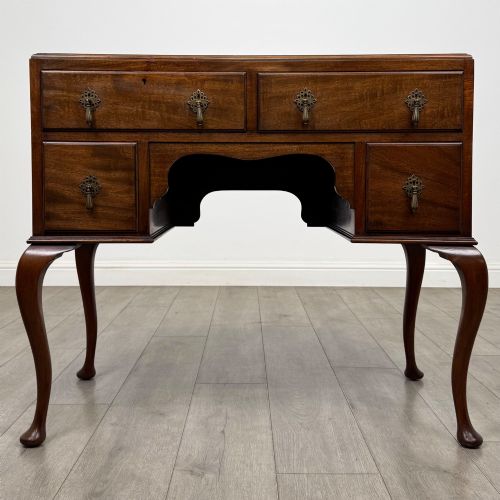
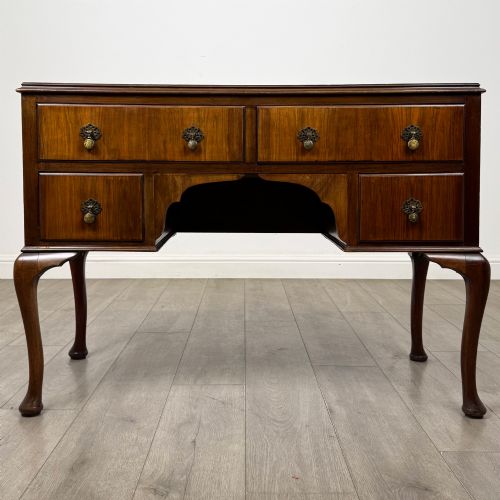
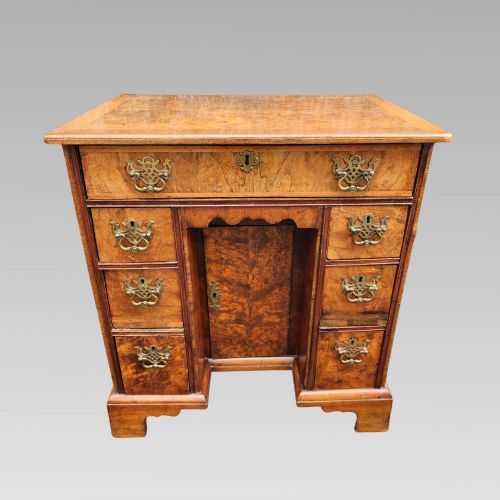
Forms range from compact oak and mahogany writing desks to elaborate burr walnut bureaux with marquetry inlay, alongside occasional kneehole desks and dressing table mirrors.
How They Were Made
Cabinetmakers utilised timber veneers, most notably figured walnut and burr walnut, applied over solid carcases of oak, mahogany, or elm.
Surface decoration frequently relied on marquetry inlay, while brass handles, escutcheons, and hinges provided functional and decorative hardware.
Listings demonstrate a strong preference for walnut and burr walnut veneers, supplemented by oak, mahogany, and elm across Edwardian and early twentieth-century examples.
What Varies in Quality
The selection of timber grain largely determines visual merit, with rich burr walnut and figured walnut veneer commanding greater presence than plain oak or standard mahogany.
Construction refinement shows in the execution of internal stationery fittings, secret compartments, and the smooth operation of the fall-front writing surface.
Wylie & Lochhead Glasgow·maples of London
The Edwardian Queen Anne Bureau Glossary
- Bureau
- A writing desk featuring a sloping lid that opens to reveal small drawers and pigeonholes. It often sits upon a chest of drawers or a stand.
- Burr walnut
- A prized timber veneer showing swirling, knotty grain patterns formed from tree growths. It was favoured for high-status cabinet work.
- Cabriole leg
- A furniture leg that curves outward at the knee and tapers inward at the ankle, ending in a pad or foot. This form defines the Queen Anne aesthetic.
- Fall-front
- The hinged writing flap of a desk that drops down into a horizontal position for writing. It conceals the internal compartments when closed.
- Marquetry
- Decorative veneer work forming pictorial or geometric patterns using various coloured woods. It creates elaborate surface enrichment on fine furniture.
Edwardian Queen Anne Bureau: Frequently Asked Questions
What is an edwardian queen anne bureau?
An edwardian queen anne bureau is a writing desk with a sloping fall-front lid, built in the early twentieth century using eighteenth-century revival design elements.
These pieces typically feature cabriole legs and fitted interior compartments for correspondence.
How do I date an edwardian queen anne bureau?
Dating relies on timber characteristics, construction methods, and secondary woods visible inside the drawers and carcase.
While the style mimics the early eighteenth century, Edwardian versions generally date from around 1900 to 1910, with some extending into the 1920s and 1930s.
Where were these bureaux placed in a home?
Historically, a bureau served as a private writing space in a drawing room, library, or bedroom for managing personal correspondence.
Today, they function well in home studies or living spaces where surface area and concealed storage are both required.
What woods are typical for these desks?
Walnut and burr walnut dominate the selection, often chosen for their rich grain and decorative veneer potential.
Mahogany, oak, and elm also appear frequently across different workshops and regional traditions.