




Edwardian Platinum Solitaire Ring
When searching for an edwardian platinum solitaire ring, collectors find delicate engagement rings dominated by old cut diamonds set in bright white metal.
Edwardian Platinum Solitaire Ring
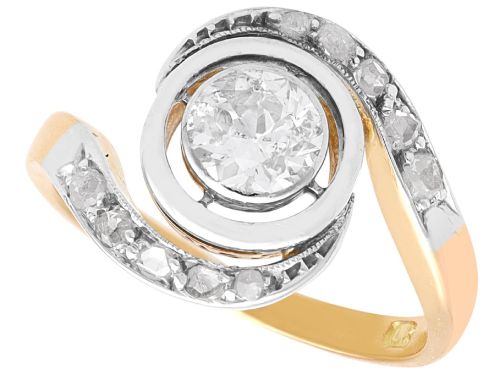
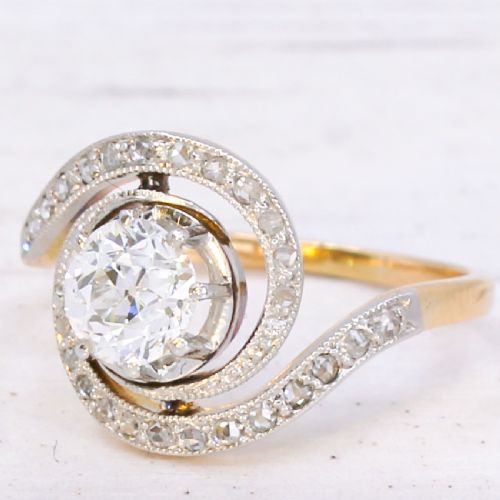
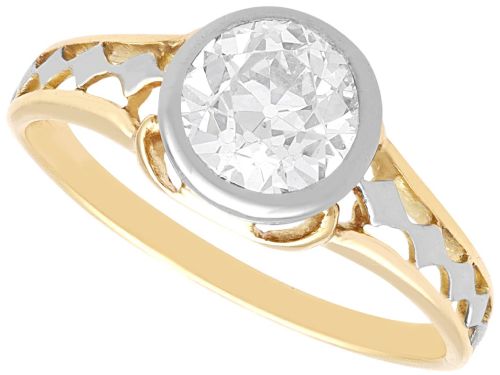
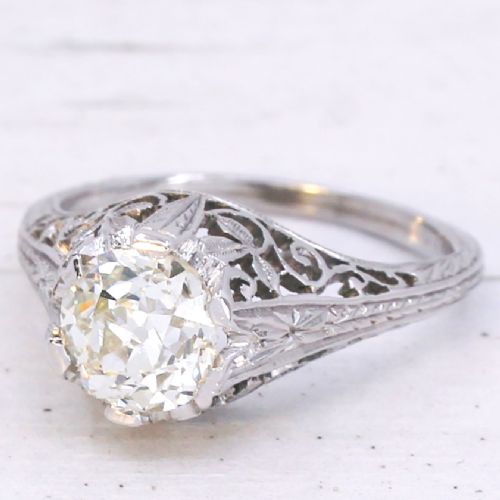
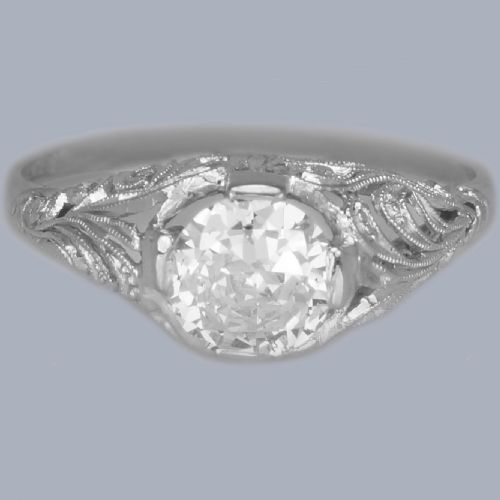
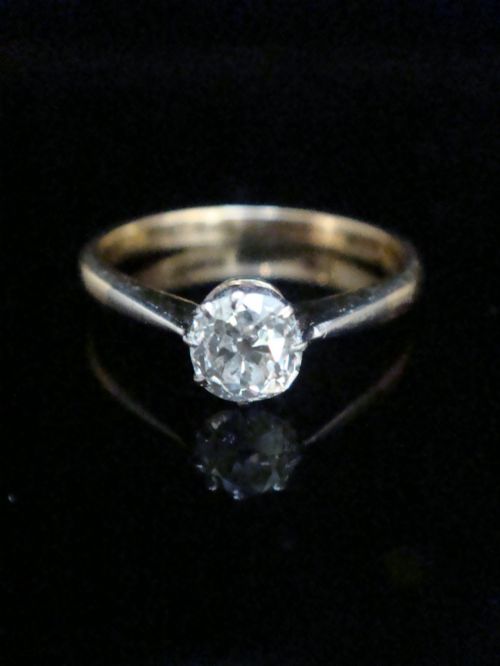
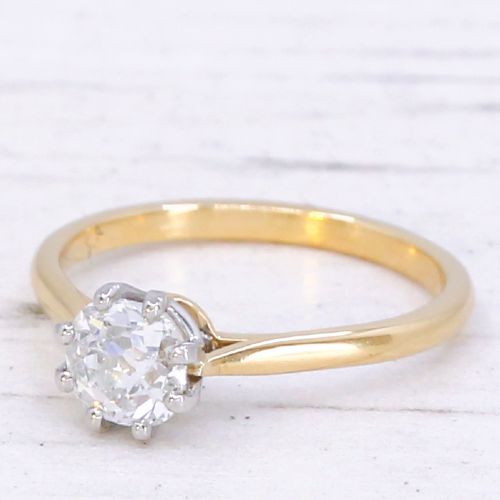
An edwardian platinum solitaire ring combines early twentieth-century design with a single central gemstone, usually an old European cut or old mine cut diamond. Most examples encountered here pair this bright white precious metal with either solid platinum or an eighteen-carat yellow or white gold shank.
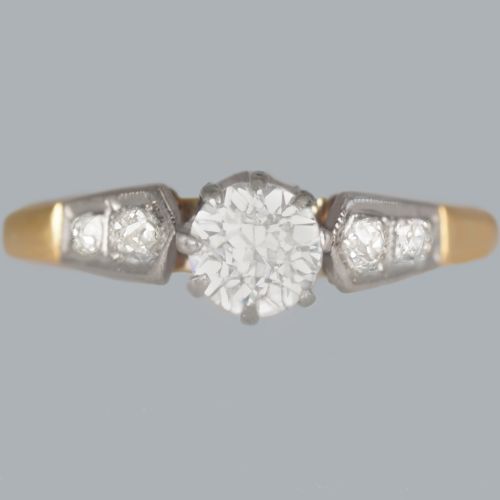
The aesthetic bridges the late Victorian period and the geometric geometry of Art Deco. While traditional solitaire engagement rings dominate, variations feature natural blister pearls, aquamarines, or small diamond shoulders flanking the main stone.
Origins trace from the Edwardian era through the nineteen-twenties and nineteen-thirties, reflecting stylistic shifts toward lighter, more intricate metalwork. The resulting pieces present a distinct profile defined by hand-finished settings and substantial central stones.
Materials and Construction
Platinum emerged as the preferred medium for fine jewellery during this period due to its strength and malleability, allowing artisans to create exceptionally fine claws and millegrain edges without sacrificing security.
Many mountings combine platinum heads with eighteen-carat gold bands, utilising the contrasting metals to accentuate the brilliance of the stones. Central diamonds are typically hand-cut with deep pavilions and small tables, producing characteristic broad flashes of light under low illumination.
Edwardian Platinum Solitaire Ring Retail Price Guide 2026
Typical asking prices for edwardian platinum solitaire ring among the pieces listed under this phrase on Sellingantiques today, from the lower quarter to the upper quarter. They describe what is for sale here now, not the wider market.
Several rings sneak tiny diamond chips into the shoulders, ensuring your ring sparkles even when viewed from the side.
Factors That Distinguish Examples
The proportion and symmetry of the central hand-cut diamond heavily influence the standing of any given piece, alongside the precision of the delicate millegrain beadwork bordering the settings. Original integrity matters greatly, with untouched settings commanding more attention than those showing modern re-tipping or shank replacement.
The integration of the platinum head to the underlying metal band demonstrates the skill of the original bench worker, where seamless transitions indicate higher workshop standards.
The Edwardian Platinum Solitaire Ring Glossary
- Old European cut
- A brilliant diamond cut popular from the late nineteenth century through the nineteen-thirties, characterised by a small table, high crown, and large open culet. These stones were cut by hand to maximise sparkle under candlelight.
- Millegrain
- A decorative technique featuring a row of tiny, raised metal beads along the edges of a setting. This soft texture softens the transition between metal and stone.
- Solitaire
- A ring designed to showcase a single primary gemstone. In these collections, that centrepiece is almost universally a diamond.
- Old mine cut
- An earlier cushion-shaped diamond cut with a near-square girdle and high crown. This precursor to the modern brilliant cut displays distinct hand-faceted proportions.
Edwardian Platinum Solitaire Ring: Frequently Asked Questions
How do I care for my ring?
Clean the piece gently using warm soapy water and a soft brush to remove daily oils from beneath the diamond. Avoid harsh chemical dips that might harm softer supporting stones or pearls.
Store the ring separately in a fabric-lined box to prevent the platinum from scratching softer metals or being damaged by harder gemstones.
Can these rings be resized?
Most rings featuring a combination of gold and platinum can be adjusted by a skilled jeweller experienced in antique pieces. The process requires caution to preserve any delicate millegrain work near the shoulders.
Consult a specialist who understands period construction methods to ensure the structural integrity of the gallery remains undisturbed.
What defines an Edwardian mounting?
Edwardian mountings rely on lightweight platinum to create airy, lace-like frameworks inspired by garlands and ribbons. This technique allowed jewellers to minimise visible metal while securely holding prominent stones.
Characteristics include knife-edge shanks, delicate pierced galleries, and fine bead-set accents that distinguish them from later, heavier geometric styles.
Are these stones certified?
Some pieces include independent laboratory reports detailing the exact colour, clarity, and carat weight of the diamond. Listings without formal certificates rely on expert estimation for stone grading.
Buyers should examine individual descriptions closely to see whether a professional gemological report accompanies the piece.