

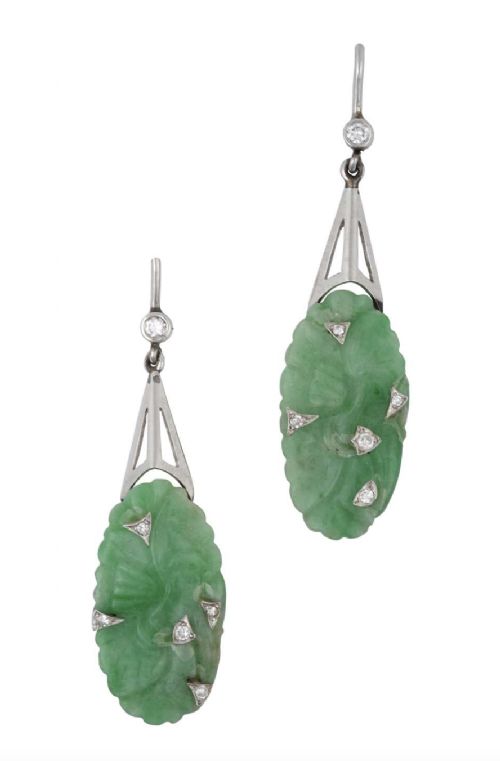


Edwardian Platinum Diamond Drops
Edwardian platinum diamond drops bring the delicate, needlework-inspired grace of early twentieth-century jewellery straight to the earlobe or neckline.
Edwardian Platinum Diamond Drops
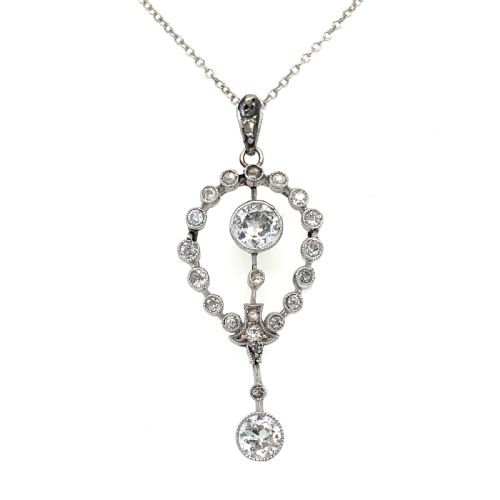
When searching for edwardian platinum diamond drops, buyers encounter a selection of earrings, pendants, and necklaces spanning the Edwardian, Art Nouveau, Victorian, and Art Deco periods. These pieces frequently pair diamonds with platinum alongside gemstones such as sapphires, aquamarines, pearls, jadeite, and opals.
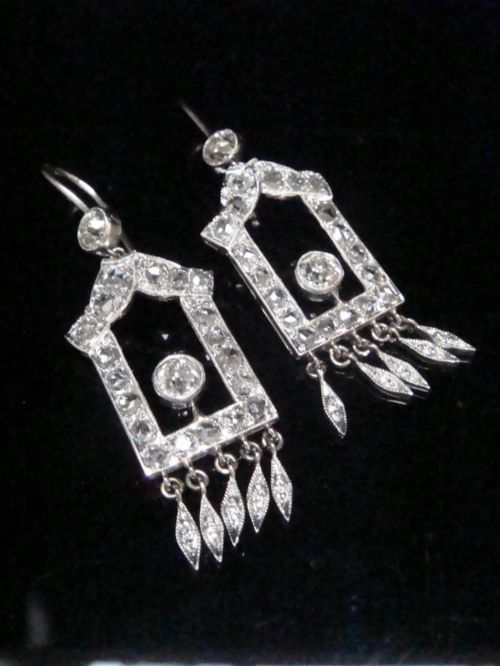
Earrings and drop pendants dominate the offerings on this page, appearing alongside fringe necklaces and negligee designs. The work originates predominantly from the Edwardian era and the 1920s, showing characteristic light openwork settings.
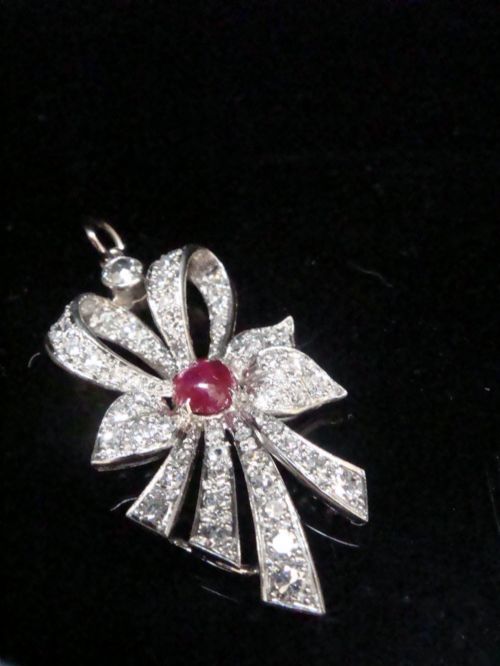
Makers and workshops of the period utilise the strength of platinum to execute garland styles, bows, and geometric clusters. Buyers find both delicate drop earrings with old cut diamonds and substantial fringe necklaces set in platinum and 18ct white or yellow gold.
How they were made
Craftsmen built these items using platinum combined with gold, deploying old cut, transitional, and rose cut diamonds to catch the candle or gaslight. The introduction of platinum allowed jewellers to forge exceptionally fine, pierced metalwork that held stones securely with minimal visible framing.
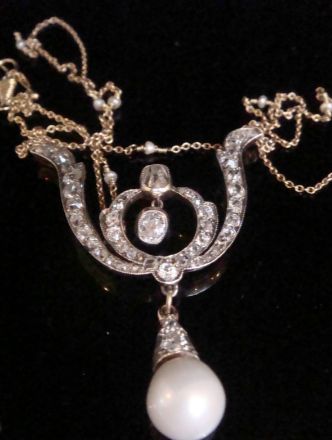
Pearls, rubies, emeralds, jadeite, and sapphires were integrated into the designs alongside central diamond arrangements. Workshops also utilised 18ct white gold, 18ct yellow gold, and 15ct yellow gold as supporting or alternative structural metals in pendants and necklaces.
Listings feature platinum, gold, and white gold settings housing diamonds, aquamarines, jadeite, and pearls across Edwardian and Art Deco periods.
What varies in quality
The refinement of the piercing and the intricacy of the metalwork set the finer pieces apart from standard production. Pierced platinum galleries that mimic lace or ribbon require exceptional bench skill to execute without rigidity.
The choice and matching of accompanying gems, such as natural saltwater pearls, carved jadeite, or Ceylon sapphires, dictate the upper tier of the range. Master jewellers balanced high carat weights of diamonds with stones of matching provenance and depth of colour.
Eduard Foehr
The Edwardian Platinum Diamond Drops Glossary
- Old cut
- A diamond cut popular before modern faceting standards, featuring a smaller table and higher crown that produces a softer, candlelit sparkle. These stones are typical of Edwardian and Art Deco settings.
- Negligee pendant
- A necklace style featuring two unequal drops suspended from a central motif, creating an asymmetrical and elongated line over the chest. This form gained popularity during the Edwardian period.
- Fringe necklace
- A necklace featuring vertical drops or tassels suspended along the lower edge of the chain or collar. These pieces often showcase graduated diamonds and platinum fringe work.
- Transitional cut
- A diamond facet style bridging old cut stones and modern brilliant cuts, characteristic of pieces made around the 1920s. It displays increased brilliance while retaining deep proportions.
- Rose cut
- An antique diamond cut featuring a flat base and a domed crown of triangular facets resembling an unopened rosebud. This cut imparts a subtle, glassy shimmer.
Edwardian Platinum Diamond Drops: Frequently Asked Questions
What defines edwardian platinum diamond drops?
These items combine durable platinum wirework and settings with old cut diamonds, often fashioned into earrings or suspended pendants. The aesthetic draws on garland motifs, bows, and symmetrical floral arrangements.
Craftsmen used the strength of platinum to reduce the visibility of metal, allowing light to pass through the diamonds from multiple angles. This technical shift distinguishes them from heavier Victorian designs.
How do I wear an antique pendant necklace?
Antique pendants and drop necklaces suit necklines that leave the collarbone and upper chest bare, such as V-necks or evening gowns. Many hang from slender chains or incorporate original fitted bales.
Care should be taken with delicate fringe or negligee styles to prevent catching on fine fabrics or knitwear during daily wear.
How can I tell an Edwardian piece from Art Deco?
Edwardian designs rely on organic curves, bows, garlands, and lace-like platinum piercing inspired by the eighteenth century. Art Deco pieces introduce strict geometry, clean lines, and symmetrical abstract patterns.
While platinum remains common to both, the later 1920s style favours bold colour contrasts and heavier stone arrangements over airy floral grace.
What gemstones appear alongside diamonds here?
Sapphires, aquamarines, pearls, jadeite, opals, rubies, and emeralds frequently accompany diamonds in these drops and pendants. Ceylon sapphires and natural saltwater pearls add historical depth to the pieces.
These coloured stones are typically secured in open-backed platinum or gold settings that allow light to illuminate their natural hues.