
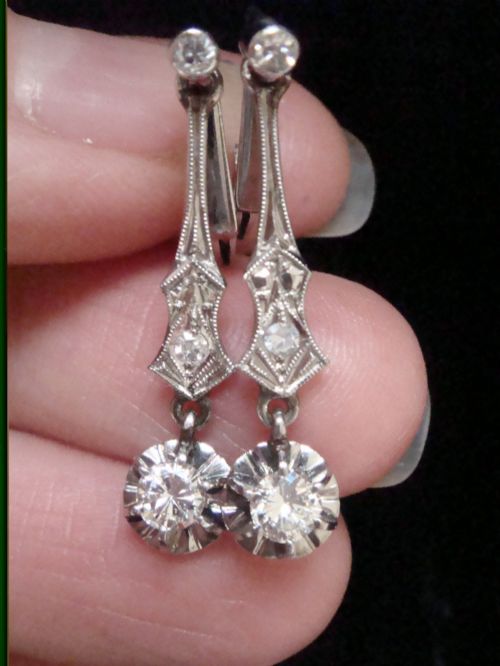


Antique French Diamond Earrings
Antique french diamond earrings bring timeless elegance, showcasing exquisite old cut diamonds set in gold and platinum.
Antique French Diamond Earrings
When you search for antique french diamond earrings, you encounter delicate drop earrings, studs, and dormeuses originating from periods such as the Georgian, Victorian, Edwardian, and Art Deco eras. These pieces typically combine yellow gold, white gold, platinum, and silver to showcase brilliant old cut, rose cut, and transitional cut diamonds.
How they were made
Goldsmiths utilised a combination of 18ct yellow gold, 14kt yellow and white gold, platinum, and silver to fabricate these mounts. Precious metals were often paired strategically, such as setting diamonds in platinum or silver atop yellow gold backs to enhance the brilliance of the stones.
Gemstones were hand-cut into old cuts, rose cuts, and French cuts, then secured using traditional claw and collet settings. Natural pearls and sapphires occasionally accompanied the diamonds, integrated into multi-stone clover and drop configurations.
What varies in quality
The standard of lapidary work and stone selection dictates the upper tier of these pieces, where older hand-cut diamonds display superior scintillation and symmetry. Metalwork precision also separates finer examples, visible in the delicacy of platinum claw settings and the seamless integration of mixed metals.
Design complexity marks another distinction, ranging from simple rose cut stud earrings to multi-tiered drop earrings incorporating sapphires and natural pearls. Pieces retaining their original structural integrity and uncompromised metal weight consistently command greater appreciation.
The Antique French Diamond Earrings Glossary
- Dormeuses
- French sleeping earrings designed with secure fastenings so the wearer could rest comfortably without removing them. They typically feature small drop stones suspended beneath a close-fitting hook.
- Old Cut
- A precursor to the modern brilliant cut, shaped by hand with fewer facets, a smaller table, and a higher crown. This historic cutting style produces a distinct, softer glow under candlelight.
- Rose Cut
- An antique stone shape featuring a flat base and a domed crown faceted with triangular planes resembling an unopened rosebud. It allows light to pass through with a subtle shimmer.
- Transitional Cut
- A diamond facet arrangement bridging the old European cut and the modern round brilliant, appearing during the early twentieth century. It retains deep proportions while introducing more uniform facet symmetry.
- Platinum
- A dense, durable white metal utilised extensively in fine jewellery during the Edwardian and Art Deco eras. Its strength permitted exceptionally fine wirework and secure claw settings for diamonds.
Antique French Diamond Earrings: Frequently Asked Questions
Can I wear antique french diamond earrings daily?
These historic pieces tolerate regular wear provided you handle them with care and store them safely. Removing them before sleeping or physical activity protects the delicate gold and platinum settings.
Old cut diamonds and precious metals are robust, but vintage mountings benefit from occasional checks by a specialist jeweller to ensure the stones remain secure.
What is a dormeuse earring?
Dormeuses are traditional French earrings originally created for comfortable overnight wear. They feature a hinged or lever-back wire that fastens securely behind the earlobe.
Most examples dangle small old cut diamonds close to the ear, combining practicality with understated elegance.
How do I identify Edwardian diamond earrings?
Edwardian pieces often utilise platinum-topped gold to maximise the white brilliance surrounding old cut diamonds. Look for intricate, lace-like openwork motifs such as clovers and symmetrical drops.
French hallmarks stamped on the metal surface frequently confirm the origin and gold purity of the piece.
Are these earrings made with modern diamonds?
The stones in these pieces are historically cut diamonds, including old cuts, rose cuts, and transitional cuts. Each diamond was shaped by hand long before modern grading standards existed.
This gives every earring a unique optical character shaped by past lapidary techniques.