


Edwardian Period Seating
Edwardian period seating offers refined mahogany dining chairs, inlaid salon seats and upholstered armchairs crafted to bring domestic elegance to any room.
Edwardian Period Seating
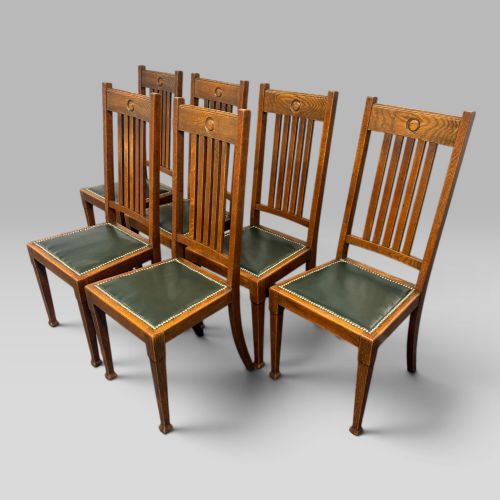
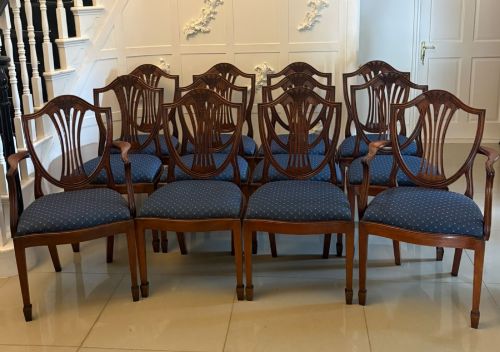
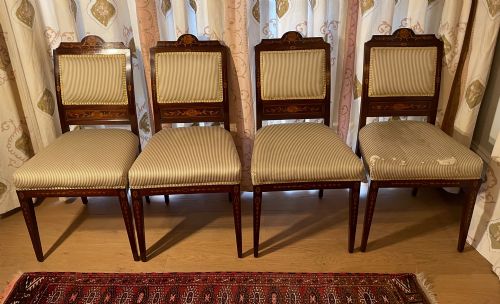
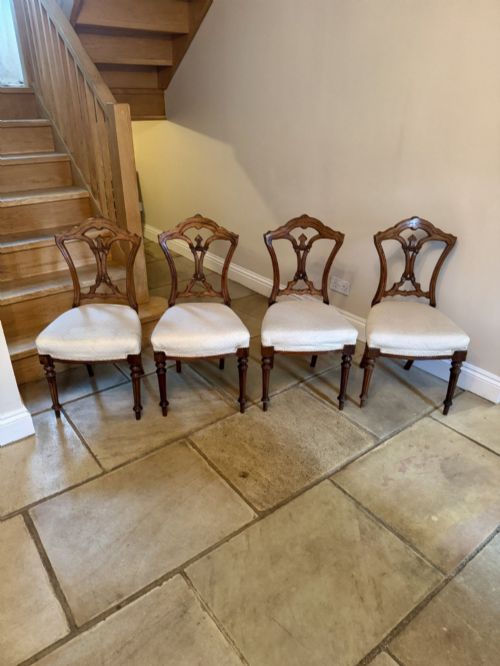
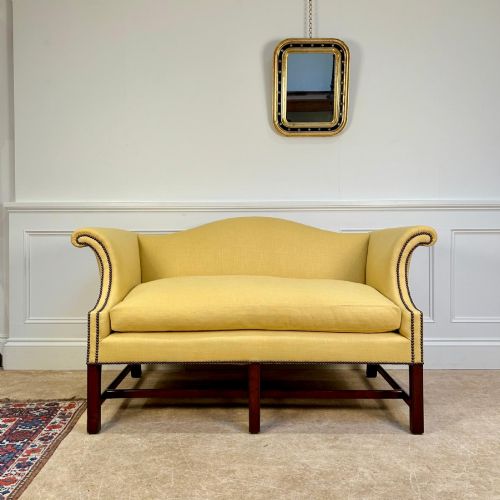
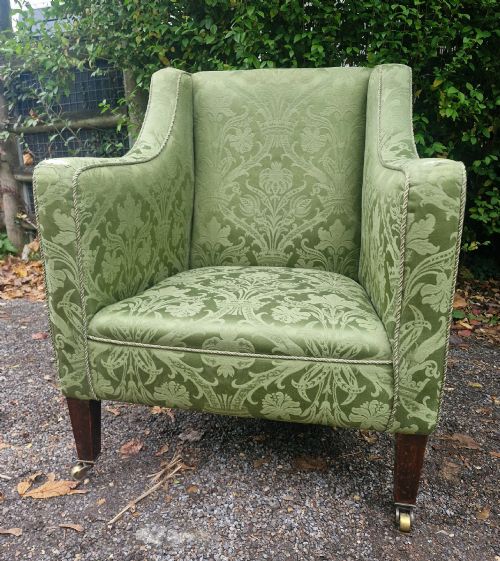
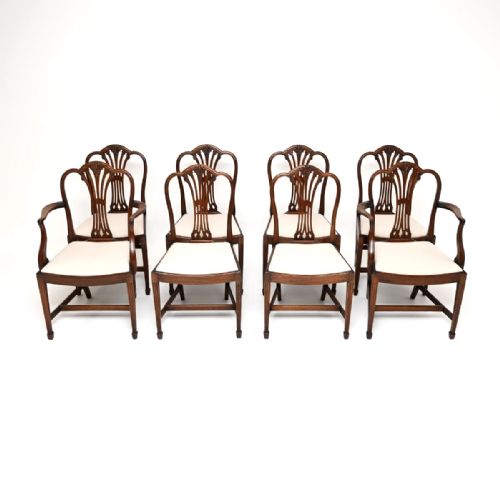
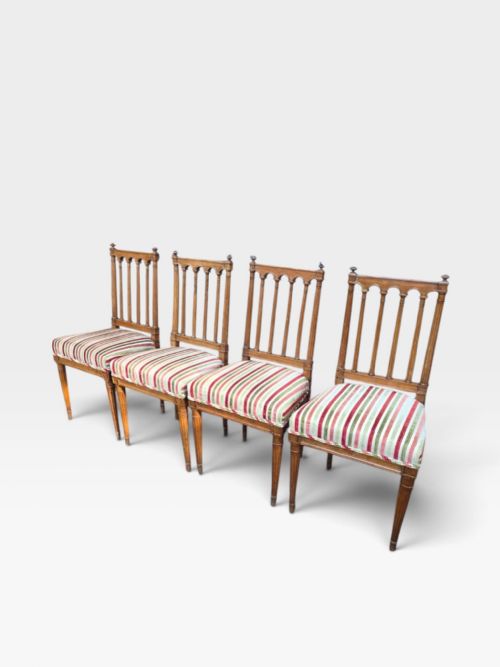
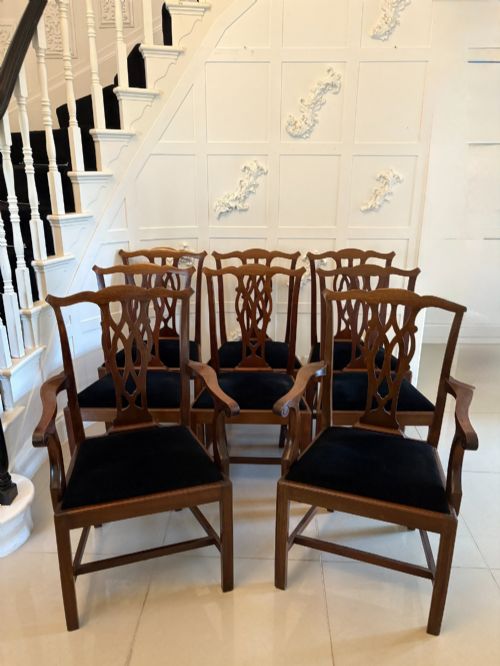
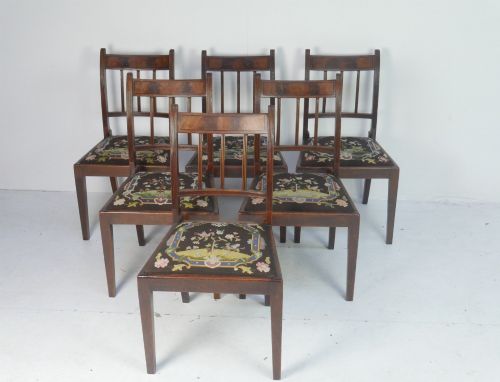
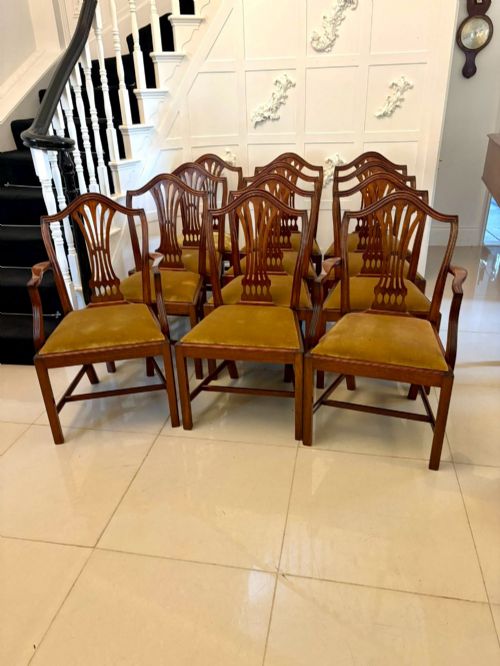
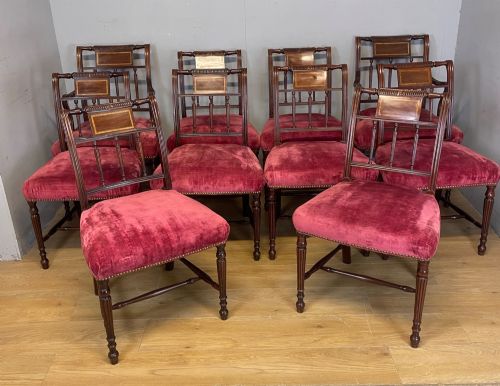
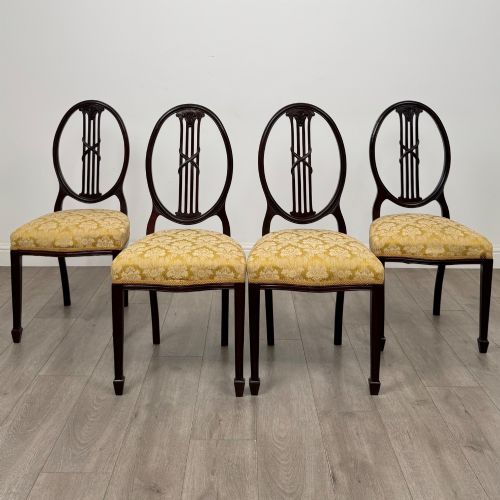
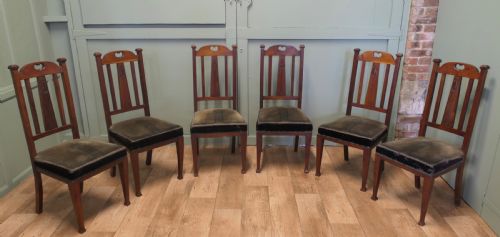
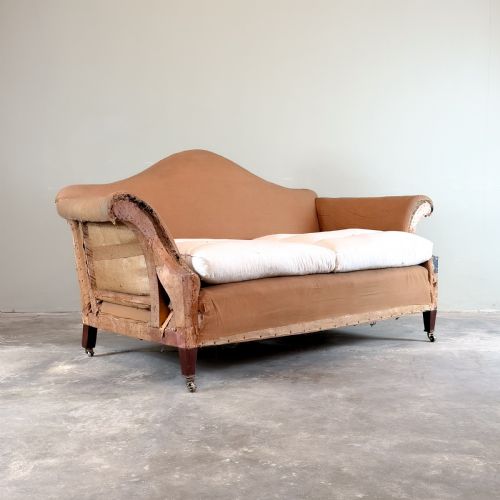
Edwardian period seating encompasses a wide variety of chairs, armchairs, and settees originating from the early twentieth century alongside earlier revival designs. Dining chairs and salon chairs dominate the selection, frequently appearing in matched sets of four, six, or eight pieces.
Makers of this era drew heavily on eighteenth-century precedents, producing substantial numbers of Sheraton, Hepplewhite, and Chippendale revival pieces. Alongside formal dining furniture, the listings include sturdy oak arts and crafts chairs, comfortable library armchairs, and occasional seating upholstered in modern fabrics.
Materials and Construction Techniques
Mahogany and oak serve as the primary timber foundations, chosen for their durability and capacity to take fine carved details or warm polished finishes. Walnut and fruitwoods appear less frequently, while cane and brass fittings provide structural contrast and decorative accent.
Joinery relies on traditional methods such as mortise and tenon joints, complemented by delicate string inlay, painted decoration, or carved shield backs. Upholstered seats frequently employ period textiles, leather, or contemporary replacement fabrics mounted over sprung or webbed frames.
Edwardian Period Seating Retail Price Guide 2026
Typical asking prices for edwardian period seating among the pieces listed under this phrase on Sellingantiques today, from the lower quarter to the upper quarter. They describe what is for sale here now, not the wider market.
An unexpected oil painting of a chirpy lady with her dog appears among the seating.
Distinctions in Quality
The standard of timber selection and depth of carving separate exceptional examples from standard production pieces. Superior sets display consistent grain matching across multiple chairs and crisp hand-carved motifs rather than shallow or purely stamped ornamentation.
Structural integrity and the preservation of original components dictate long-term value. Pieces that retain their original show wood, stable joinery, and appropriate upholstery methods command greater attention from discerning collectors.
Charles Tozer
The Edwardian Period Seating Glossary
- Shield Back
- A chair back shaped like an upturned heraldic shield, popular in Hepplewhite designs. This form offers a slender, graceful silhouette while maintaining structural strength through curved timber framing.
- String Inlay
- A narrow line of contrasting wood veneer inserted into a shallow channel on a flat surface. Cabinetmakers utilised this technique to outline chair splats and table edges.
- Carver
- An armchair designed to match a set of dining chairs, traditionally placed at the head of the table. These pieces incorporate supportive armrests while sharing the decorative vocabulary of the smaller side chairs.
- Cane
- Strips of woven rattan used to form open-work panels for chair backs and seats. This material provides lightweight resilience and visual transparency.
- Salon Chair
- A decorative, lightweight occasional chair intended for drawing rooms rather than heavy daily dining use. These pieces often feature painted frames, upholstered seats, and delicate proportions.
Edwardian Period Seating: Frequently Asked Questions
How do I spot a true Edwardian chair?
Look for the characteristic lightness of proportion combined with mahogany timbers and delicate string inlay work. Many pieces draw directly on eighteenth-century revival styles while maintaining early twentieth-century construction methods.
Examine the underside and joints for traditional craftsmanship, such as hand-cut tenons and mature timber patination. Subtle details like tapered legs and subtle marquetry help separate Edwardian production from later reproductions.
Can I use antique dining chairs daily?
Solid mahogany and oak dining chairs from this period were built for robust domestic service and remain entirely suitable for regular daily use. Ensure the frame joints remain tight and secure before subjecting them to heavy loads.
Periodic checks of the glue blocks and stretcher joints will maintain their stability over decades of meals. Professional tightening by a restorer prevents minor looseness from developing into structural damage.
What is a Sheraton revival chair?
A Sheraton revival chair is an early twentieth-century interpretation of furniture designs originally popularized by Thomas Sheraton in the late eighteenth century. These pieces typically feature symmetrical rectangular or shield-shaped backs with straight tapered legs.
Makers of the Edwardian period prized these designs for their refined elegance and compatibility with formal dining spaces. They frequently incorporate satinwood banding and fine painted floral motifs.