
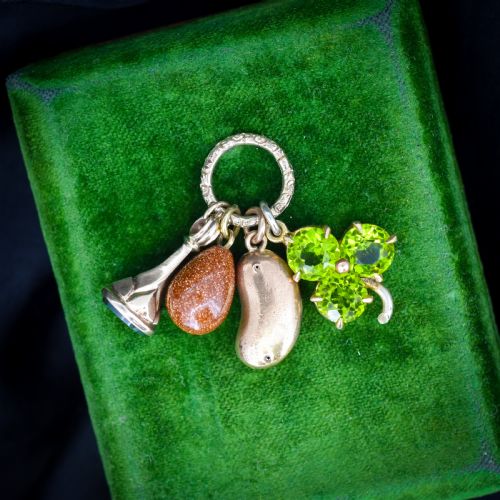


Edwardian Peridot Pendant
An edwardian peridot pendant brings together vivid green olivine stones and delicate pearl work, offering an understated elegance collectors prize.
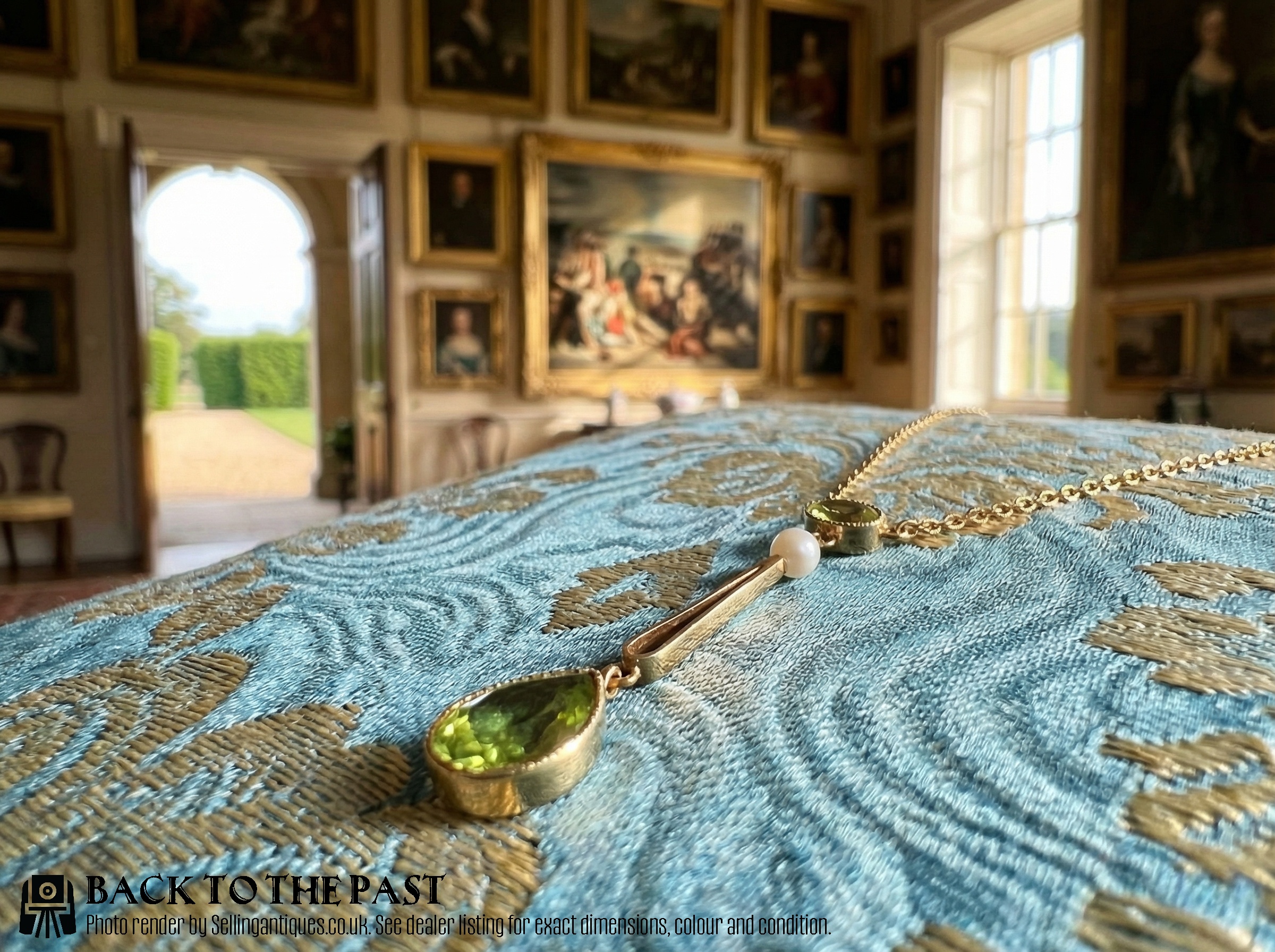
Edwardian Peridot Pendant
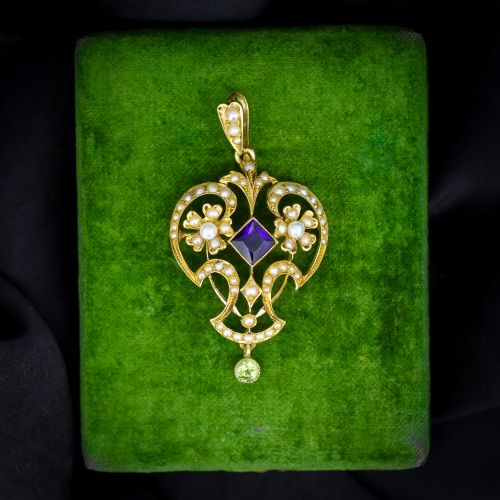
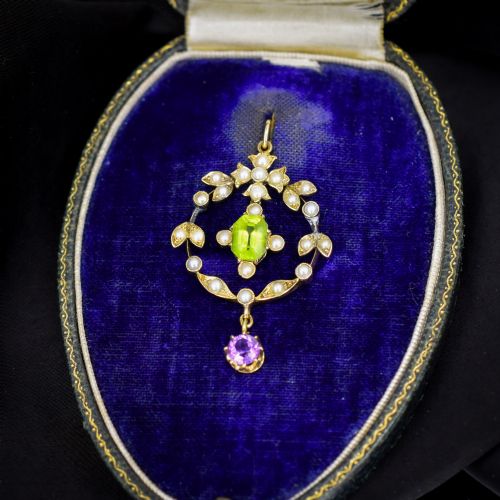
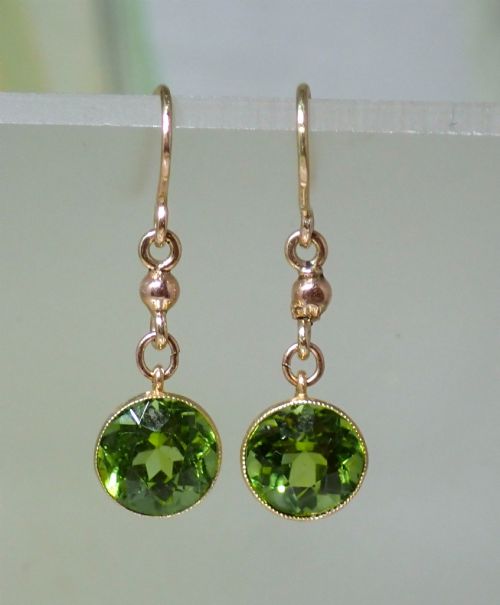
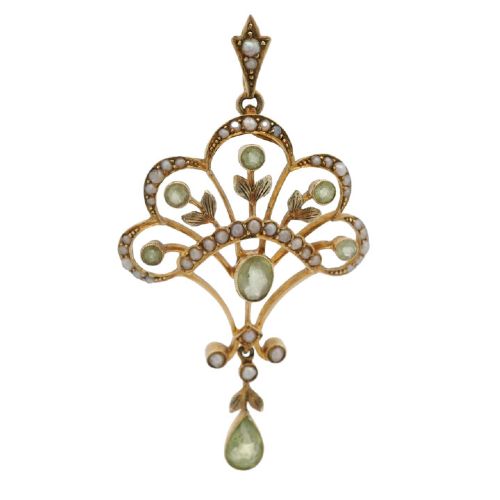
When you search for an edwardian peridot pendant, you enter a sphere of delicate gold work dominated by the distinctive glowing green of peridot stones. These pieces typically date from the turn of the twentieth century, bridging the late Victorian era and the onset of the First World War.
The version you are most likely to meet on this page combines a central peridot with seed pearls, fashioned into drop necklaces, lavaliers, or convertible pendant brooches. Styles shift between the flowing botanical lines of Art Nouveau and the geometric symmetry of the Arts and Crafts movement or Edwardian garland designs.
Makers of the period favoured lighter mounts than their Victorian predecessors, letting maximum light pass through the transparent green stones. Surviving examples demonstrate how jewellers balanced rich yellow or rose gold settings with the bright, lime-green hue of the peridot.
Materials and Manufacture
Gold forms the structural chassis of these pendants, utilised predominantly in fifteen-carat and nine-carat yellow gold, alongside occasional rose gold variations and platinum highlights. Stones are collet-set or claw-set by hand, securing the central peridot while surrounding it with fine wirework and delicate settings.
Seed pearls and cultured pearls appear throughout the designs as structural accents, often held by tiny pins or natural adhesives within floral and scroll motifs. Additional coloured gemstones such as garnets, amethysts, rubies, pink sapphires, and paste sometimes accompany the peridots to create polychromatic focal points.
Edwardian Peridot Pendant Retail Price Guide 2026
Typical asking prices for edwardian peridot pendant among the pieces listed under this phrase on Sellingantiques today, from the lower quarter to the upper quarter. They describe what is for sale here now, not the wider market.
Tiny seed pearls were sometimes threaded on horsehair before metal wires became fine enough to hold them.
Assessing Quality
The upper tier of these pendants is distinguished by the depth of colour and clarity within the peridot itself, alongside substantial fifteen-carat gold weight rather than lighter nine-carat alloys. Superior pieces display intricate hand-articulated drops and well-matched seed pearls that retain their original lustre without replacement.
Design complexity also separates standard productions from exceptional workshop output, seen in elaborate garland swags, integrated chains, and convertible mechanisms that allow a pendant to function securely as a brooch. The finesse of the piercing and the absence of solder overflow mark the distinction between mass-market output and finer jeweller craft.
The Edwardian Peridot Pendant Glossary
- Peridot
- A gem-quality variety of olivine valued for its distinct lime-to-olive green coloration. It serves as the primary focal stone in these Edwardian pieces.
- Seed Pearl
- Very small, naturally occurring or freshwater pearls utilised in jewellery as delicate borders and accents. They are characteristic of Edwardian cluster and garland settings.
- Lavalier
- A dangling pendant necklace featuring a central stone suspended from a finer chain or smaller drop element. This style gained immense popularity during the Edwardian period.
- Garland Style
- A decorative design motif inspired by eighteenth-century neoclassical festoons and ribbons. In jewellery, it translates into symmetrical swags of gold and pearls.
- Art Nouveau
- An artistic movement spanning the late Victorian and Edwardian eras characterised by organic, flowing lines and asymmetrical natural forms. Pendants in this style often incorporate whipping curves and floral motifs.
Edwardian Peridot Pendant: Frequently Asked Questions
What is an edwardian peridot pendant?
An edwardian peridot pendant is a necklace ornament made between roughly 1890 and 1910, featuring a green peridot stone set in gold, frequently accented with pearls.
These jewels reflect the aesthetic movements of the period, drawing heavily on Art Nouveau fluidity and Edwardian garland symmetry.
How do I wear a convertible pendant brooch?
Convertible pieces feature a fold-down bail for a chain alongside a pin fastening on the reverse, allowing the item to serve as both a necklace drop and a lapel brooch.
Ensure the pin catch is secure when wearing the piece as a brooch to prevent loss.
How do I care for antique peridot jewellery?
Peridot is a softer gemstone compared to diamond or sapphire, rating around six and a half to seven on the Mohs scale. Clean these pendants gently with warm soapy water and a soft cloth.
Avoid ultrasonic cleaners and harsh chemicals, which can damage the delicate seed pearls and weaken historic gold settings.
How can I tell the difference between nine-carat and fifteen-carat gold?
Fifteen-carat gold contains a higher proportion of pure gold, resulting in a richer, deeper yellow tone compared to standard nine-carat alloys. Hallmarks and maker marks stamped on the reverse of the mount often confirm the exact gold purity.