



Edwardian Peridot Necklace
An edwardian peridot necklace brings together bright green peridot stones and delicate gold work, offering a distinct piece of early twentieth-century jewellery history.
Edwardian Peridot Necklace
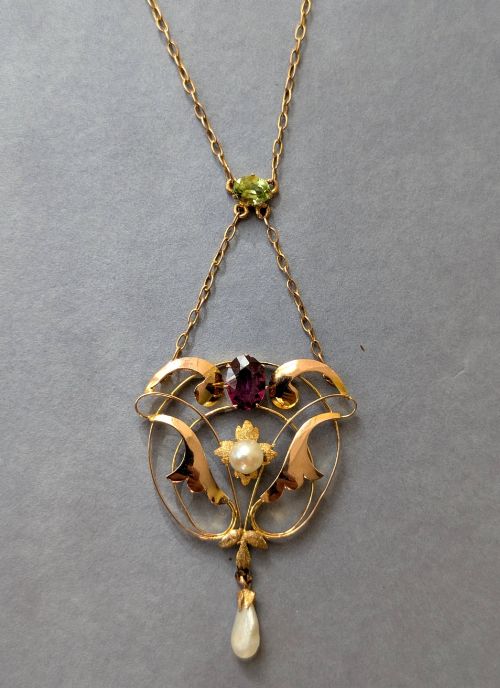
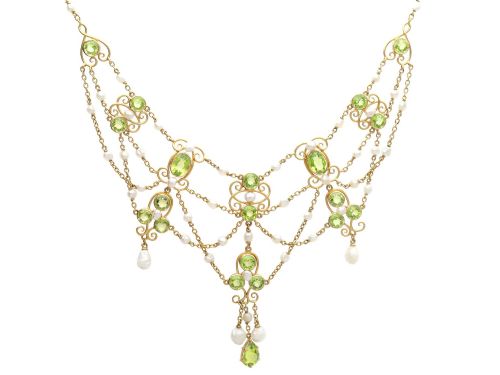
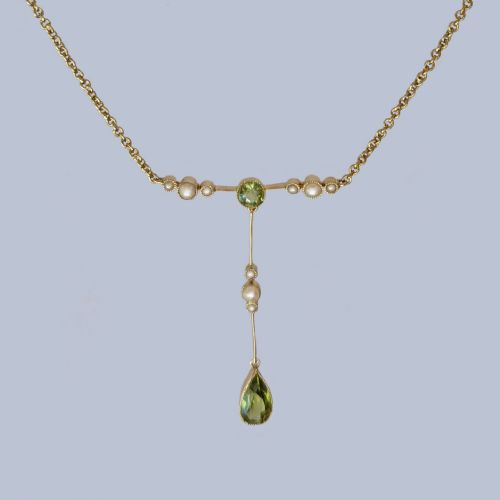
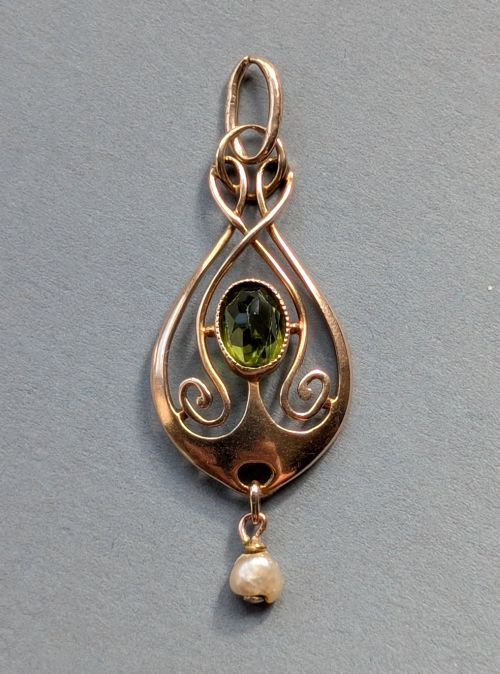
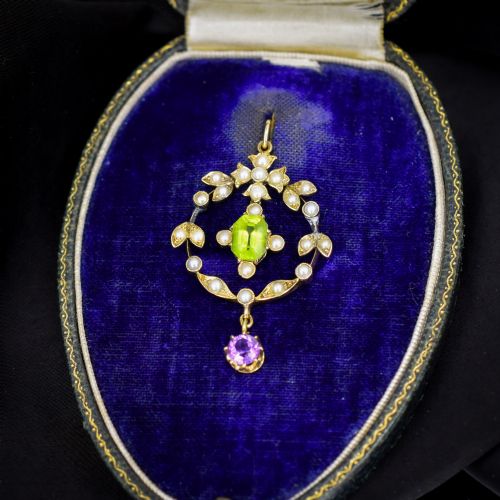
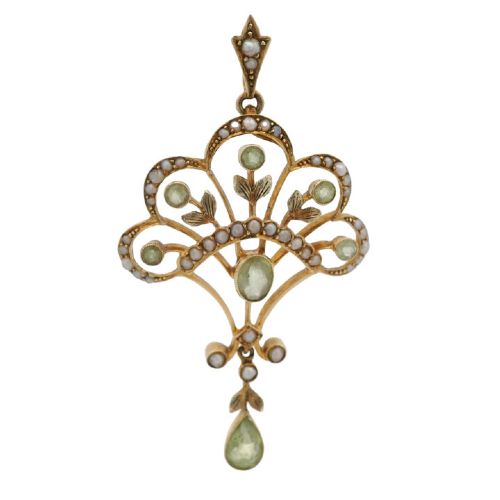
An edwardian peridot necklace typically takes the form of a pendant or lavalier suspended from a fine chain, often combining floral, scroll or drop motifs characteristic of the period. These pieces frequently incorporate seed pearls alongside the central peridot stones, reflecting the popular decorative vocabulary seen across the Edwardian era.
The materials and styles seen on this page span the Edwardian era alongside late Victorian and early twentieth-century examples, frequently intersecting with Art Nouveau and Arts and Crafts designs. Buyers will find both nine-carat and fifteen-carat gold settings, occasionally platinum, holding the distinctive olive-green stones.
Originating predominantly from the years around nineteen hundred to nineteen ten, these necklaces capture a specific moment in jewellery design when lighter, openwork mounts replaced heavier Victorian settings. The survival of these pieces on the market provides collectors with wearable examples of period craftsmanship.
Materials and Techniques
Makers utilised nine-carat and fifteen-carat yellow or rose gold to construct lightweight, intricate frames, often enhancing the delicate appearance with platinum elements or fine seed pearls. Enamelling techniques such as plique-à-jour also appear alongside stone settings, adding translucent colour depth to the metalwork.
Peridots were precision-cut and secured in collet or claw settings, sometimes accompanied by diamonds, amethysts, tourmalines or sapphires depending on the specific colour palette desired. The construction relies on soldered wirework and pierced sheet gold to create the flowing garland and lavalier shapes recorded in the evidence.
Edwardian Peridot Necklace Retail Price Guide 2026
Typical asking prices for edwardian peridot necklace among the pieces listed under this phrase on Sellingantiques today, from the lower quarter to the upper quarter. They describe what is for sale here now, not the wider market.
The archive demonstrates both Edwardian garland styles and Art Nouveau organic scrollwork across pendant and lavalier forms.
Quality Variations
The distinction between tiers rests upon the choice of gold purity, with fifteen-carat pieces generally representing a finer standard of manufacture compared to nine-carat equivalents. The complexity of the metalwork, such as detailed plique-à-jour enamel or integrated platinum elements, also separates standard production from superior examples.
Stone selection and matching dictate much of the visual success of each piece, particularly where multiple peridots and seed pearls are graded for size and colour consistency. Maker attribution, such as documented work by Murrle Bennett, further elevates the standing of an individual pendant within the wider surviving record.
Murrle Bennett
The Edwardian Peridot Necklace Glossary
- Lavalier
- A pendant featuring a suspended drop stone or cluster that hangs lower than the main mounting, popular during the Edwardian period. This drop design adds movement when worn.
- Seed Pearl
- A tiny, naturally small saltwater or freshwater pearl used in groups to accent gold scrollwork and floral motifs. They are typically half-drilled and glued or pegged onto small pins.
- Plique-à-jour
- An enamelling technique where enamel is applied to open cells without a backing, resembling miniature stained glass. It allows light to pass through the translucent coloured areas.
- Arts and Crafts
- A design movement valuing handcraftsmanship and simple materials over mass production. Pieces from this style often feature bolder, hand-wrought gold settings.
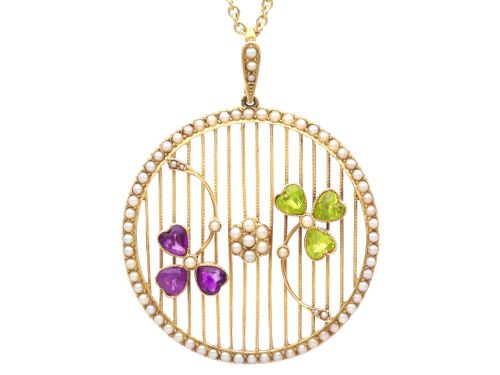
- Suffragette
- A descriptor applied to jewellery featuring the green, white and violet colour scheme associated with the women's suffrage movement. These pieces commonly combine peridot, seed pearl and amethyst.
Edwardian Peridot Necklace: Frequently Asked Questions
How do I care for an edwardian peridot necklace?
Peridot is a softer gemstone compared to diamond, rating around six and a half to seven on the Mohs scale, so it requires gentle handling and protection from hard knocks. Cleaning should be done with warm soapy water and a soft brush, avoiding ultrasonic cleaners that might dislodge delicate seed pearls.
Store the necklace flat in a lined box away from other harder pieces of jewellery to prevent scratching the gold and stones. Regular checks by a jeweller will ensure the tiny claws holding the peridots and pearls remain secure.
Were these necklaces worn every day originally?
During the Edwardian era, delicate pendant necklaces were typically reserved for afternoon wear, evening events or formal occasions rather than rough daily tasks. The fine fifteen-carat gold chains and seed pearl accents were designed for elegance rather than heavy endurance.
Today, modern owners still treat them as occasional wear to preserve the fragile seed pearls and intricate wirework. Careful handling ensures these surviving pieces remain intact for future generations.
How can I tell if a necklace is Edwardian?
Edwardian jewellery is distinguished by its light, airy platinum and gold settings, frequently employing garland motifs, bows, swags and delicate openwork. The presence of peridots combined with seed pearls in lavalier or drop configurations strongly points toward this specific era.
Examining the reverse of the pendant often reveals hand-finished construction typical of the period before mass-manufacturing took over. Hallmarks indicating nine-carat or fifteen-carat gold further help narrow down the manufacturing date.
What is the difference between nine-carat and fifteen-carat gold on these pieces?
Fifteen-carat gold contains a higher proportion of pure gold than nine-carat gold, offering a richer warm colour and greater prestige among period collectors. Pieces made in fifteen-carat gold often accompanied more ambitious designs and higher-grade gemstones.
Nine-carat gold was also widely utilised during the period, providing a more accessible option without sacrificing the delicate aesthetic of the design. Both purities are authentic to the era and appear regularly across surviving examples.