

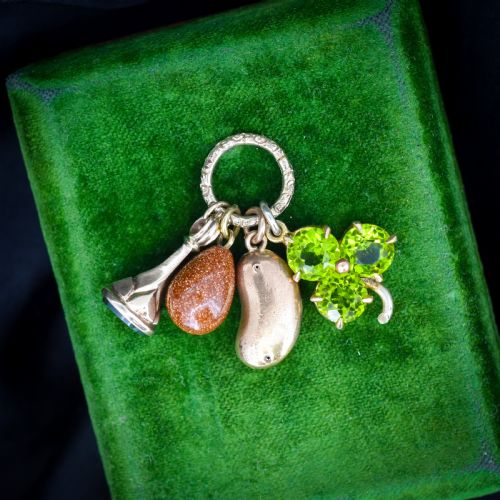


Edwardian Peridot Drop
An edwardian peridot drop brings together bright green peridot stones and delicate gold work, offering a fresh touch of period elegance.
Edwardian Peridot Drop
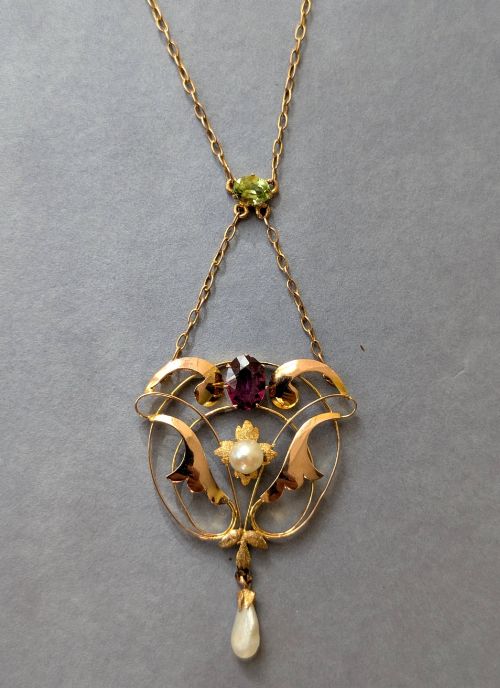
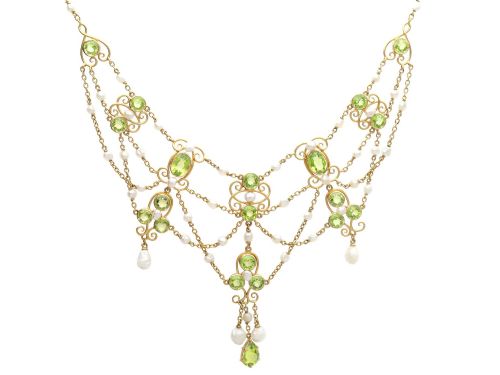
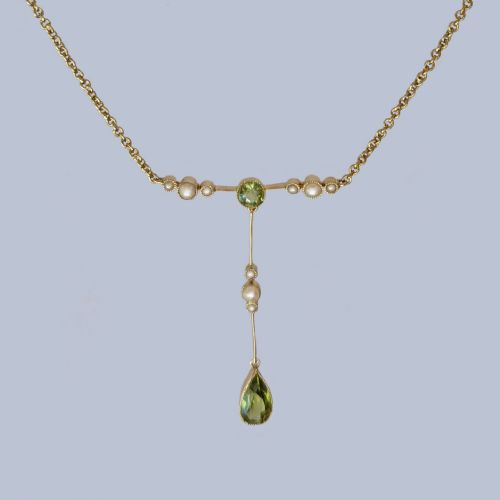
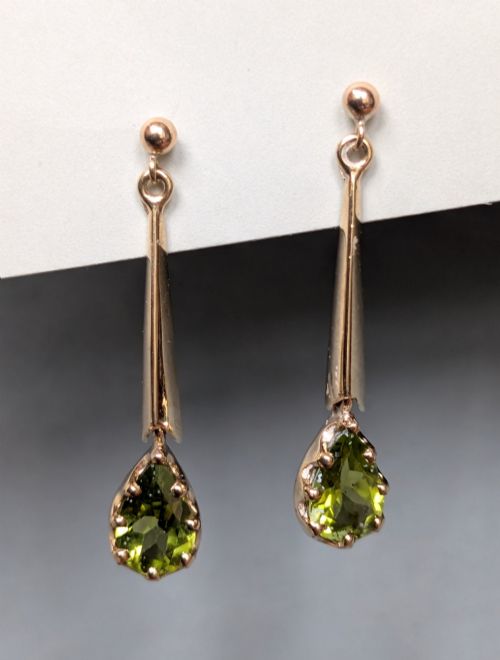
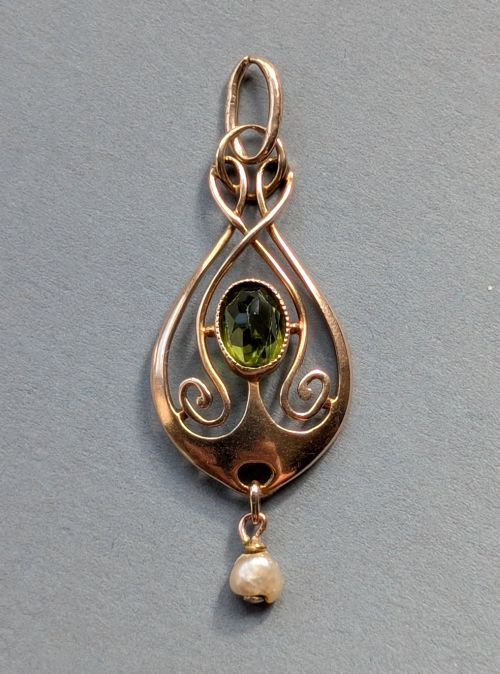
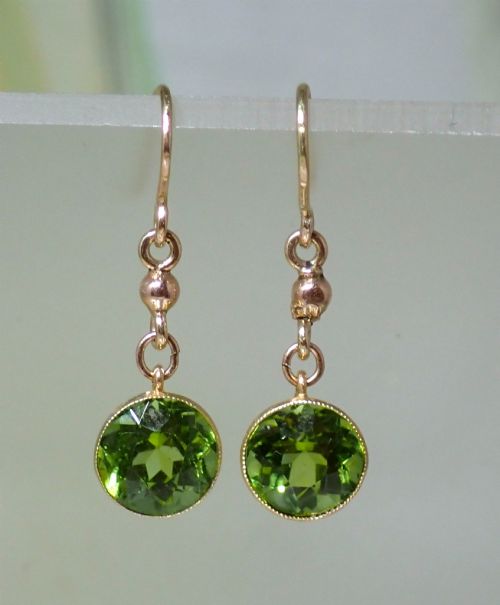
The edwardian peridot drop centres on lively lime-green stones suspended below fine gold chains or mounts. These pieces take the form of pendants, lavaliers, necklaces, and drop earrings created during the early twentieth century and late nineteenth century.
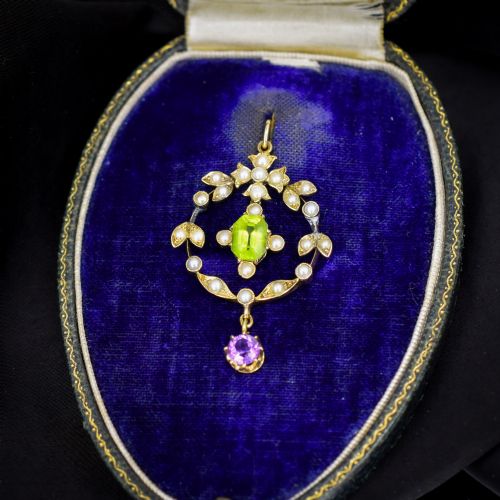
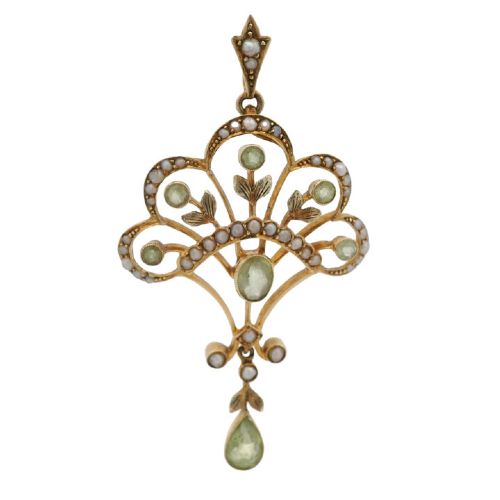
Most examples combine peridot with seed pearls or larger pearls in symmetrical Edwardian settings or flowing Art Nouveau and Arts and Crafts designs. Buyers encounter both delicate pendant brooches and articulated drops that catch the light with movement.
Makers set these peridots in higher-carat 15ct gold as well as 9ct gold, occasionally incorporating platinum, amethyst, tourmaline, or sapphire accents. The selection ranges from simple solitaire drops to elaborate multi-stone suffragette clusters.
How they were made
Goldsmiths shaped yellow gold into slender wirework, collet settings, and detailed foliate motifs characteristic of the period. Stones are securely bezel set or claw set to maximise the passage of light through the transparent peridot crystals.
Seed pearls are threaded or pinned meticulously onto delicate frames, creating subtle textural contrast against the polished gold and faceted green stones. Many pendants utilise articulated links so the drop section moves independently from the bail.
Edwardian Peridot Drop Retail Price Guide 2026
Typical asking prices for edwardian peridot drop among the pieces listed under this phrase on Sellingantiques today, from the lower quarter to the upper quarter. They describe what is for sale here now, not the wider market.
Some pieces double as both pendants and brooches, ready for an immediate wardrobe identity crisis.
What varies in quality
Quality rests in the saturation and clarity of the peridot stones, alongside the crispness of the surrounding gold fabrication. Finer examples display vivid green hues without heavy inclusions, matched with secure, undamaged pearl settings.
The complexity of the metalwork also distinguishes pieces, moving from simple bezels to intricate wirework incorporating multiple gemstones and convertible pendant-brooch fittings.
Murrle Bennett
The Edwardian Peridot Drop Glossary
- Peridot
- A transparent olive-green gemstone belonging to the olivine group. It forms the primary visual focus in these Edwardian and Victorian drops.
- Seed pearl
- A very small natural or cultured pearl, often half-drilled and glued or pegged onto gold wire. These pearls frequently border peridot stones in floral clusters.
- Lavalier
- A pendant featuring a main stone with one or more suspended drops hanging below. This form gained popularity during the Edwardian and Art Nouveau periods.
- Suffragette
- A descriptor for jewellery combining green, white, and violet stones such as peridot, seed pearls, and amethyst. These colours represent the movement associated with women's suffrage.
- Art Nouveau
- A design style characterised by flowing, organic lines and stylised floral motifs. Pieces from this era often feature asymmetrical whiplash curves.
Edwardian Peridot Drop: Frequently Asked Questions
How do I wear an edwardian peridot drop?
These pendants suspend easily from fine gold chains to sit at the collarbone or lower on the chest, depending on the length. Many double as brooches, giving you multiple ways to fasten them to garments.
Take care to store them separately from harder gems to prevent scratching the softer peridot and pearl surfaces.
Are these pieces solid gold?
The evidence shows examples made from 15ct gold and 9ct yellow gold, alongside elements involving platinum. These are solid precious metals rather than plated bases.
Maker marks and metal stamps often appear on the reverse or on the jump rings of the pieces.
How do I tell Edwardian from Victorian pieces?
Edwardian jewellery tends toward lighter, airier platinum and yellow gold frameworks with diamond or pearl accents. Victorian designs often appear slightly heavier and warmer in tone.
Both periods overlap in the listings due to transitional styles around the turn of the century.
What is the difference between a pendant and a lavalier?
A standard pendant generally hangs directly from a fixed bail, while a lavalier incorporates one or more dangling elements suspended below the main stone.
Both forms utilise articulated joints to create movement when worn.