


Edwardian Peridot Jewellery
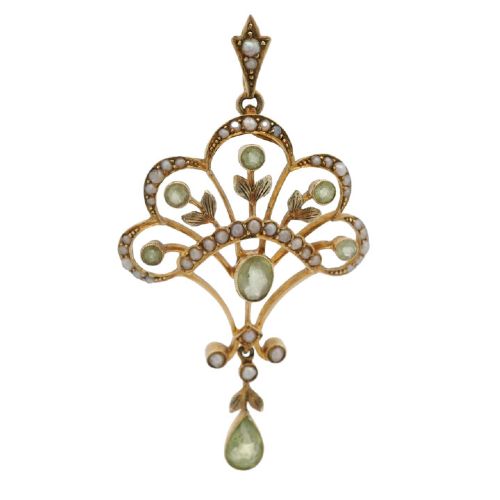
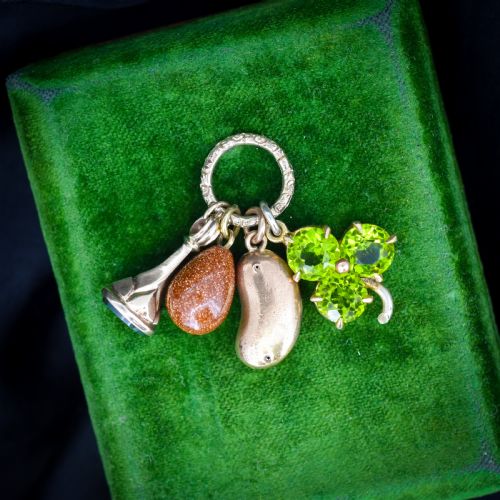
Edwardian peridot jewellery brings luminous green stones together with delicate seed pearls in yellow gold and platinum settings.
Edwardian Peridot Jewellery
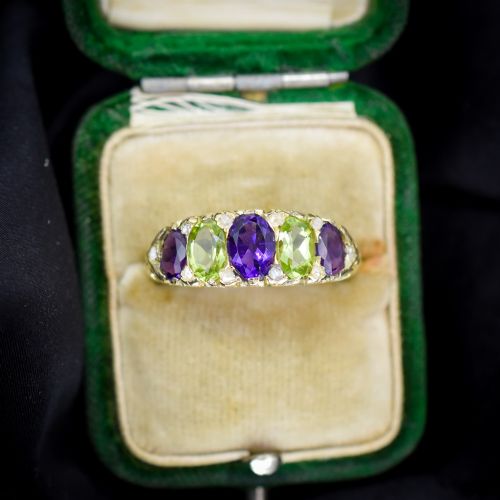
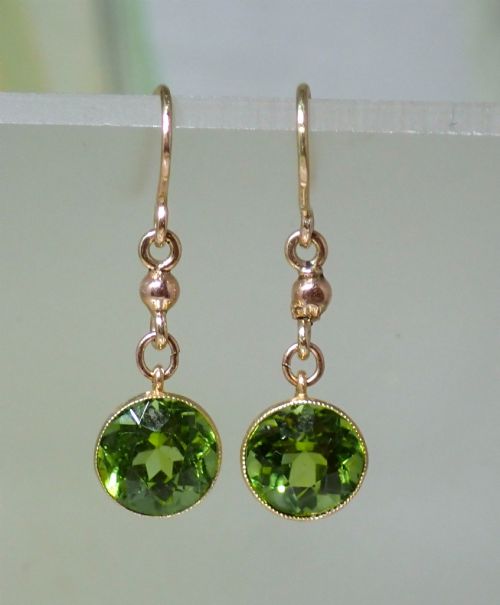
Edwardian peridot jewellery encompasses necklaces, pendants, bracelets, and brooches set with transparent olive-green gemstones. These pieces typically date from the Edwardian era, 1890, 1900, and the Victorian period.
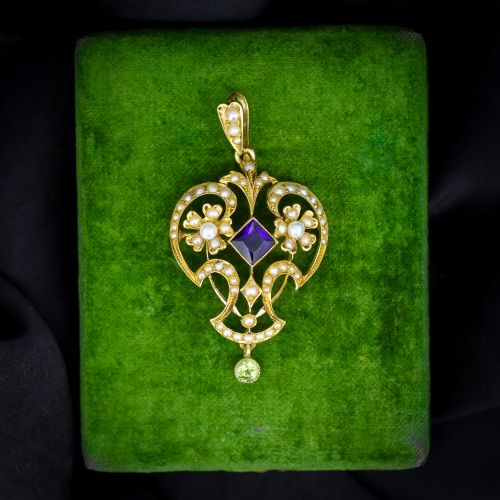
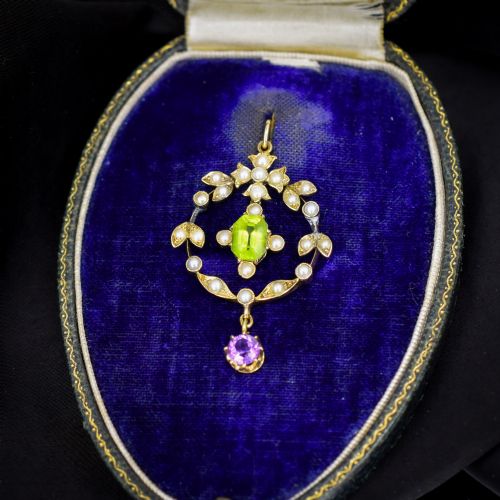
The version most commonly met on this page is the pendant necklace or brooch combining peridot with seed pearls. Gold and platinum form the structure for these delicate arrangements.
How they were made
Goldsmiths worked with 9ct gold, 15ct gold, and platinum to fabricate light, intricate mounts. Seed pearls were meticulously drilled and threaded or pegged onto settings alongside the main green stones.
Stones including diamonds and natural pearls were integrated into clusters and drop designs. Metalwork utilised wire-work and millegrain techniques to frame the peridots.
Edwardian Peridot Jewellery Retail Price Guide 2026
Typical asking prices for edwardian peridot jewellery among the pieces listed under this phrase on Sellingantiques today, from the lower quarter to the upper quarter. They describe what is for sale here now, not the wider market.
Listings span the Edwardian and Victorian periods, incorporating peridot, seed pearls, diamonds, 9ct gold, 15ct gold, and platinum.
What varies in quality
The distinction between tiers rests upon the choice of precious metal and the precision of the stone setting. Higher grade examples employ 15ct gold or platinum combined with substantial peridots and diamonds.
Design complexity also separates standard items from finer work, particularly where articulated drops or combined pendant-brooch configurations are executed with balanced symmetry.
The Edwardian Peridot Jewellery Glossary
- Peridot
- A transparent green gemstone of the olivine group that forms the central stone in these Edwardian designs. Its distinctive olive hue defines the aesthetic of the period.
- Seed pearl
- A very small natural or cultured pearl, often half-drilled and mounted in clusters to frame larger gemstones. These small pearls add a luminous white contrast to the green peridot.
- Millegrain
- A jewellery technique involving a row of tiny metal beads along the edges of a setting. This softens the transition between metal and stone with a refined texture.
- Cluster brooch
- A piece of jewellery featuring a central stone surrounded by a ring of smaller gems, designed to be pinned to garments. These versatile items often double as pendants.
Edwardian Peridot Jewellery: Frequently Asked Questions
How do I care for my peridot jewellery?
Peridot is a softer gemstone and sensitive to sudden temperature changes, so clean it gently with warm soapy water and a soft cloth.
Avoid using ultrasonic cleaners or harsh chemicals that might damage the surrounding seed pearls and softer gold mounts.
Can I wear an Edwardian pendant as a brooch?
Certain pieces from this era were made with convertible fittings, combining a hidden bail with a pin mechanism at the back.
Examine the reverse of the piece to see if both a pin and a loop are present before attempting to switch how you wear it.
What is the difference between 9ct and 15ct gold in these items?
Fifteen-carat gold contains a higher proportion of pure gold than 9ct gold, giving the metal a richer yellow tone.
Pieces made with 15ct gold often indicate a slightly earlier manufacture date or a higher tier of production during the period.
Are the seed pearls in these pieces natural?
Seed pearls found in antique items from this era are typically natural saltwater or freshwater pearls harvested before cultured pearls became dominant.
Their organic origins account for minor variations in shape and lustre across the clusters.