



Edwardian Pearl Drop Earrings
Edwardian pearl drop earrings combine delicate metalwork with luminous gems, offering collectors a refined piece of early twentieth-century jewellery.

Edwardian Pearl Drop Earrings
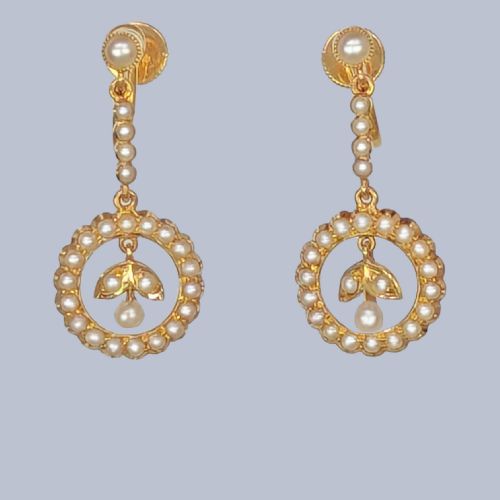
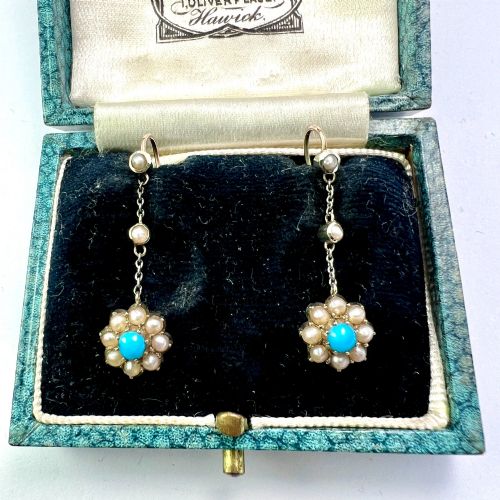
When you search for edwardian pearl drop earrings, you encounter delicate dangle designs suspended from hook, screw or dormeuse fittings. These items often feature natural pearls paired with contrasting coloured stones or set within intricate gold and silver mounts.
The pieces appearing on this page span Edwardian, Victorian, and later early twentieth-century periods. While true Edwardian examples predominate, related Victorian and 1920s variants also surface frequently in the listings.
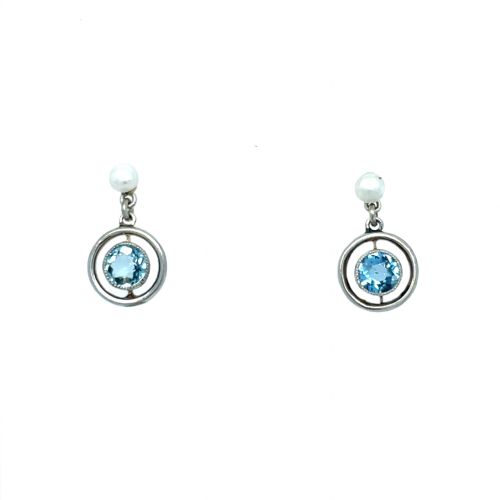
Common forms include flower clusters, teardrops, and linear dangles incorporating seed pearls or larger pearls. Gemstone accents such as peridot, aquamarine, turquoise, and diamond frequently accompany the central pearl elements.
Materials and construction
Goldsmiths utilised various purities of yellow and rose gold, alongside 15ct and 18ct gold alloys. Silver and platinum frequently appear in combination with gold to provide contrasting mounts for diamond settings.
Pearls are integrated alongside gemstones like amethyst, quartz, opal, and ruby using fine wirework and bezel or prong settings. Foliate motifs and geometric drops demonstrate the dominant Edwardian and Art Nouveau design influences of the era.
Edwardian Pearl Drop Earrings Retail Price Guide 2026
Typical asking prices for edwardian pearl drop earrings among the pieces listed under this phrase on Sellingantiques today, from the lower quarter to the upper quarter. They describe what is for sale here now, not the wider market.
Listings frequently pair pearls with peridot, aquamarine, turquoise, and amethyst set in yellow, rose, 15ct, or 18ct gold.
Assessing quality and finish
The sophistication of the metalwork largely dictates the distinction between standard items and superior examples. Fine pieces incorporate detailed silver foliate mounts or platinum settings that demand advanced bench skills.
The choice of accompanying gemstones and the uniformity of the pearls influence the overall calibre of the jewellery. Items combining diamonds with natural pearls in complex configurations represent the upper tier of the available range.
The Edwardian Pearl Drop Earrings Glossary
- Dormeuse
- A type of secure earring fitting designed to be comfortable while sleeping. These often feature a hinged lever back.
- Seed pearl
- A very small natural or cultured pearl, typically under two millimetres in diameter. Jewellers frequently used them in clusters and floral arrangements during the Edwardian period.
- Rose cut
- A vintage diamond cut featuring a flat base and a domed crown with triangular facets. This style was popular before the development of modern brilliant cuts.
- Chinoiserie
- A decorative style reflecting Chinese artistic influences. It occasionally appears in specific Edwardian design interpretations.
Edwardian Pearl Drop Earrings: Frequently Asked Questions
How do I clean antique pearl earrings?
Pearls are organic gems that require gentle care to preserve their nacre. Wipe them gently with a soft, damp cloth after wearing and avoid harsh chemical dips.
Keep moisture away from the metal mounts and store the earrings separately to prevent scratching from harder gemstones.
Can I wear these earrings daily?
Antique drop earrings are delicate items that benefit from careful handling. Occasional wear helps preserve the fine goldwork and secure the delicate pearl settings against undue stress.
Remove them before sleeping, swimming, or engaging in physical activities to protect the antique hooks and screw fittings.
What is the difference between seed pearls and drop pearls?
Seed pearls are tiny, uniform pearls typically used to pave surfaces or form intricate floral clusters. Drop pearls are larger, pendant-shaped stones that hang freely from the main body of the earring.
Many Edwardian designs combine both types, using seed pearls in the upper cluster and a larger drop pearl at the base.
How can I tell if the pearls are natural?
Close examination with a loupe reveals slight surface irregularities and growth textures characteristic of natural or early cultured pearls. Perfectly uniform shapes and identical lustre across multiple stones often suggest modern production.
Professional gemological testing remains the definitive method for confirming the origin of pearls in antique jewellery.