

Edwardian Office Storage
Edwardian office storage pieces are practical timber cabinets and filing systems built to organise paperwork, combining utility with period craftsmanship.
Edwardian Office Storage
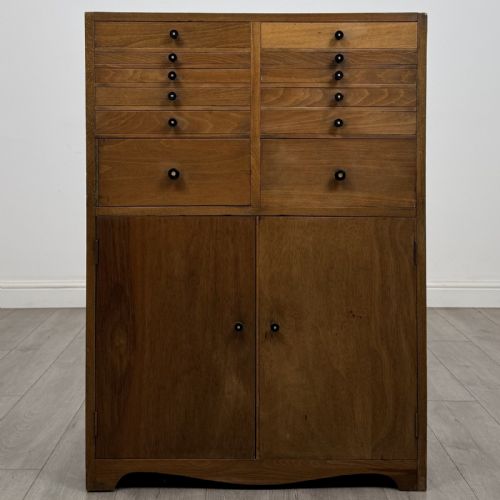
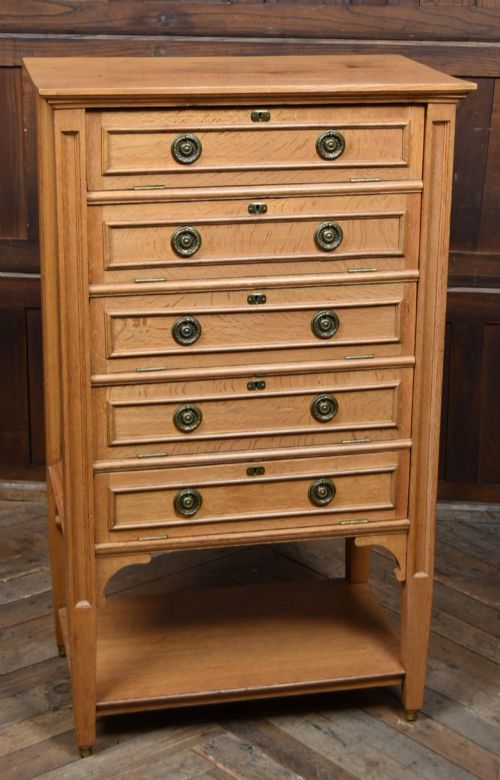
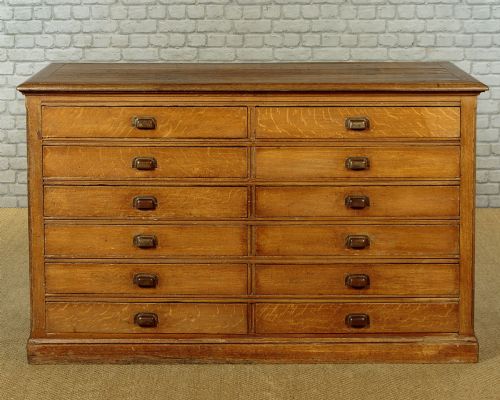
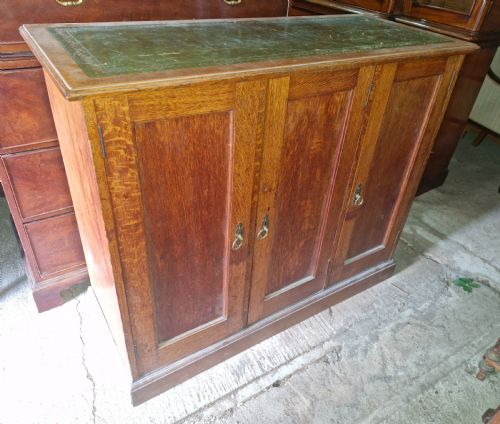
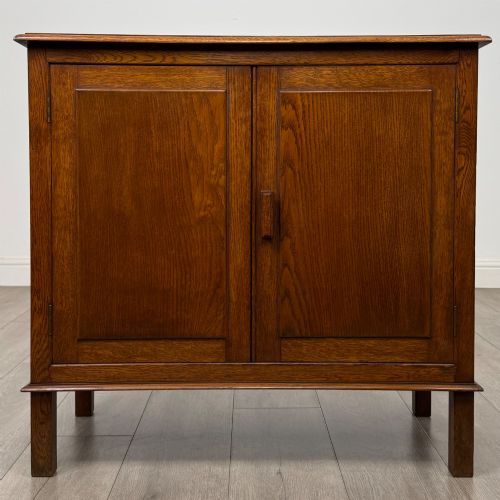
Edwardian office storage primarily comprises vertical filing cabinets, tambour front units, and multi-drawer chests designed for workplace organisation. These pieces originate mainly from the Edwardian period and the early twentieth century, spanning oak, mahogany, and walnut construction.
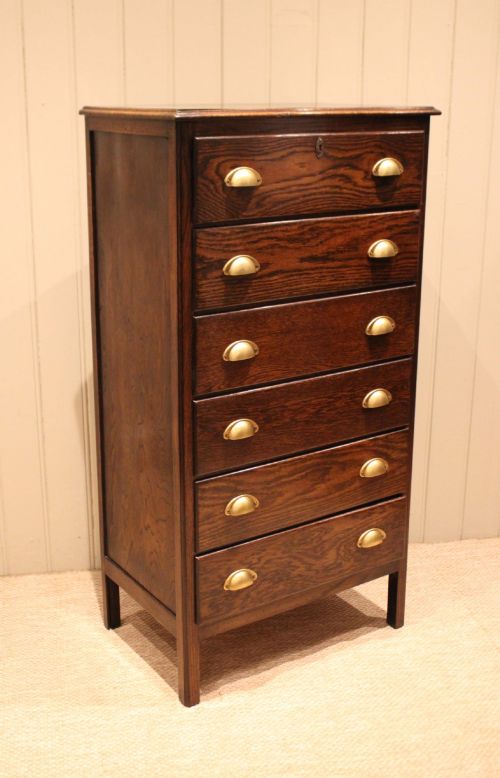
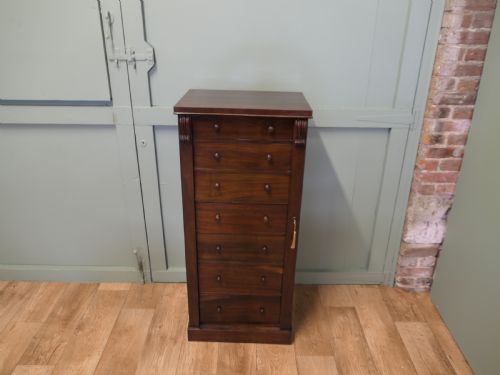
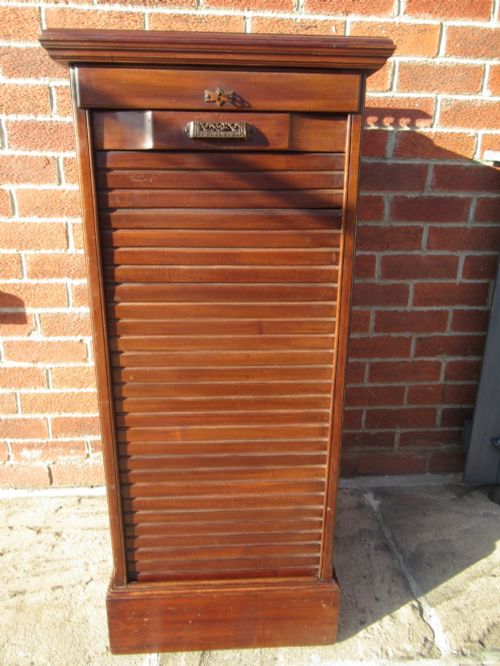
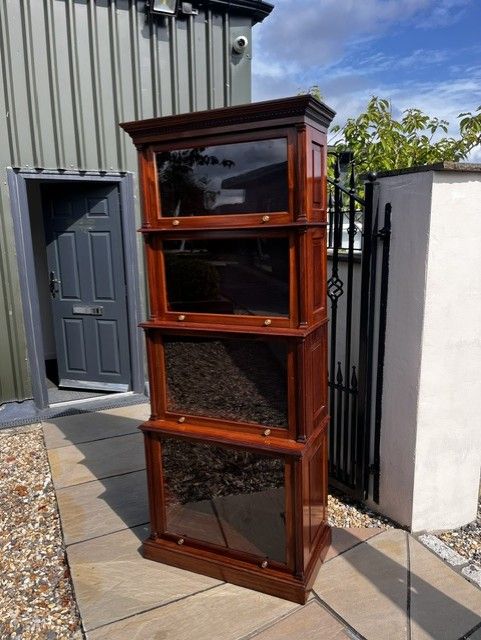
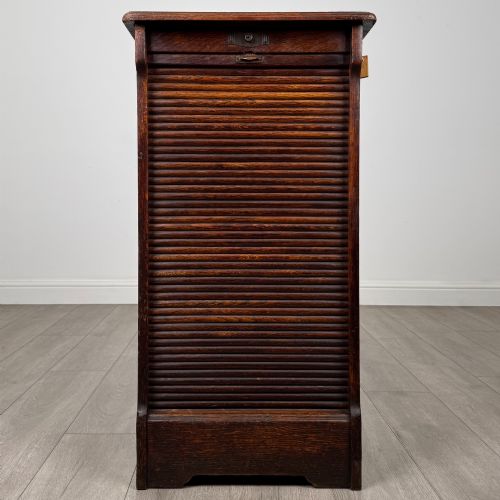
Buyers frequently encounter tambour door cabinets, barrister stacking bookcases, and banks of small drawers intended for letters, music, or ledgers. The forms reflect commercial utility and domestic study use from the opening decades of the twentieth century.
Earlier Victorian and later 1920s or 1930s pieces also appear alongside the core Edwardian material, showing similar functional priorities. The selection focuses heavily on timber cabinetry rather than modern steel office furniture.
Materials and construction
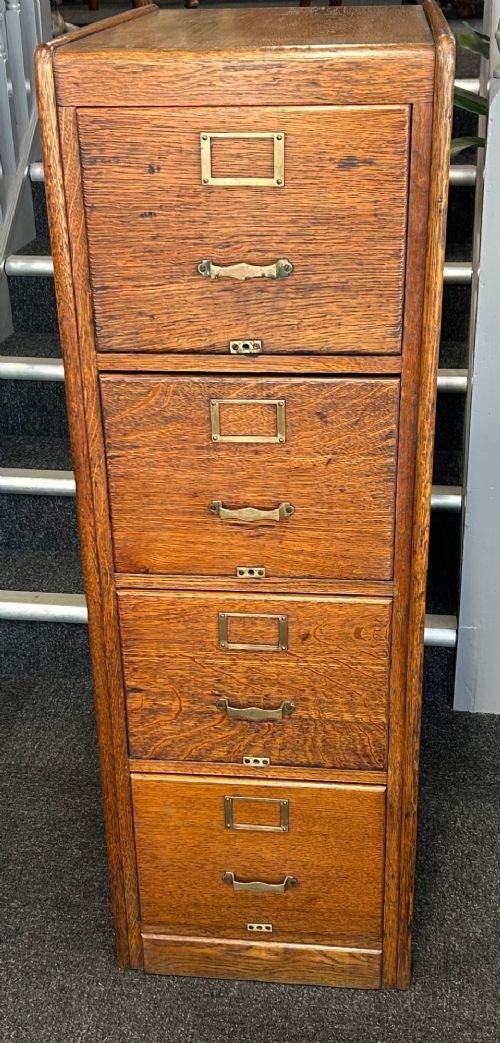
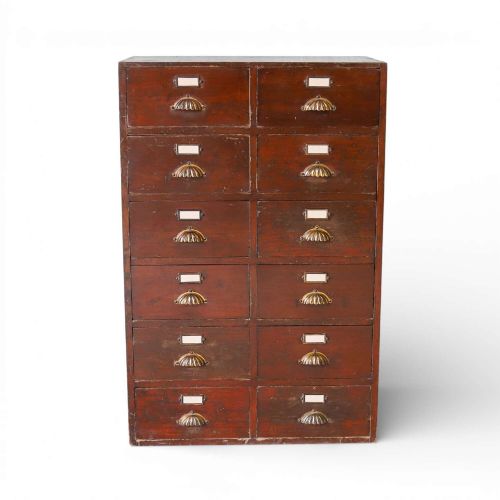
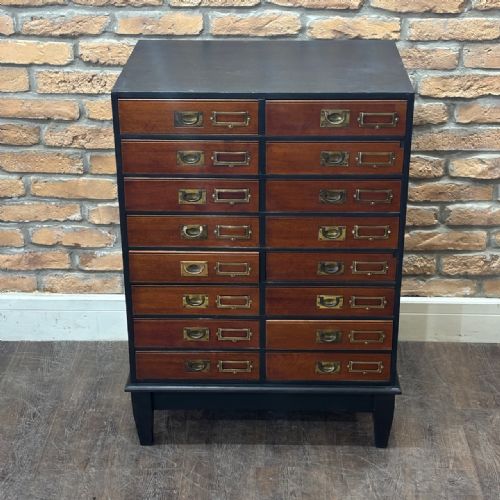
Makers utilised solid oak and mahogany as primary timbers, supported by walnut, pine, and teak for specific interior or regional variants. Brass hardware, including shell pulls, label holders, and patent locking mechanisms, provides functional detailing on drawers and doors.
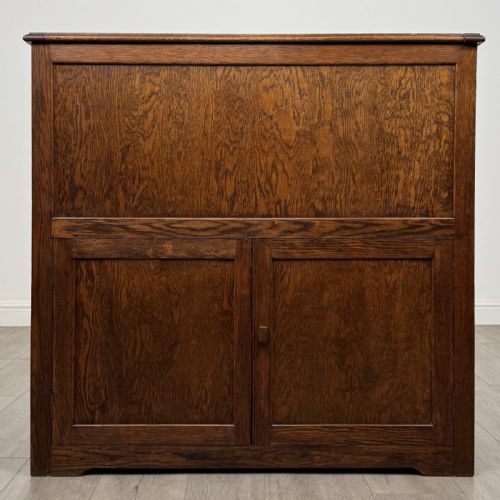
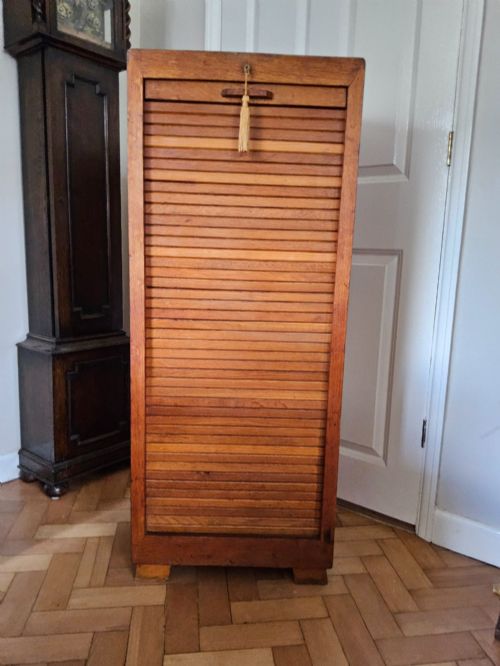
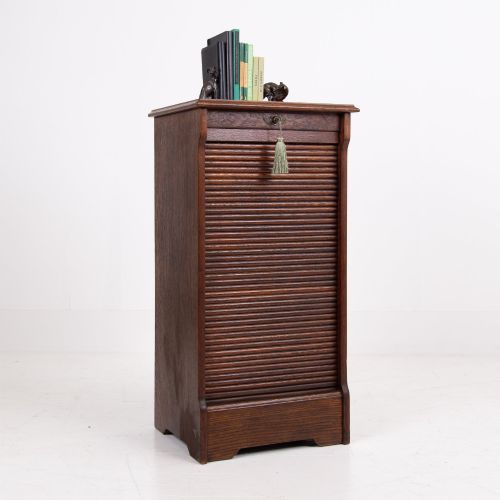
Flexible closures rely on slatted tambour fronts that slide smoothly around internal tracks, concealing vertical filing spaces or shelving. Modular stacking designs utilise interlocking wooden sections, whilst fitted interiors incorporate adjustable shelves and pigeon holes.
Edwardian Office Storage Retail Price Guide 2026
Typical asking prices for edwardian office storage among the pieces listed under this phrase on Sellingantiques today, from the lower quarter to the upper quarter. They describe what is for sale here now, not the wider market.
The listings feature solid oak and mahogany alongside brass, glass, and canvas across pieces dated from the nineteenth century to the nineteen-forties.
Distinctions in craftsmanship
Quality rests on the selection of timber figures, the integrity of joint work, and the survival of original hardware such as brass label holders and pulls. Superior examples retain working patent mechanisms and smooth-sliding tambour doors without warping.
Maker attribution and patent designs elevate specific pieces above standard commercial utility items. Internal fittings like original dividers and adjustable shelving systems also indicate higher grade manufacture.
Maple & Co.·Globe Wernicke·Amberg
The Edwardian Office Storage Glossary
- Tambour
- A flexible door formed of narrow wooden slats glued to a canvas backing, allowing it to slide around a curved track. This mechanism conceals the interior whilst saving space in compact offices.
- Barrister stacking bookcase
- A modular bookcase featuring glass-fronted tiers that lift and slide inside the unit. Multiple sections stack vertically without permanent fixings.
- Pigeon hole
- A small compartment within a cabinet or desk used for sorting letters and documents. These compartments form part of fitted wooden interiors.
- Label holder
- A small metal frame fixed to a drawer front to hold a paper card identifying the contents. They appear frequently in brass on multi-drawer filing cabinets.
- Shell pull
- A handle pressed or cast in the shape of a scallop shell, common on early twentieth-century drawer fronts. This style provides a secure grip for heavy filing drawers.
Edwardian Office Storage: Frequently Asked Questions
How do tambour doors work?
Tambour doors consist of narrow wooden slats attached to a flexible fabric backing. They slide along grooved tracks built into the cabinet frame to open and close.
This design allows the door to disappear into the sides of the cabinet. It provides secure closure without requiring external swing clearance in tight office spaces.
How do I care for antique office wood?
Maintain antique oak and mahogany by keeping pieces away from direct heat sources and strong sunlight. Apply a traditional beeswax polish occasionally to nourish the timber grain.
Avoid excessive moisture on wooden surfaces and brass hardware. Gentle dusting with a dry cloth preserves the original finish and patina.
Are these cabinets suitable for modern files?
Many Edwardian filing cabinets were designed for specific historical paper sizes or card indexes rather than modern A4 suspension files. Internal configurations vary between vertical drawers, pigeon holes, and flat folio shelves.
Buyers should check internal drawer dimensions to ensure their specific storage needs match the historical format of the cabinet.