
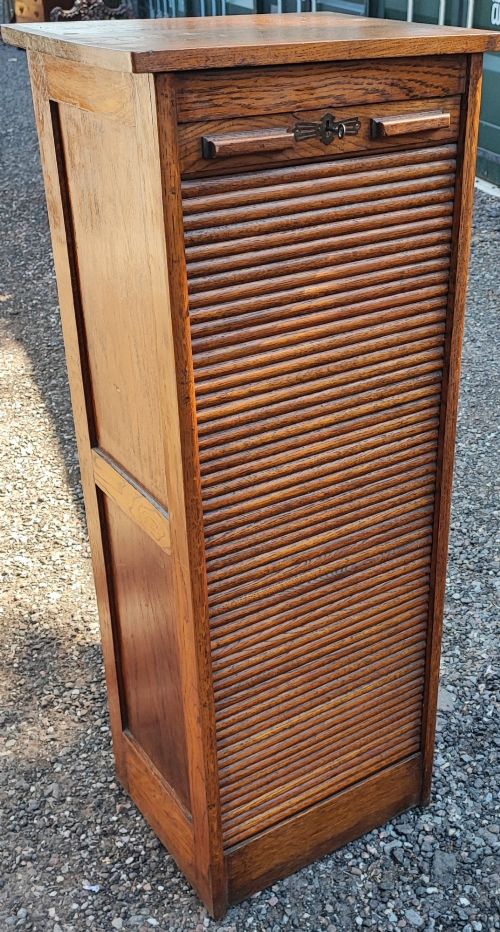
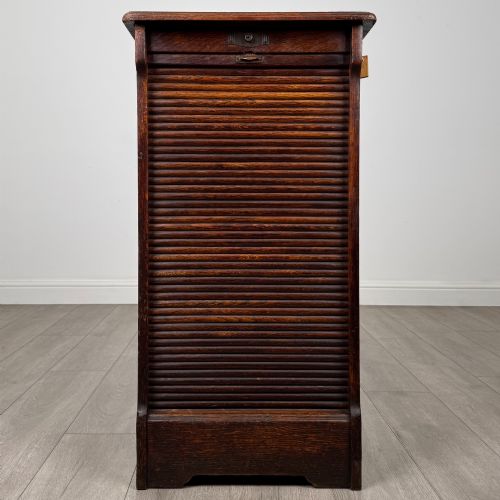
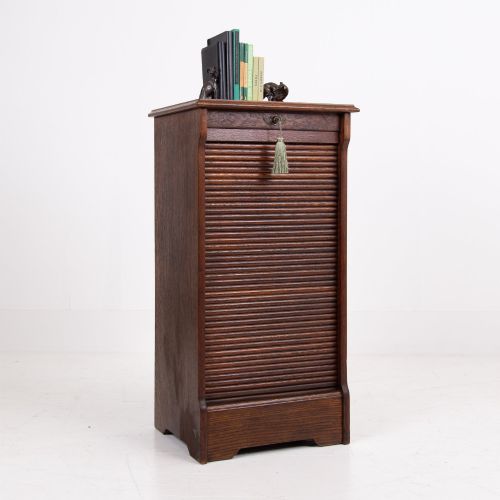
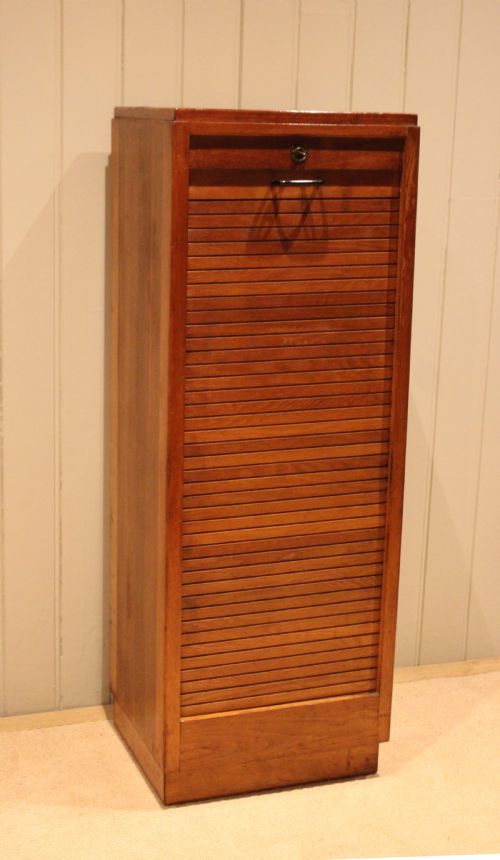


Edwardian Oak Tambour Cabinet
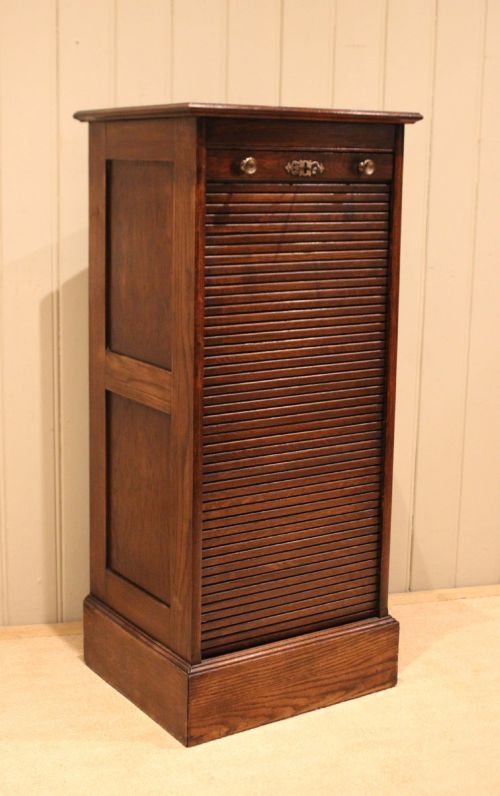
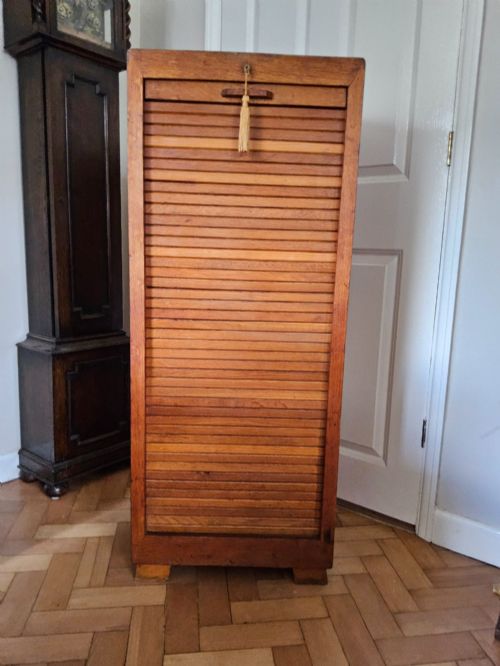
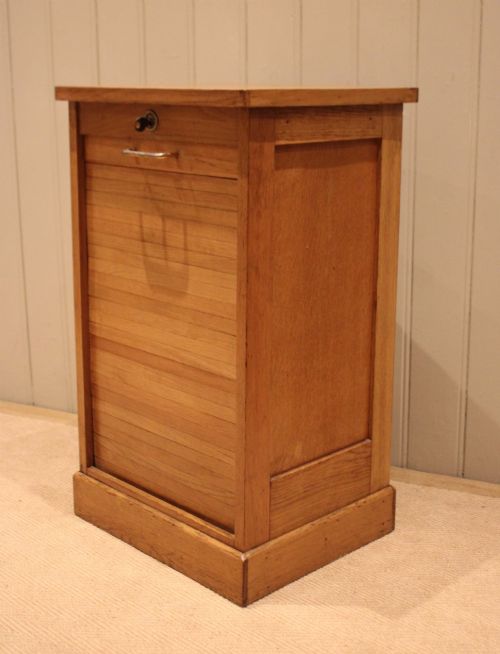
These edwardian oak tambour cabinets are clever functional pieces that conceal office clutter behind flexible wooden shutters.
Edwardian Oak Tambour Cabinet
When you search for an edwardian oak tambour cabinet, you encounter sturdy office furniture designed to organise stationery, files and correspondence. The prevailing form on this page is the single or double tambour front filing cabinet, alongside desks, stationery boxes and bureau bookcases.
Most examples hail from the Edwardian era and the early twentieth century, constructed primarily in oak. These hardworking items served solicitors, merchants and clerks before finding a second life in modern studies and living spaces.
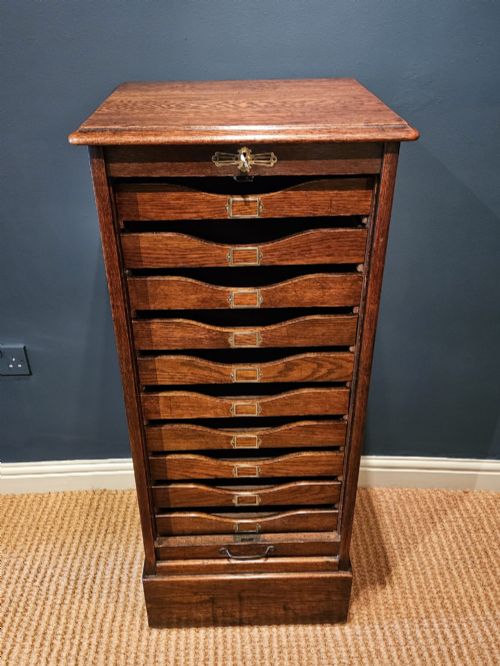
The defining characteristic is the slatted tambour door, which slides smoothly around a track to reveal internal drawers, shelves or pigeonholes. This mechanism saves floor space by eliminating traditional swinging doors in cramped administrative offices.
Materials and construction methods
Cabinet makers built these pieces using solid oak and oak veneers, often backed by canvas strips to hold the individual wooden slats of the tambour shutter together. Brass handles, label holders and metal locking mechanisms provided durable hardware for daily commercial use.
The flexible shutter required precision joinery so the narrow wooden strips could glide effortlessly along routed grooves in the cabinet frame. Secondary materials such as glass, steel, lead and paper appear in related stationery cabinets, desks and bureau bookcases.
Some stationery cabinets feature adjustable date stamps built directly into the timber housing to keep busy clerks on track.
Distinguishing quality across examples
Quality rests in the smoothness of the tambour action and the integrity of the slatted mechanism. Superior pieces operate without sticking, while lesser examples suffer from warped tracks or stiff canvas backing that impedes movement.
The choice of timber and depth of colour also separate standard office furniture from finer examples. Rich golden or dark oak finishes, well-figured grain patterns and substantial solid construction denote superior workshop output.
James Shoolbred & Co
The Edwardian Oak Tambour Cabinet Glossary
- Tambour
- A flexible door or shutter made from narrow wooden slats glued to a canvas backing, allowing it to slide around a curved track. This clever mechanism conceals storage compartments without requiring clearance for swinging doors.
- Bureau bookcase
- A combination of a sloping writing desk and enclosed shelving, often featuring glazed upper doors. These multipurpose pieces suited domestic studies and offices.
- Stationery cabinet
- A desk accessory or small chest fitted with pigeonholes and small drawers for paper, envelopes and correspondence. They often include adjustable dates or calendar functions.
- Arts and Crafts
- A design movement prioritising traditional craftsmanship and simple forms over mass-produced ornamentation. Pieces from this style exhibit honest construction and understated detail.
Edwardian Oak Tambour Cabinet: Frequently Asked Questions
How do tambour doors work?
Tambour doors consist of narrow vertical strips of wood attached to a flexible fabric backing. They slide along a concealed track within the cabinet frame.
This allows the shutter to curve around the sides or back of the unit, completely hiding the interior space when closed.
What were these cabinets used for?
Offices and studies utilised these cabinets to store correspondence, ledgers, files and stationery. The lockable rolling shutter kept sensitive business documents secure throughout the working day.
Today, they serve similar organisational purposes in homes, holding paperwork, craft supplies or media collections.
How do I care for oak tambour furniture?
Keep the cabinet away from direct heat sources and drastic humidity changes to prevent the wood and sliding tracks from warping. Regular dusting and occasional application of appropriate wax maintain the finish.
Avoid forcing the shutter if it sticks, and instead inspect the track for obstruction or dryness.
How do I date an oak cabinet?
Examine the materials, hardware, and construction marks to establish a period. Edwardian and early twentieth-century pieces often feature brass label holders, specific lock types, and particular oak finishes.
Dates ranging from the late Victorian period through the nineteen-forties appear in the records, reflecting continuous manufacturing of this practical office design.