
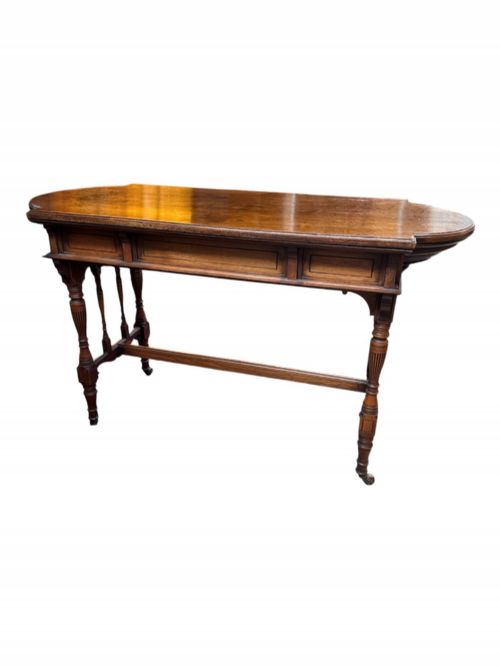


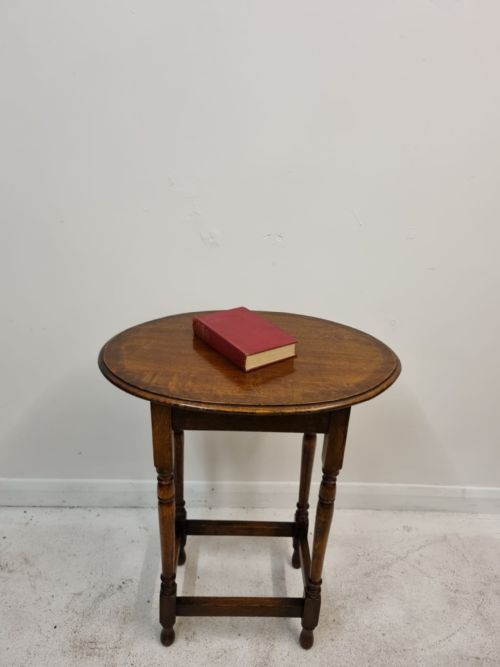


Edwardian Oak Stretcher Table
An Edwardian oak stretcher table is a sturdy, functional centrepiece built for daily use, prized for its honest timber and robust underframe.
Edwardian Oak Stretcher Table
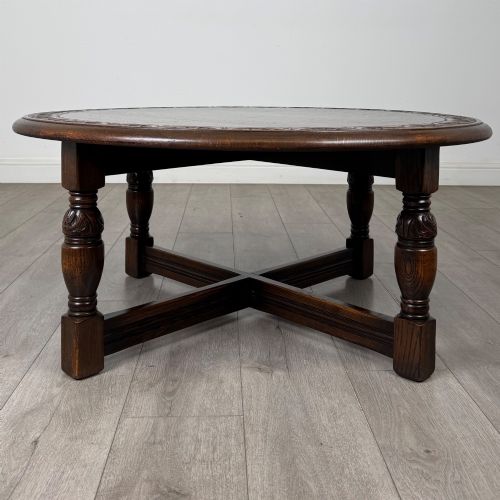
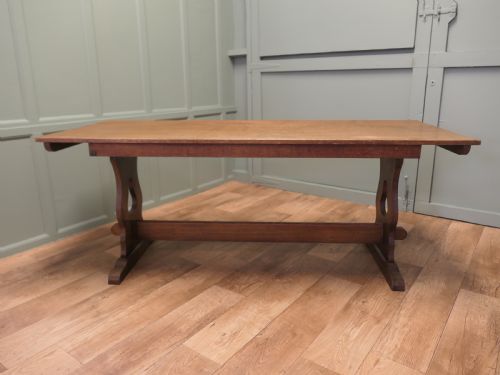
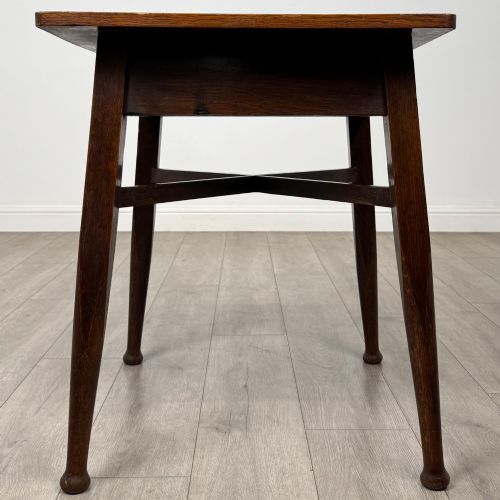
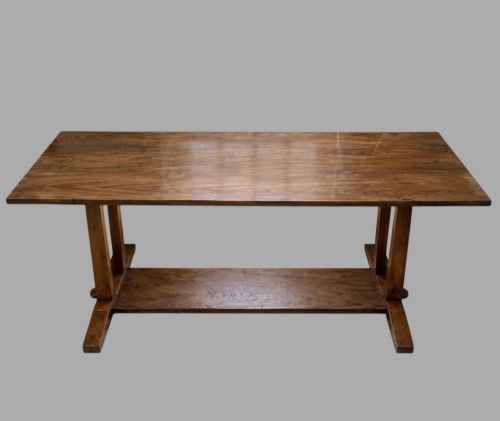
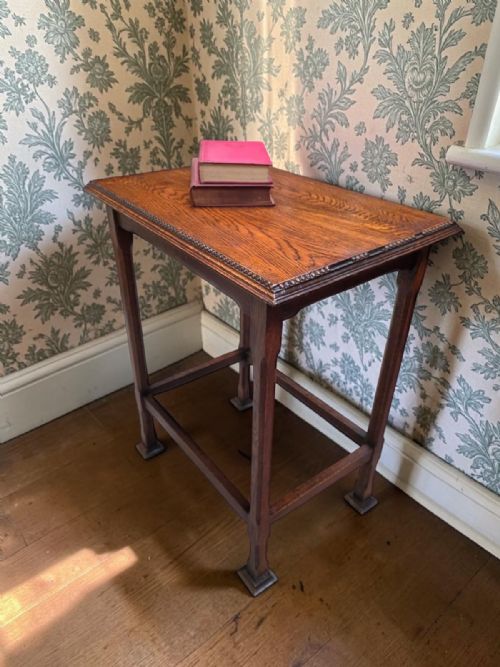
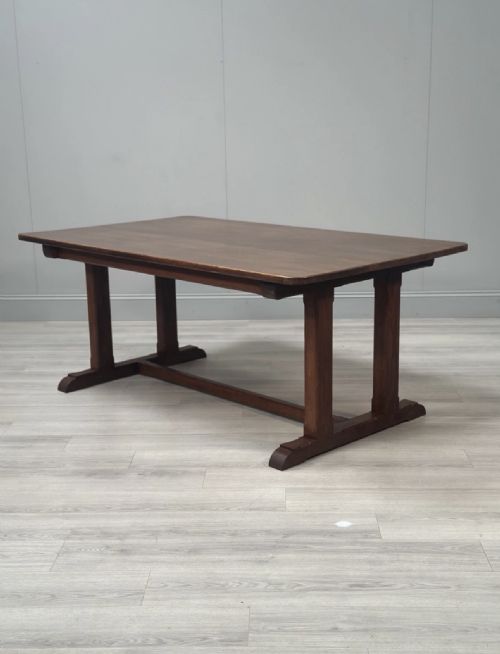
An Edwardian oak stretcher table combines the practical forms of the early twentieth century with the enduring utility of timber framing. Buyers looking for an edwardian oak stretcher table will encounter various formats, from compact side tables and oval variants to larger refectory and dining pieces.
The evidence shows these tables span multiple periods, including the Victorian era, the Edwardian period, and later revivals up to the mid-twentieth century. Alongside standard dining and side tables, the listings include library tables, console tables, and desks.
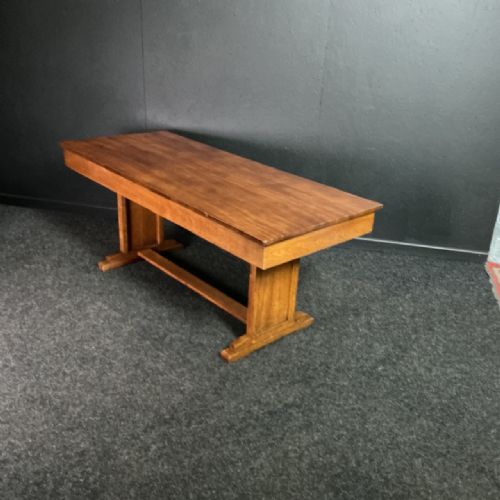
Many examples lean into distinct design movements, particularly Arts and Crafts and Jacobean Revival styles. These pieces often feature stretcher bases that provide both structural rigidity and a distinct visual anchor beneath the main top.
How they were made
Makers utilised solid oak, frequently selecting burr oak for enhanced figuring or golden oak for a brighter finish. Wrought iron and brass hardware appear on select examples to reinforce joints or provide functional fittings.
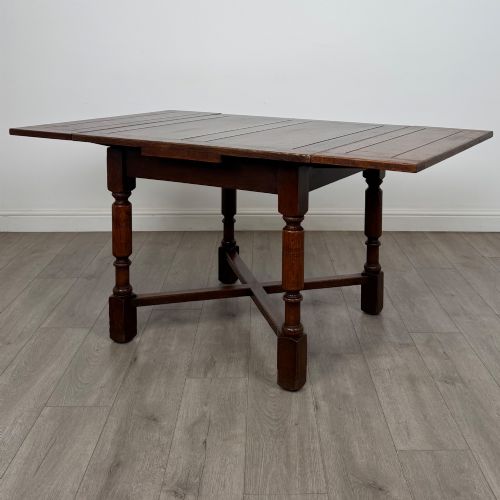
Construction techniques relied on traditional joinery to support heavy timber tops and stretcher frames. Tables often incorporate extending mechanisms, such as draw leaves, or barley twist legs that add architectural interest to the underframe.
What varies in quality
The balance of proportions and the subtlety of stylistic details, such as hand-carved elements or robust wrought iron bracing, separate standard utilitarian builds from finer decorative works.
Sir Robert Lorimer
The Edwardian Oak Stretcher Table Glossary
- Stretcher
- A horizontal support connecting the legs of a table to improve stability. This underframe is a defining feature of the type.
- Refectory table
- A long, narrow dining table traditionally used in communal halls. Examples in this category often feature prominent stretcher bases.
- Draw leaf table
- A table equipped with pull-out leaves beneath the main top to extend the surface area. This mechanism allows for flexible daily use.
- Burr oak
- A growth deformation in oak that produces intricate, swirling grain patterns. Cabinet makers prized this wood for decorative table tops.
Edwardian Oak Stretcher Table: Frequently Asked Questions
How do I identify an Edwardian table?
Look for construction traits typical of the early twentieth century, combined with stylistic cues from the Edwardian period or Arts and Crafts movement. The use of solid oak and functional stretcher bases is common.
Compare the proportions and hardware with dated examples from the same era to confirm the period of origin.
Where were these tables used?
These pieces served multiple domestic and institutional functions, appearing in dining rooms, kitchens, libraries, and public halls. Their sturdy construction suited heavy daily tasks.
Smaller variants worked well as side tables or lamp tables, while larger refectory formats accommodated communal dining.
How do I care for oak furniture?
Maintain the timber by keeping it away from direct heat sources and excessive moisture. Regular dusting with a dry cloth preserves the finish.
Apply suitable beeswax periodically to nourish the oak and protect the surface from drying out.
What is a stretcher base?
A stretcher base consists of horizontal wooden or iron bars connecting the table legs near the floor. This design counters lateral movement and strengthens the frame.
In many pieces, the stretcher also acts as a footrest or adds a decorative architectural element to the lower half of the furniture.