


Edwardian Oak Secretary
An edwardian oak secretary offers a practical writing workspace with fitted drawers and pigeonholes inside a sturdy timber frame.
Edwardian Oak Secretary
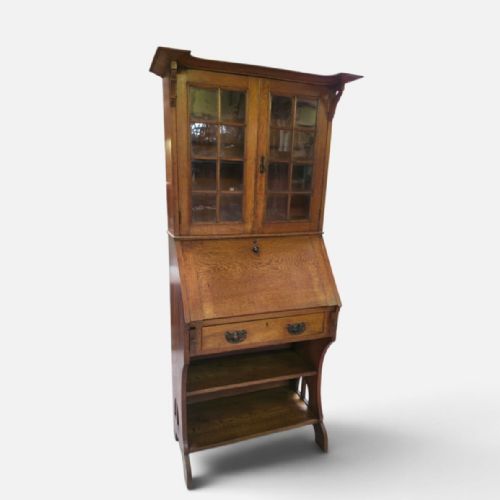
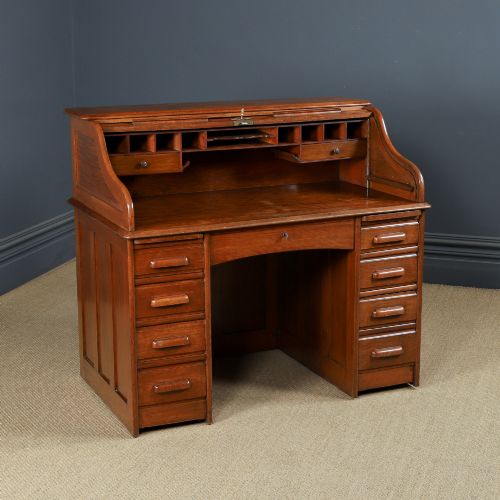
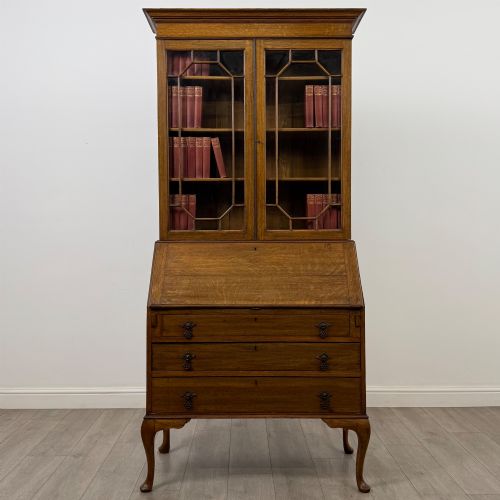
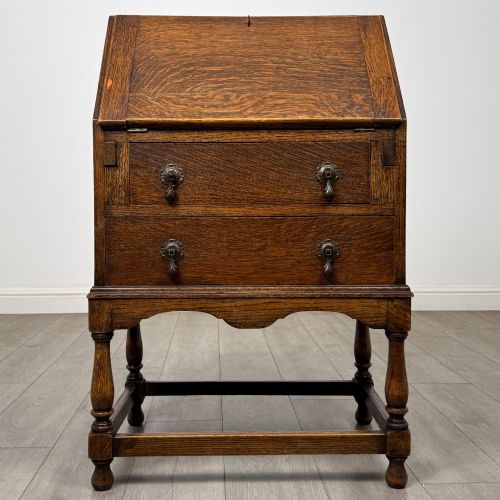
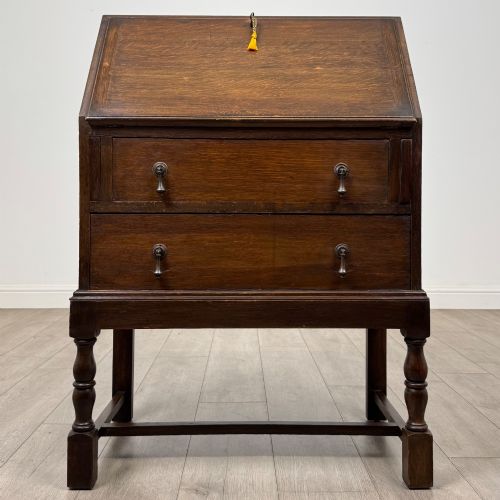
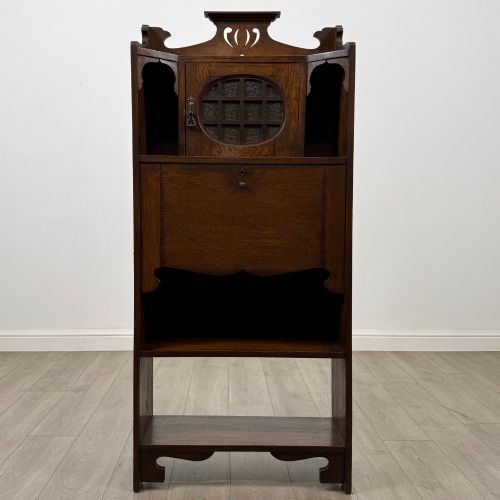
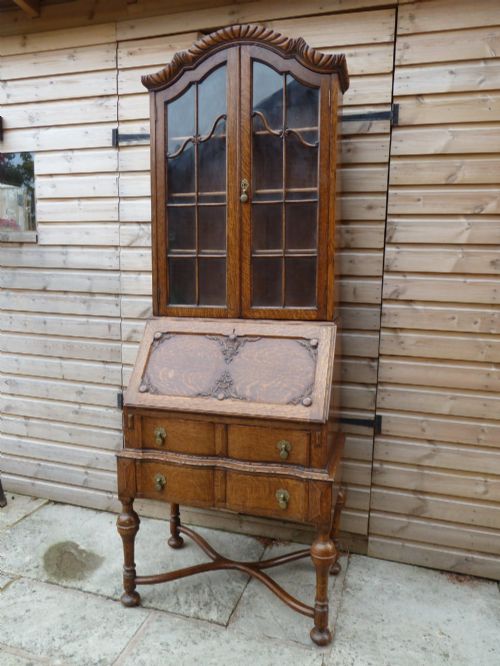
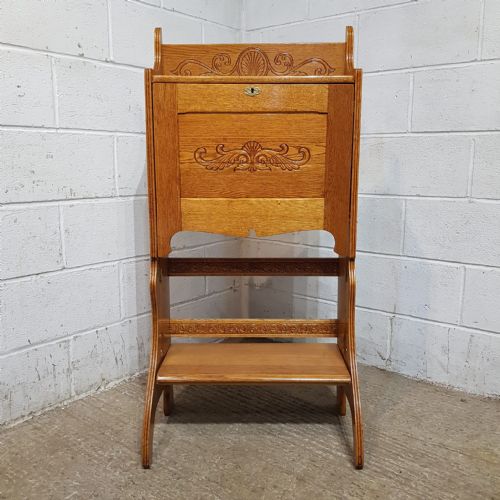
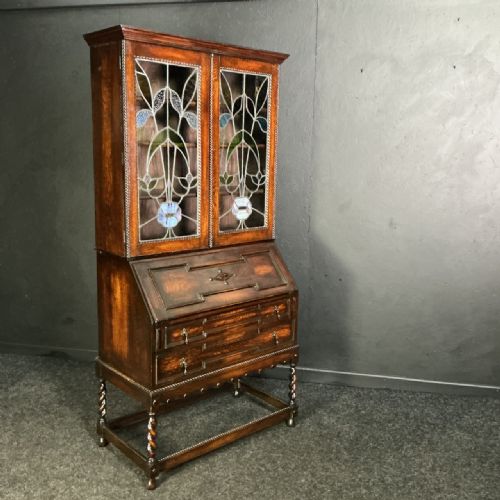
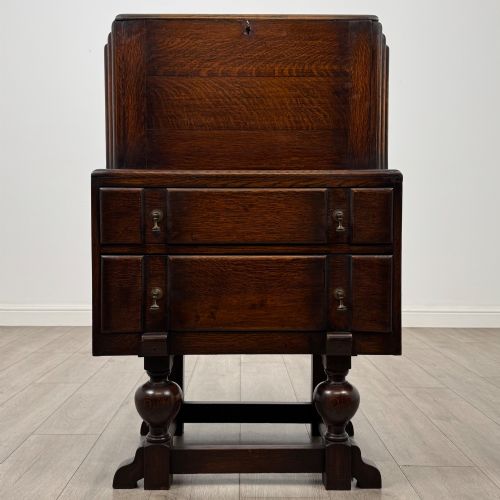
Buyers seeking an edwardian oak secretary find practical writing furniture designed for domestic studies and offices, spanning forms such as compact writing bureaux, bureau bookcases, and roll top desks. The pieces on this page appear in golden oak, dark oak, and satinwood, frequently paired with practical shelving or display cabinets above.
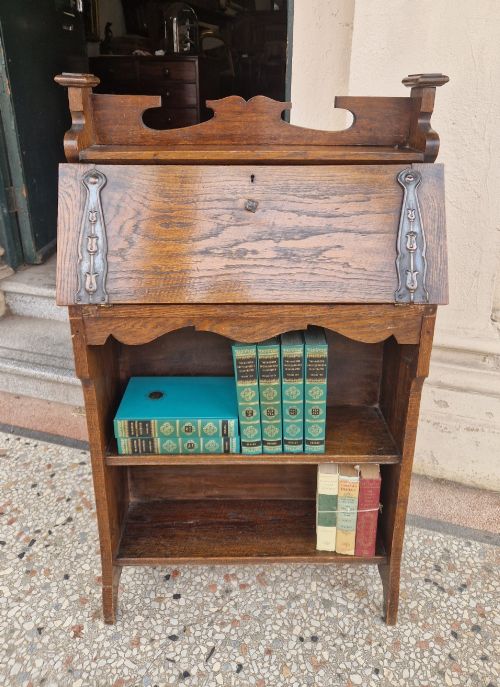
The selection ranges from narrow writing bureaux and bureau on stand variants to larger two-part bureau bookcase combinations. Stylistic influences lean towards Arts and Crafts simplicity alongside occasional Jacobean, Tudor, and Georgian revivals.
Most items originate from the Edwardian period and the early twentieth century, though nineteenth-century Victorian and late Georgian pieces also feature in the wider selection.
Materials and construction
Makers utilised solid oak and golden oak as the primary timber, sometimes complemented by satinwood veneers and crossbanding. Interiors frequently contain compartmentalised stationery fittings with small drawers and pigeonholes.
Hardware elements incorporate original brass handles, bun handles, and copper or iron fittings, while glass doors feature on the bookcase variations. Internal drawer construction often relies on traditional secondary timbers with oak linings.
The listings span from 1880 to 1930, showcasing solid oak, satinwood, brass, and glass across Arts and Crafts and revival styles.
Assessing quality in construction and design
Superior examples demonstrate careful selection of golden oak grain, precise carving, and well-executed moving interiors that operate smoothly. Simpler utility pieces contrast with elaborately detailed Arts and Crafts designs or documented retail pieces.
The integration of upper bookcases, leaded glass panels, and substantial cornice work distinguishes larger architectural cabinets from standard writing desks.
Harris Lebus·Liberty of London·James Shoolbred and Co
The Edwardian Oak Secretary Glossary
- Bureau
- A writing desk featuring a sloping fall-front that opens to reveal internal pigeonholes and small drawers. This form forms the core of the items listed under this search.
- Bureau Bookcase
- A two-part cabinet combining a lower writing bureau with an upper shelving or display section enclosed by doors. These taller pieces provide substantial storage for books and correspondence.
- Roll Top Desk
- A desk featuring a flexible slatted wooden cylinder that slides down to cover the writing surface and pigeonholes. It offers secure closure for office paperwork.
- Crossbanding
- A decorative border of veneer laid around the perimeter of a panel with the grain running perpendicular to the centre. This technique frames the primary wood surface.
- Arts and Crafts
- A design movement favouring honest construction, simple geometric lines, and visible craftsmanship over excessive machine-made ornamentation. Pieces from this tradition often display exposed joinery and hammered metal fittings.
Edwardian Oak Secretary: Frequently Asked Questions
What is an edwardian oak secretary?
An edwardian oak secretary is a wooden writing desk, often combining a sloping fall-front or roll top with internal compartments for letters and papers.
These items range from compact writing bureaux intended for home use to larger bureau bookcases designed for libraries and studies.
How do I use a bureau in a modern home?
A bureau serves as a compact workstation where the fall-front closes to conceal laptops, paperwork, and stationery when not in use.
The fitted interior compartments help organise mail and small items efficiently in living rooms or studies.
How do I tell an Arts and Crafts bureau apart from other styles?
Arts and Crafts pieces focus on plain oak surfaces, unpretentious construction, and sometimes copper or iron hardware rather than heavy historical carving.
They often bear the distinct design ethos associated with makers like Liberty or Shoolbred from the turn of the twentieth century.
What is the difference between a bureau and a bureau bookcase?
A standard bureau consists of a desk base with a writing flap and drawers, standing alone as a single piece of furniture.
A bureau bookcase adds a glazed or open shelving cabinet directly onto the top section to store books and display objects.