

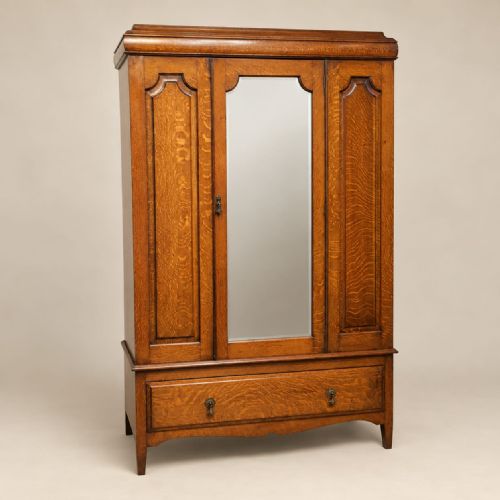
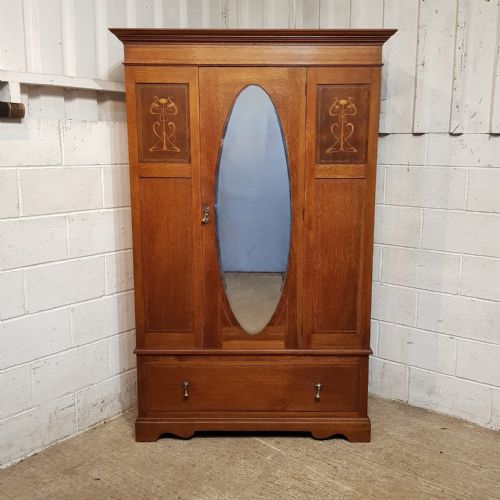
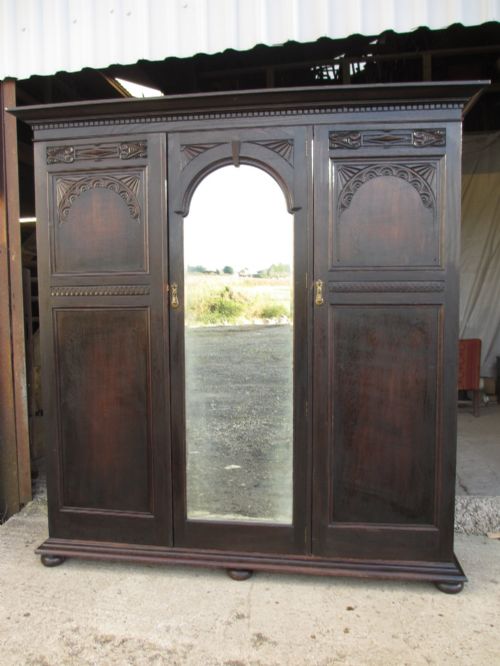
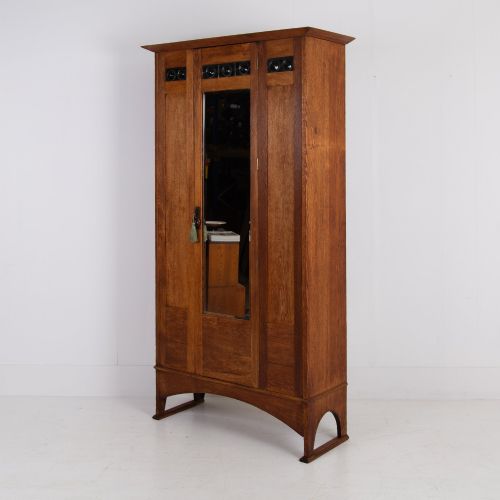
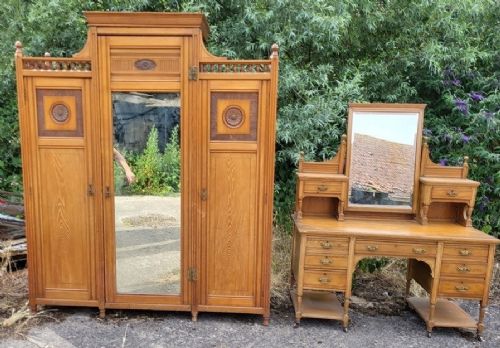
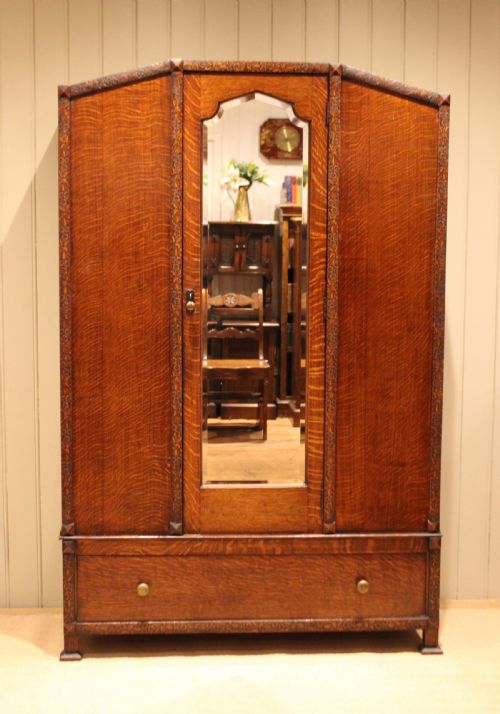


Edwardian Oak Mirrored Armoire
An edwardian oak mirrored armoire offers generous bedroom storage with the clarity of bevelled glass.
Edwardian Oak Mirrored Armoire
An edwardian oak mirrored armoire brings substantial timber and practical hanging space into the bedroom, drawing on the sturdy construction methods of the late nineteenth and early twentieth centuries. These large wardrobes often incorporate full length or panelled mirror doors that reflect light and add depth to a room.
Buyers browsing this selection frequently encounter pieces shaped by the Arts and Crafts movement or early twentieth century utility. Alongside standard single and double door wardrobes, the inventory spans compact hall variants, triple door configurations, and occasional miniature examples.
How they were made
Cabinet makers relied predominantly on solid oak, frequently paired with secondary timbers like ash or decorative veneers such as pollard oak. Surfaces often display hand carved details, subtle marquetry inlay, or mother of pearl highlights characteristic of the period.
Functional hardware plays a defining role in the construction, utilising heavy brass handles, hinges, and locking mechanisms alongside original bevelled glass mirror plates. Interior fittings commonly feature hanging rails, hooks, and sliding linen trays arranged behind panelled doors.
Edwardian Oak Mirrored Armoire Retail Price Guide 2026
Typical asking prices for edwardian oak mirrored armoire among the pieces listed under this phrase on Sellingantiques today, from the lower quarter to the upper quarter. They describe what is for sale here now, not the wider market.
Materials appearing across current pieces include solid oak, brass, mirror glass, ash, and mother of pearl.
What varies in quality
The distinction between standard commercial output and exceptional cabinet work rests on timber selection and architectural ambition. Pieces bearing maker documentation from established workshops generally display superior jointing and more thoughtful integration of decorative hardware.
Proportion and surface finish further separate examples, with finer wardrobes showing well balanced cornices, crisp carving, and clear mirror silvering. The presence of complementary interior drawer arrangements or secondary woods like pollard oak elevates the character of the piece.
Shapland & Petter·Maple & Co·Heals·Gillows of Lancaster·Arnott & Co
The Edwardian Oak Mirrored Armoire Glossary
- Armoire
- A large standing cupboard or wardrobe used primarily for hanging clothes. In British usage, the term frequently overlaps with large freestanding wardrobes from the Victorian and Edwardian eras.
- Pollard oak
- Timber taken from trees that have been pollarded, producing a highly decorative, clustered grain pattern. Cabinet makers used this wood selectively for drawer fronts and feature panels.
- Arts and Crafts
- A design movement spanning the late nineteenth and early twentieth centuries that emphasised honest construction, simple forms, and visible craftsmanship. Furniture from this ethos often avoids excessive ornamentation in favour of exposed grain and metal fittings.
- Compactum
- A multi-functional wardrobe featuring a combination of hanging space, drawers, and shelving within a single unified structure. These pieces maximise interior capacity for smaller bedrooms.
- Bevelled glass
- Mirror or window glass with edges cut and polished to an angled slope. This traditional technique creates a prismatic border that reflects light distinctly.
Edwardian Oak Mirrored Armoire: Frequently Asked Questions
How do I care for Edwardian oak?
Keep wooden wardrobes away from direct heat sources and dramatic humidity shifts to prevent timber movement or splitting. Dust regularly with a dry cloth and apply a quality beeswax sparingly when the wood appears dry.
Avoid silicone-based polishes that build up over time and dull the natural grain. Ensure mirror plates are cleaned with standard glass cleaner applied to a cloth rather than sprayed directly near the wooden frame.
Are these wardrobes easy to dismantle?
Many large wardrobes from this period were designed with modular construction to allow transport up staircases and through doorways. They typically dismantle into a cornice, base, side panels, and doors.
Marking internal components during disassembly ensures straightforward reassembly. Professional delivery and installation is often recommended due to the heavy weight of solid oak and large mirror glass.
How can I date my armoire?
Dating relies on architectural style, construction methods, and hardware typology found across the piece. Edwardian examples often feature lighter hardware and brighter oak finishes compared to earlier Victorian furniture.
Maker stamps, trade labels, or registration marks applied to the backboards or drawer interiors provide definitive historical reference points.