
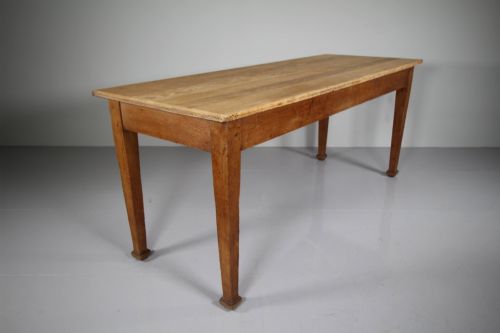
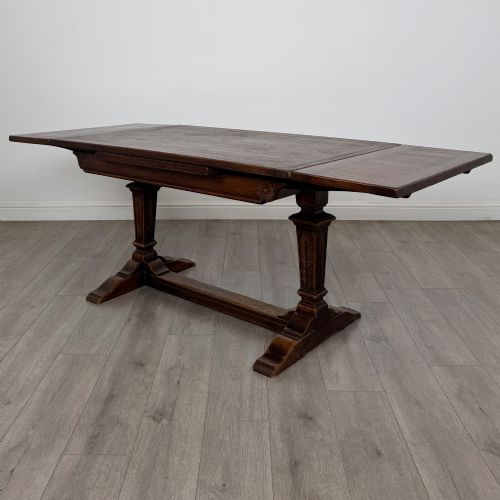
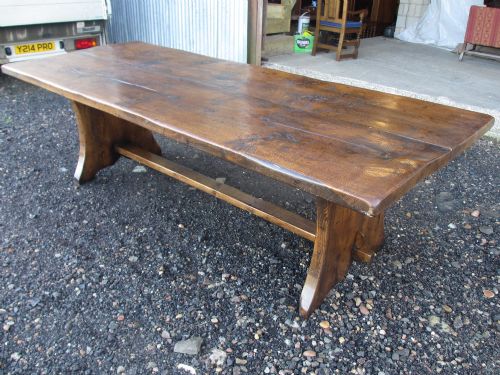
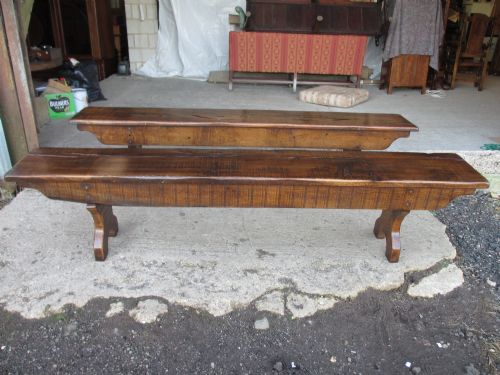
Edwardian Oak Kitchen Table
An edwardian oak kitchen table brings solid timber utility and honest craftsmanship straight from domestic workspaces into modern dining rooms.
Edwardian Oak Kitchen Table
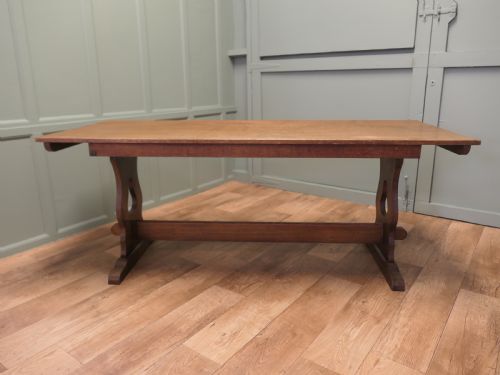
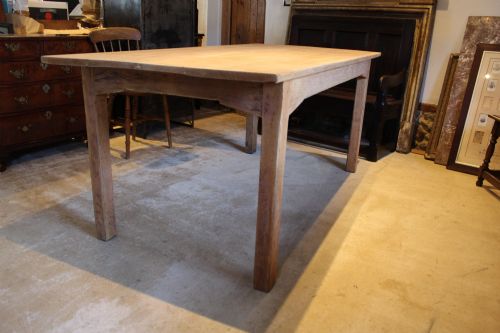
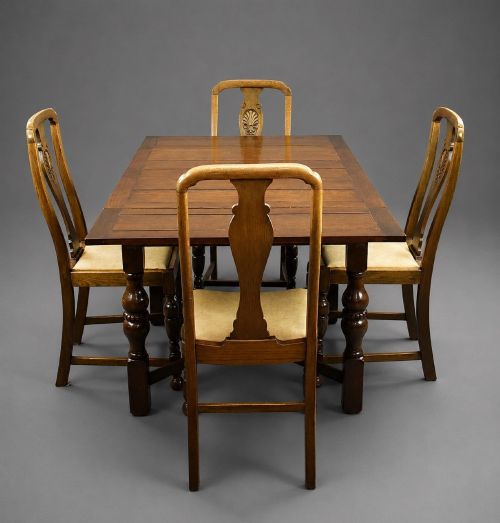
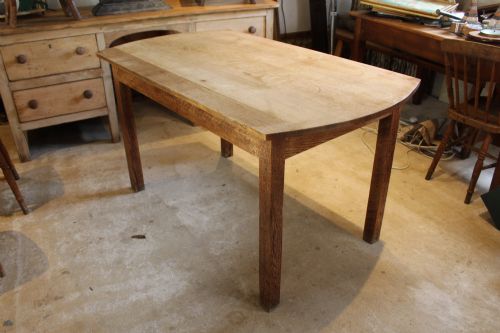
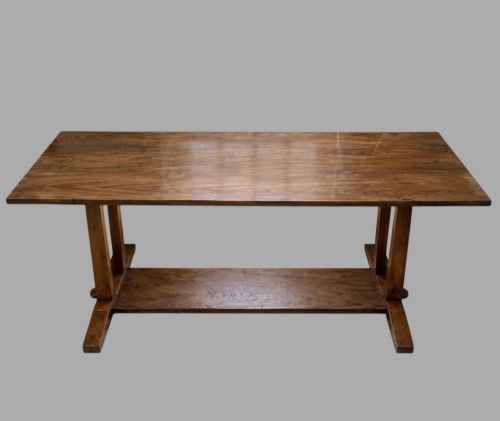
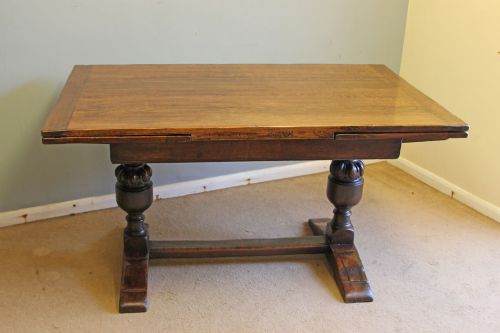
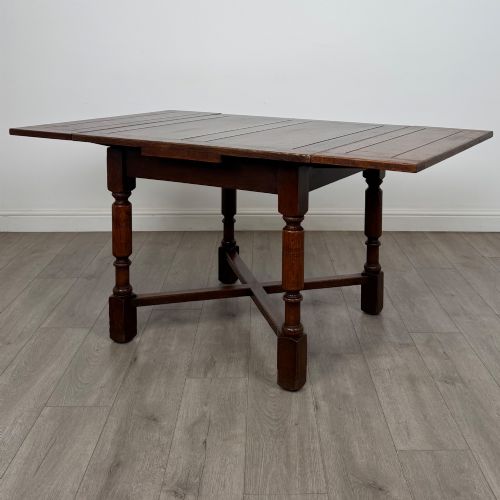
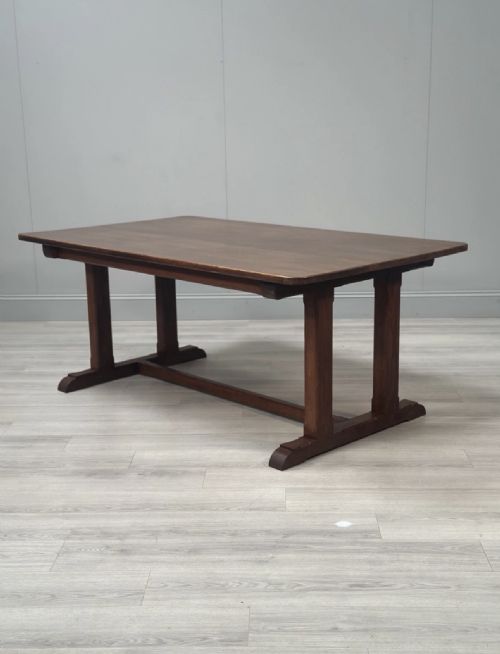
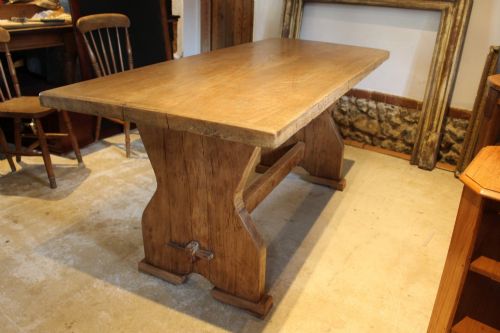
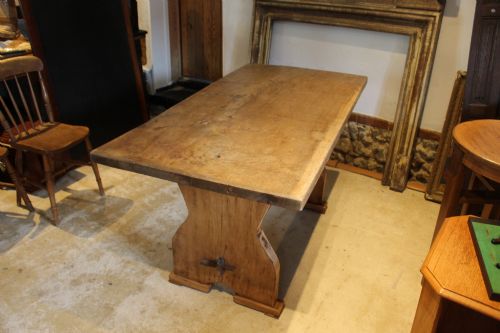
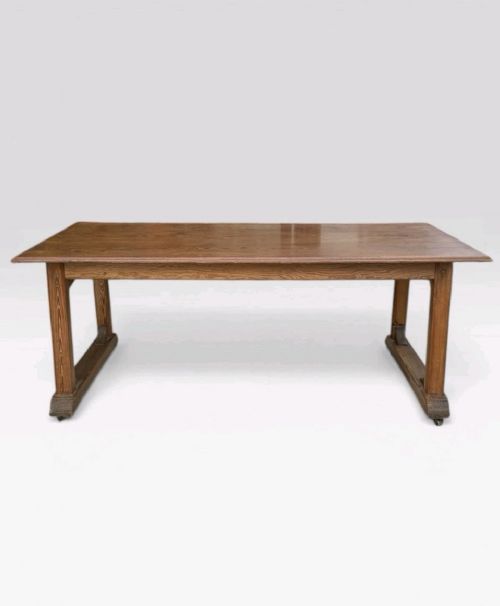
An edwardian oak kitchen table generally takes the form of a sturdy refectory, draw-leaf, or gate-leg design intended for daily domestic service. These pieces emerge predominantly from the early twentieth century, aligning with Edwardian and Arts and Crafts ideals of practical utility combined with straightforward construction.
Buyers encounter examples ranging from compact four-seater breakfast tables to large refectory formats seating eight or ten people. The survival of these tables demonstrates their original robust purpose as heavy-duty work surfaces in large country houses and urban sculleries alike.
Materials and Technique
Makers utilised solid oak, quarter-sawn oak, and occasionally supporting timbers such as elm or beech to build frames capable of withstanding heavy daily use. Quarter-sawn boards display distinct medullary ray patterns, adding visual depth to surfaces that needed to endure constant scrubbing and preparation work.
Construction methods rely heavily on traditional pegged joints, shaped trestle ends, and functional extension mechanisms like draw-leaves or drop-leaf hinges. These technical choices provide structural stability without relying on metal fasteners, allowing the timber to expand and contract naturally.
Listings feature oak alongside elm, brass, and glass, spanning periods from Victorian origins through Edwardian and 1930s revivals.
Proportion and Timber Selection
Quality in these tables rests primarily on the grade of timber selected and the integrity of the original joints. Pieces fashioned from quarter-sawn boards or dense solid oak exhibit superior stability and a more striking grain than those built from utility-grade planks.
Proportion and execution distinguish standard utilitarian furniture from pieces bearing design influences associated with prominent workshops or architects. Clean lines, well-balanced trestle supports, and smoothly functioning extension leaves separate finer examples from basic vernacular pieces.
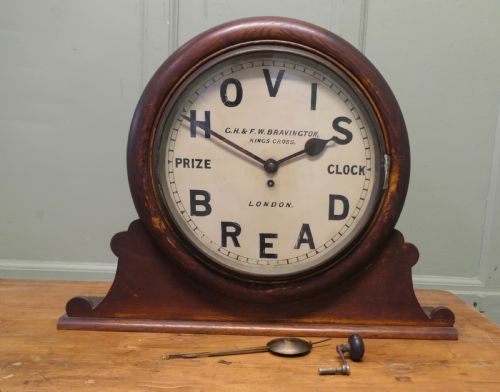
Heals of London·Maple and Co·Sir Robert Stoddart Lorimer·G.H.& F.W. Bravington London
The Edwardian Oak Kitchen Table Glossary
- Refectory table
- A long, narrow dining table traditionally used for communal meals. These versions frequently feature heavy trestle ends or four robust legs connected by low stretchers.
- Draw-leaf table
- An extending table equipped with two sliding leaves stored beneath the main top. Pulling these leaves outwards extends the surface area instantly.
- Quarter-sawn oak
- Timber cut radially from the log rather than tangentially. This method produces enhanced dimensional stability and a characteristic figured grain pattern.
- Gate-leg table
- A table with hinged leaves supported by swing-out legs resembling a gate. This mechanism allows the surface area to fold down compactly when not in use.
- Arts and Crafts
- A design movement valuing handcraft, vernacular traditions, and honest construction over industrial mass production. Tables from this tradition display understated structural honesty.
Edwardian Oak Kitchen Table: Frequently Asked Questions
How do I seat eight people?
Look for refectory styles or extending formats such as draw-leaf models that accommodate larger gatherings without crowding the room.
Measuring the clearance beneath the aprons ensures chairs tuck in comfortably around the trestle supports.
Can I use this daily?
Solid timber construction and pegged joints make these surfaces exceptionally resilient for family meals and food preparation.
Routine maintenance involves simple wiping and occasional waxing to protect the natural grain from moisture.
Are leaves original?
Draw-leaf mechanisms and drop-leaves form an integral part of the original construction on many period examples.
Inspecting the timber matching and sliding runners helps confirm that extending sections belong to the primary build.
How do I date them?
Hardware, timber finishing, and stylistic cues like Arts and Crafts chamfering point toward the early twentieth century.
Comparing construction details against documented workshop pieces narrows the production period accurately.