
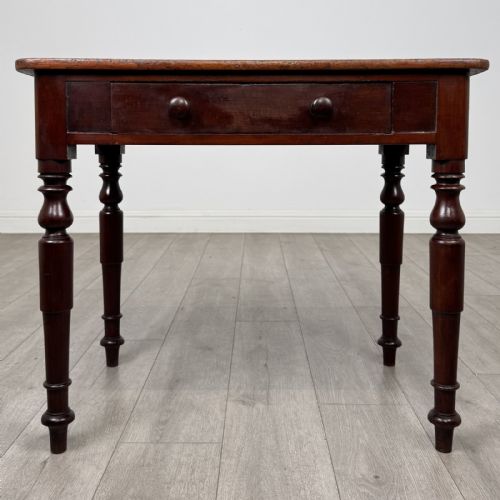
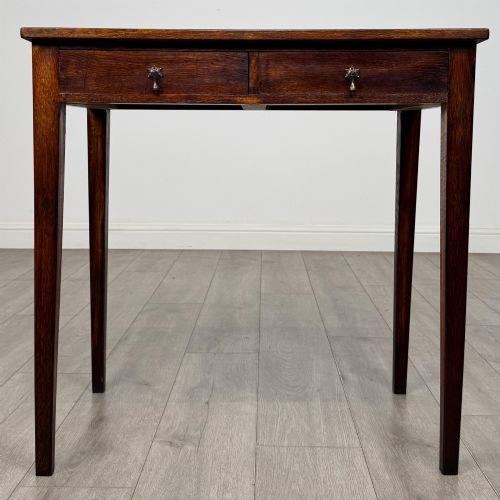
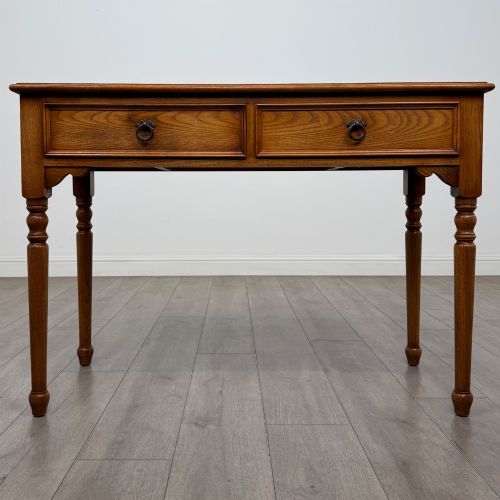

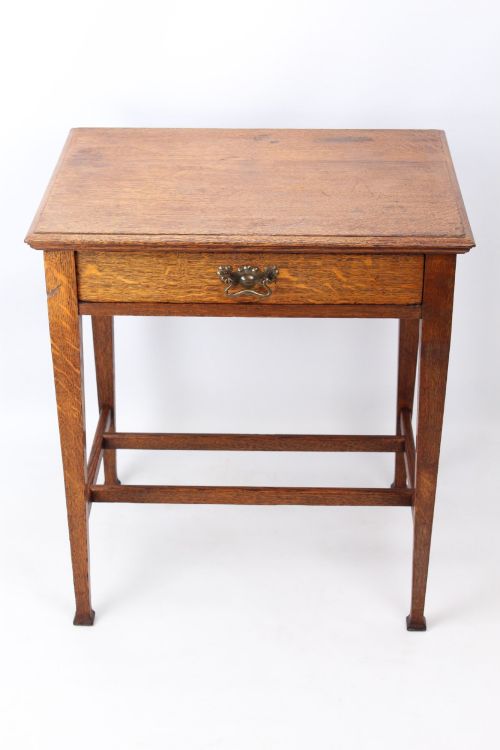
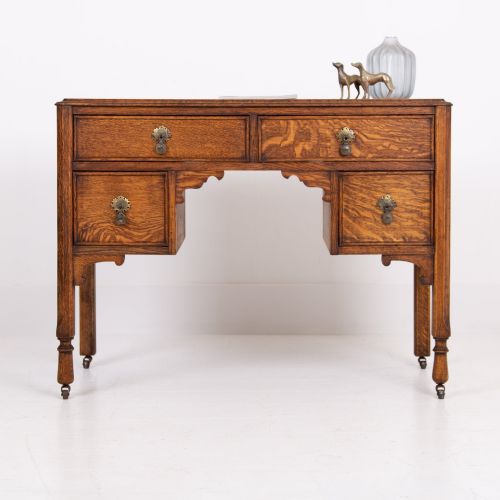
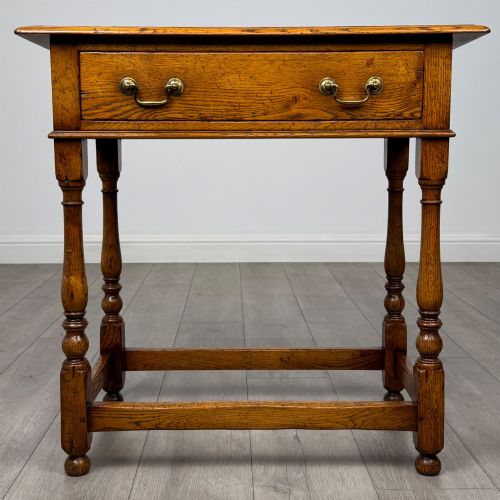
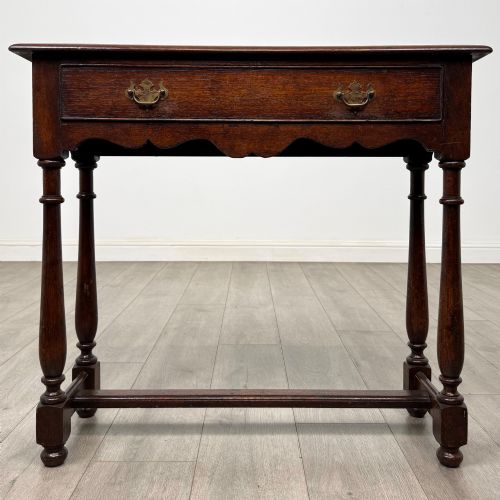
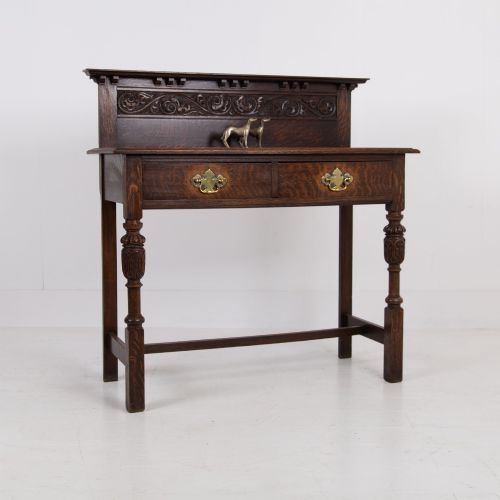

Edwardian Oak Hall Desk
When you want an Edwardian oak hall desk, you are looking for a sturdy piece designed to handle daily correspondence in an entranceway.
Edwardian Oak Hall Desk
An edwardian oak hall desk functions as a practical writing surface or console for an entrance hallway, often equipped with drawers for stationery. These pieces appear alongside related forms such as side tables, writing tables, and hall tables that share similar proportions.
Most examples date from the Edwardian period or around nineteen hundred, reflecting the domestic needs of the early twentieth century. You will also encounter pieces from the Victorian era and the nineteenth century, showing how the form evolved from earlier side tables and writing desks.
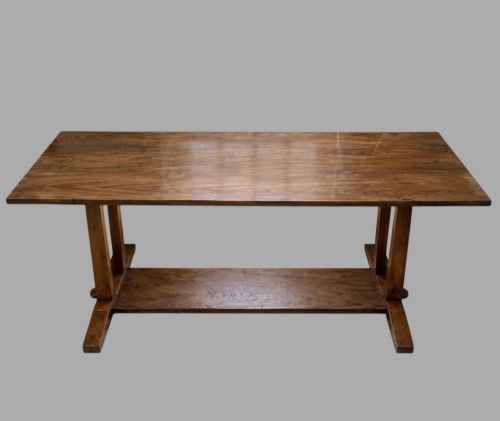
Makers of the period utilised durable timbers to create functional hall furniture that suited both modest homes and larger residences. The designs range from plain utilitarian desks to those decorated with carving or influenced by the Arts and Crafts movement.
How they were made
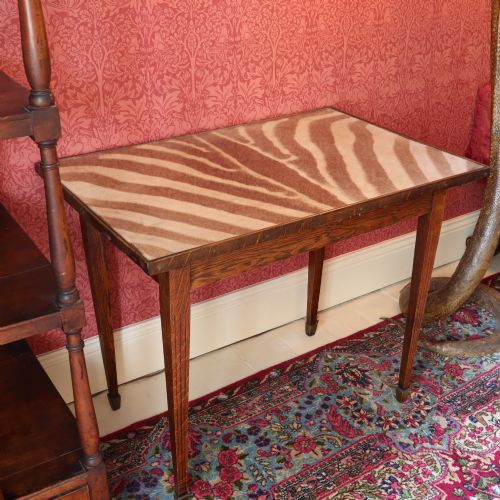
Cabinet makers relied principally on solid oak, selected for its strength and prominent grain, sometimes enhanced by burr figuring or carved details. Brass handles, leather inserts, and occasionally fabric or suede surfaces completed the functional writing areas.
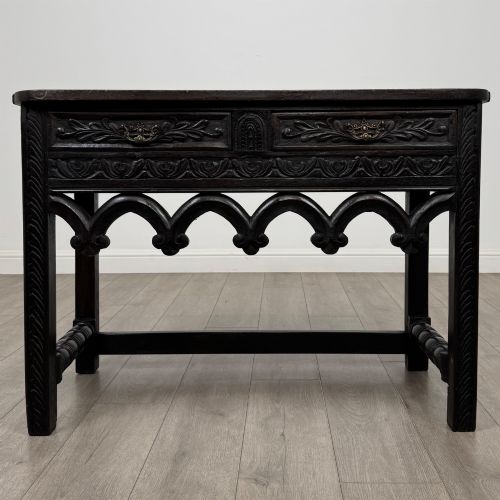
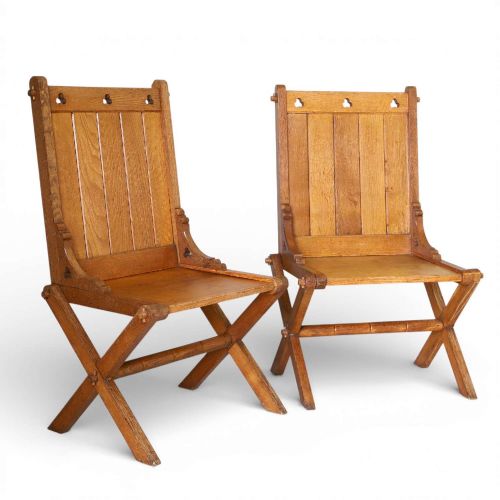
Construction techniques combined traditional joinery with decorative carving, particularly visible in pieces showing Gothic Revival or Arts and Crafts influence. Workshops utilised straightforward assembly methods that ensured the furniture could withstand frequent daily use in busy halls.
The furniture forms associated with this search range from simple console tables and writing desks to elaborate Gothic Revival pieces.
What varies in quality
The standard of an edwardian oak hall desk depends heavily on the selection of timber and the crispness of any carved ornamentation. Finer examples display thoughtful proportions and careful attention to structural joints rather than mass-produced simplicity.
The Edwardian Oak Hall Desk Glossary
- Edwardian
- Pertaining to the reign of King Edward VII, spanning from nineteen hundred to nineteen ten. This era favoured lighter domestic furniture styles compared to heavy Victorian designs.
- Arts and Crafts
- A design movement emphasising handcraftsmanship, simple forms, and natural materials. It heavily influenced early twentieth-century oak hall furniture.
- Gothic Revival
- An architectural and decorative style drawing on medieval motifs, often featuring pointed arches, trefoils, and heavy carved woodwork.
- Console table
- A table designed to stand against a wall, frequently used in hallways for mail and small items.
- Burr oak
- A growth deformity in oak timber that produces intricate, swirling grain patterns highly prized for cabinet work.
Edwardian Oak Hall Desk: Frequently Asked Questions
Where should I place an oak hall desk?
An edwardian oak hall desk fits naturally in an entranceway, landing, or narrow corridor where surface space is useful.
Its compact footprint allows it to serve as a convenient drop zone for post and keys without blocking foot traffic.
How do I care for oak hall furniture?
Protect the wood by keeping it away from direct heat sources and sudden temperature fluctuations that can dry out the timber.
Apply a traditional beeswax polish occasionally to nourish the oak and maintain a natural satin sheen.
What is the difference between a hall desk and a writing table?
A hall desk is typically shallower in depth to fit narrow corridors and entrance spaces.
Writing tables are generally designed for extended seated work in libraries or studies rather than transient hallway use.
Did Edwardian desks use leather inserts?
Many writing surfaces and desks from this period incorporated tooled leather, fabric, or suede writing panels.
These insets provided a smooth, flat surface for handwriting while protecting the underlying oak from ink spills.