




Edwardian Oak Desk Box
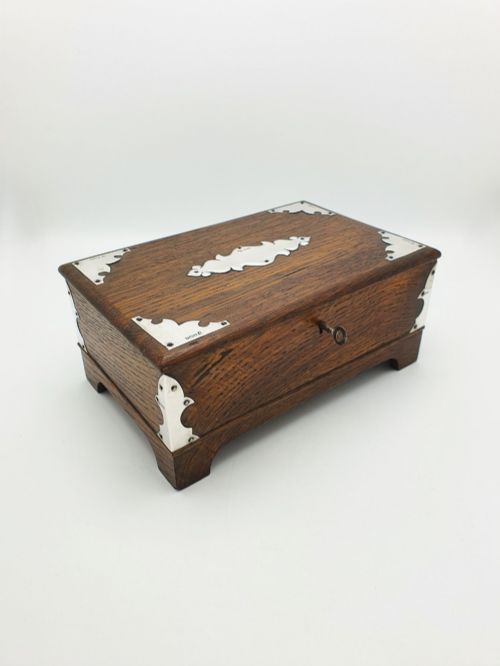
An edwardian oak desk box is a practical desktop accessory designed for organising correspondence, tobacco or writing equipment, prized for its robust build and period utility.
Edwardian Oak Desk Box
When searching for an edwardian oak desk box, buyers encounter a variety of forms including stationery cabinets, letter boxes, cigar boxes and smoking cabinets. These pieces date principally from the Edwardian era and the late nineteenth century, reflecting the rigorous correspondence habits of the period.
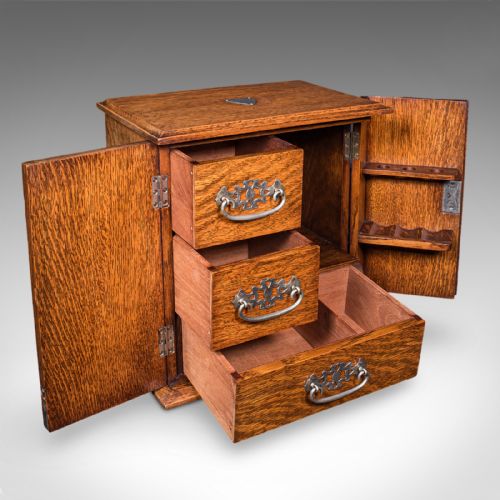
The version most commonly met on this page is the table top stationery cabinet or fall-front desk tidy, often fitted with internal compartments for letters and post. Country house letter boxes and brass-mounted desktop boxes also appear frequently, alongside specialised smoker's cases.
Many examples incorporate Arts and Crafts influences or Gothic Revival details, while others take distinctive shapes such as a coal wagon or house postbox. They served distinct domestic and professional roles, from the doctor's consulting room to the country house hall.
How they were made
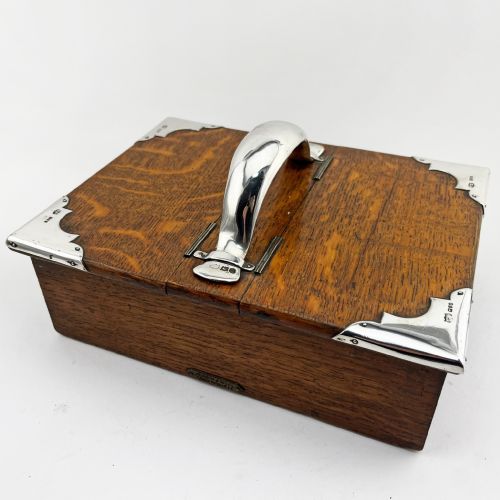
Makers utilised solid oak, frequently described as golden oak, paired with brass mounts, hinges and handles. Some pieces incorporate sterling silver mounts or glass ink bottles to enhance their utility.
Construction techniques involve sturdy joinery suitable for desktop use, with drop-front doors, fall fronts and hinged lids securing internal compartments. Metal fittings such as brass binding and silver plaques provide both structural reinforcement and decorative contrast.
Edwardian Oak Desk Box Retail Price Guide 2026
Typical asking prices for edwardian oak desk box among the pieces listed under this phrase on Sellingantiques today, from the lower quarter to the upper quarter. They describe what is for sale here now, not the wider market.
One smoker's cabinet takes the cheerful form of a GWR coal wagon.
What varies in quality
The distinction between standard examples and finer pieces lies in the integration of functional details such as adjustable dates, integrated inkstands and complete internal fittings. Superior items often feature substantial brass or sterling silver mounts and thoughtful internal arrangement.
Design ambition separates basic containers from work associated with notable silversmiths or retailers, visible in the handling of Arts and Crafts details and the weight of the timber used.
Mappin and Webb
The Edwardian Oak Desk Box Glossary
- Fall front
- A hinged door that drops forward to reveal interior letter slots and pigeonholes.
- Stationery cabinet
- A desktop box designed specifically to hold writing paper, envelopes and correspondence.
- Humidor
- A moisture-controlled box used for storing cigars or tobacco within a smoking cabinet.
- Inkstand
- A desktop tray or box holding one or more ink bottles alongside pen rests.
- GWR coal wagon
- A novelty form modelled after Great Western Railway coal trucks, occasionally adopted for smoker's cabinets.
Edwardian Oak Desk Box: Frequently Asked Questions
What is an edwardian oak desk box?
An edwardian oak desk box is a tabletop container designed to keep correspondence, stationery, or smoking materials orderly on a desk or hall table.
These pieces reflect the domestic and professional routines of the early twentieth century, combining durable timber construction with functional internal layouts.
How were stationery cabinets used?
Stationery cabinets stored writing paper, envelopes, and incoming post within dedicated slots and compartments on a desk or bureau.
Fall-front designs allowed quick access to writing materials while keeping the desktop neat when closed.
Where were letter boxes placed?
Letter boxes served in country houses and hotels for collecting household or guest correspondence before postal collection.
They frequently stood in entrance halls, fitted with brass mounting and clear letter slots to receive daily post.
How do smoking cabinets differ?
Smoking cabinets and cigar boxes were built to store tobacco, cigars, and smoking accessories securely.
They often featured internal humidors, racks, and dedicated compartments separate from standard stationery storage.