





Desktop Document Casket
A desktop document casket organises precious papers on a writing desk, combining sturdy construction with decorative metal or leather work.
Desktop Document Casket
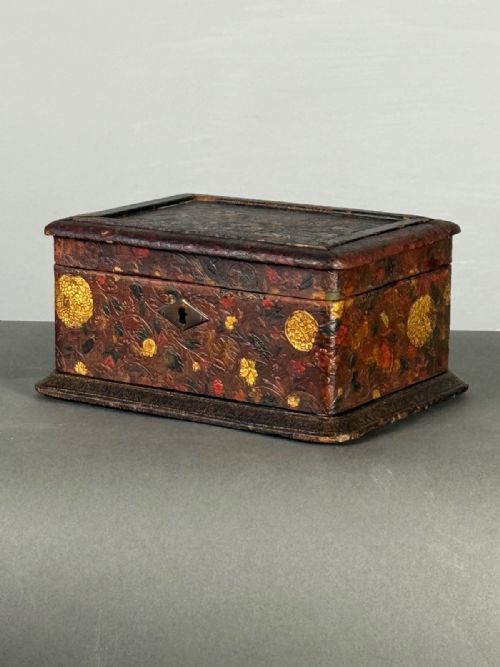
A desktop document casket sits on a writing table to hold letters, papers and writing implements. The examples found here range across the nineteenth century, including Victorian pieces, alongside an earlier seventeenth-century cabinet and an Edwardian box.
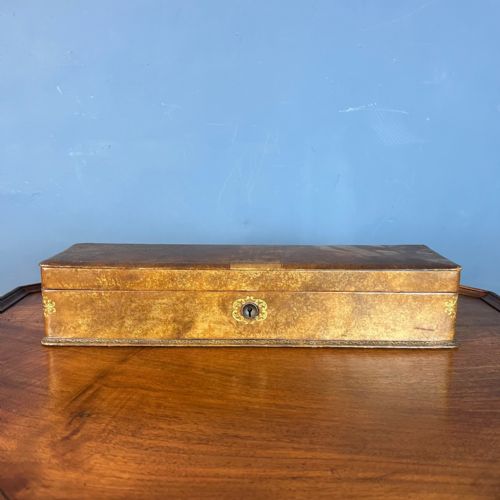
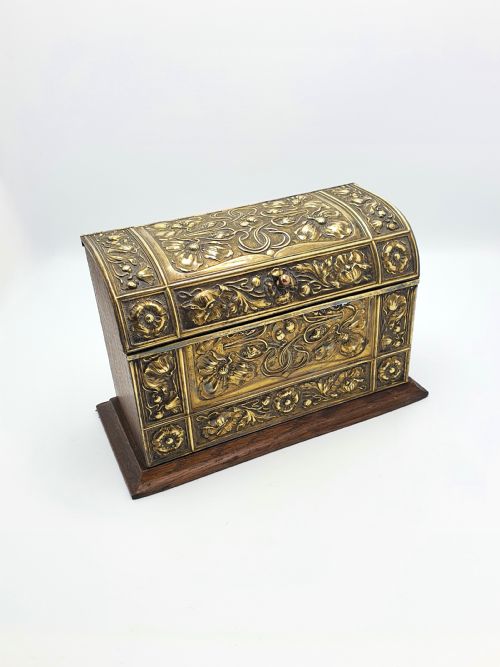
Most pieces on this page take the form of stationery boxes, desk accessories, and trinket boxes. Forms vary from simple oak and brass-bound boxes to elaborate domed top table boxes and leather-covered caskets.
Origins span English, French, Flemish, and Anglo-Indian workshops, showing diverse regional tastes in desk furniture. A buyer encounters materials such as burr walnut, ebony, kingwood, fruitwood, and leather.
Materials and construction methods
Cabinet makers utilise dense hardwoods such as oak, walnut, and ebony to build the carcass of each desktop document casket. Veneers like burr walnut and kingwood provide decorative surface grain.
Surface ornamentation relies on brass bindings, tooled leather, and gold leaf with polychrome pigment. Bone inlays and marquetry add further decorative contrast across the wooden panels.
Desktop Document Casket Retail Price Guide 2026
Typical asking prices for desktop document casket among the pieces listed under this phrase on Sellingantiques today, from the lower quarter to the upper quarter. They describe what is for sale here now, not the wider market.
Some boxes wear their travels visibly, hiding bits of old stationery dust deep inside their carved wooden compartments.
Distinctions in quality
The standard of a desktop document casket depends on the precision of its joinery and the complexity of its surface decoration. Finely carved bone details and intricate marquetry indicate higher labour input.
The choice of primary timber and secondary veneers alters the character of the piece, with figured burr walnut and ebony marking out finer examples. Integrated brass hardware adds structural integrity and decorative finish.
Susse Freres Paris
The Desktop Document Casket Glossary
- Marquetry
- Inlaid wood veneers forming decorative patterns on the surface of a box. This technique employs contrasting timbers to create geometric or pictorial designs.
- Stationery box
- A desk accessory designed specifically to hold writing paper and envelopes upright. These compartments keep correspondence organised within reach.
- Kingwood
- A dense, richly figured timber utilised for decorative veneers in cabinet making. Its dark grain provides a striking contrast against lighter woods.
Desktop Document Casket: Frequently Asked Questions
What is a desktop document casket?
A desktop document casket is a box designed to hold letters, stationery, and valuable papers on a writing desk.
These pieces protect correspondence while adding decorative character to a workspace through materials like wood, leather, and brass.
How were stationery boxes used?
Stationery boxes held writing paper, envelopes, and desk accessories within easy reach of the writer.
Victorian and Edwardian examples often include partitioned interiors to keep different sizes of paper separated.
What materials appear on these boxes?
Construction materials include hardwoods such as oak, walnut, ebony, and fruitwood.
Surfaces frequently feature tooled leather, brass mountings, gold leaf, and bone inlays.
How do I identify a 19th-century box?
Nineteenth-century boxes often display styles associated with the Victorian era, Art Nouveau, or campaign furniture.
Construction techniques and specific wood choices like burr walnut help point towards this period.