


Edwardian Oak Centre Table
An edwardian oak centre table brings practical presence and solid timber grain to a room, offering a functional surface designed to anchor a central space.
Edwardian Oak Centre Table
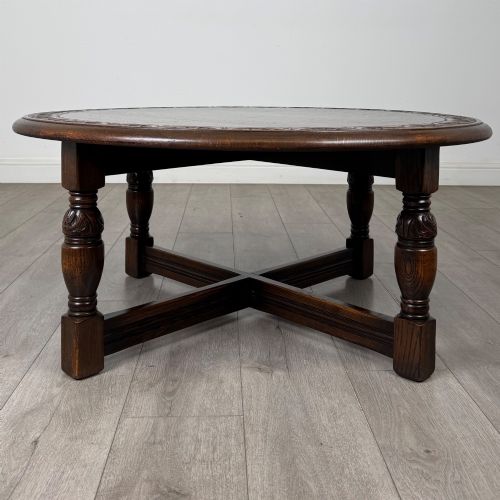
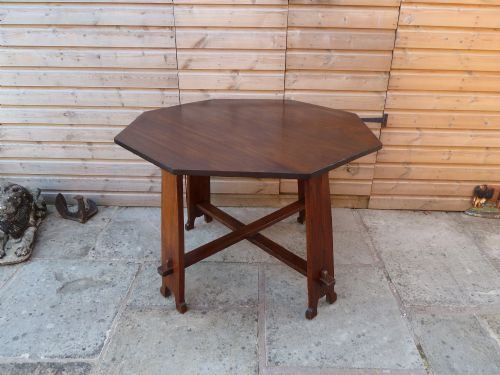
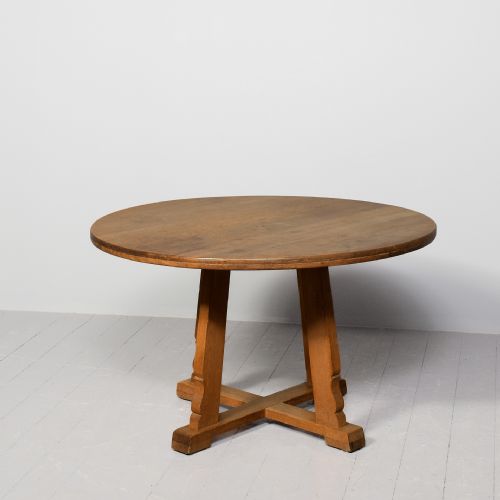
An edwardian oak centre table appears in forms ranging from round occasional pieces and two-tier designs to larger library and dining tables. These pieces draw on the sturdy qualities of oak, sometimes utilising circular or octagonal formats that suit a central placement in a room.
The selections span periods from the nineteenth century into the early twentieth century, alongside Edwardian examples featuring bleached tops or geometric parquetry. Buyers meet varied styles including Arts and Crafts influences and Aesthetic Movement details.
Makers such as James Shoolbred and Co. London produced significant library tables, while other pieces follow the style of designers like Sir Robert Stoddart Lorimer. These tables served various domestic and institutional functions as library, coffee, and hall tables.
How They Were Made
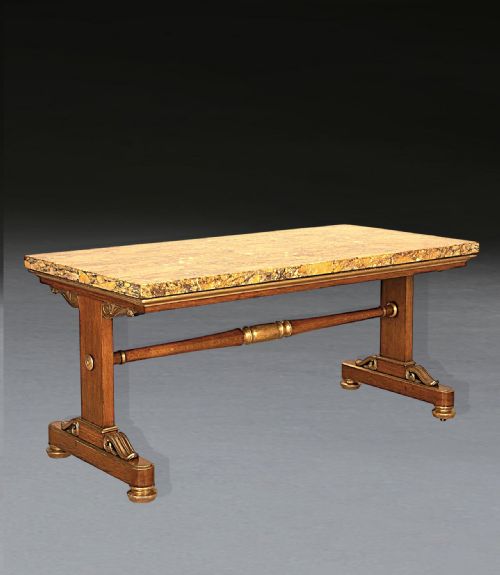
Construction relies primarily on oak timber, often selected for golden tones or finished with a bleached top, paired with secondary materials such as leather, brass, and rattan. Certain pieces incorporate distinctive stone tops, notably Siena marble and Derbyshire fossil marble.
Decorative techniques include geometric parquetry and inlaid burr walnut details, alongside giltwood enrichments. Craftsmanship is visible in the structural joinery of octagonal frames and two-tier configurations.
Some tables feature fossil marble tops preserving ancient sea creatures right in the middle of your afternoon tea.
What Varies in Quality
Quality differentiates standard production from exhibition pieces through the precision of parquetry work and the selection of timber figures. Tables bearing documented maker attributions or unusual marble inserts demonstrate higher standards of workshop execution.
The integrity of secondary materials, such as original leather surfaces or intact rattan panels, separates unaltered examples from later restorations. Proportions and the handling of edge mouldings further distinguish the finer outputs.
James Shoolbred and Co
The Edwardian Oak Centre Table Glossary
- Parquetry
- Geometric mosaic woodwork used for decorative floors and table tops. This technique employs contrasting timber species to create patterns.
- Centre table
- A freestanding piece designed to be viewed from all sides rather than pushed against a wall. These occupy the middle of a room.
- Library table
- A large sturdy table designed for reading and holding books, often fitted with drawers. They frequently feature heavy timber construction.
- Derbyshire fossil marble
- A dark limestone containing prehistoric crinoid fragments, polished for decorative table tops. It provides a smooth patterned stone surface.
- Arts and Crafts
- A design movement valuing traditional craftsmanship and simple forms over mass production. It emphasised the natural qualities of materials like oak.
Edwardian Oak Centre Table: Frequently Asked Questions
Where should I place an edwardian oak centre table?
These tables are designed to stand free in the middle of a room, allowing access from all sides.
They work well in large hallways, libraries, or living spaces where a freestanding surface is needed.
How do I care for an oak surface?
Oak benefits from occasional waxing to maintain the lustre of the timber grain and protect the finish.
Keep these tables away from direct heat sources and strong sunlight to prevent timber movement.
What is the difference between a centre table and a coffee table?
Centre tables are taller and were historically used in the middle of principal rooms for display or reading.
Coffee tables are lower in height, developed later for use specifically beside seating.
Are these tables suitable for daily use?
Solid oak construction provides durability for everyday domestic tasks such as holding lamps or books.
Care should be taken with marble or inlaid surfaces to avoid scratching or staining the decorative top.