


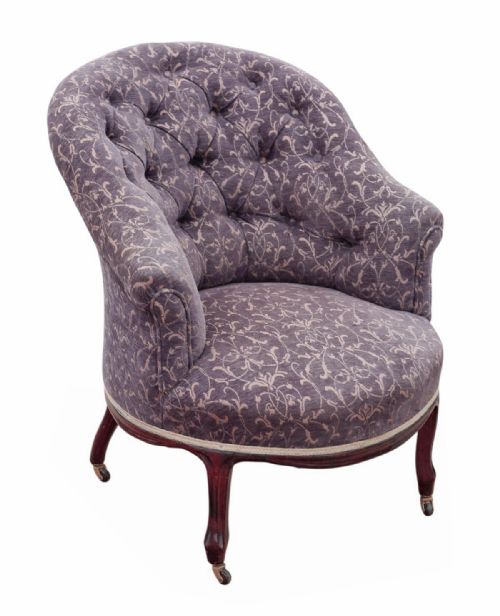


Edwardian Nursing Armchair
An edwardian nursing armchair provides low-slung, comfortable seating designed for domestic interiors, offering period character and compact proportions.
Edwardian Nursing Armchair
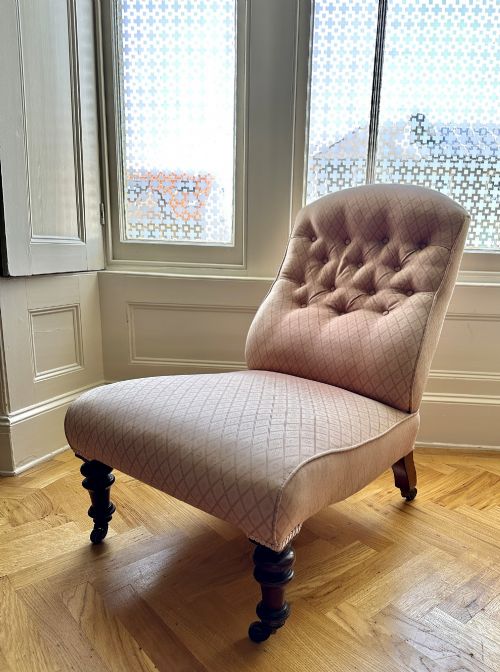
An edwardian nursing armchair sits low to the floor with an open seat designed for comfortable nursing and domestic rest. These pieces emerge primarily from the Edwardian period alongside related Victorian examples.
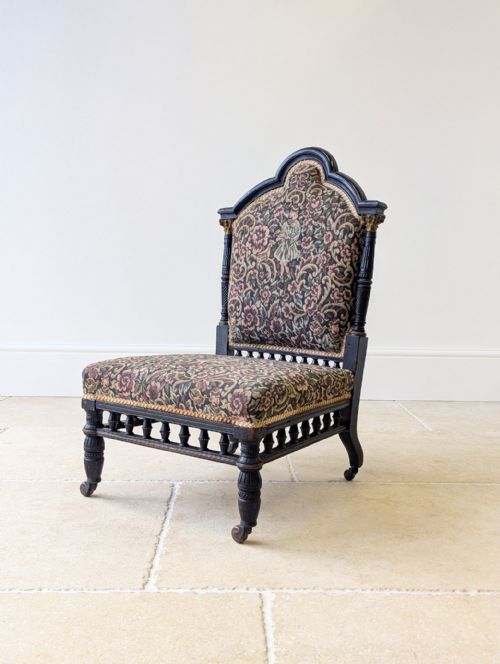
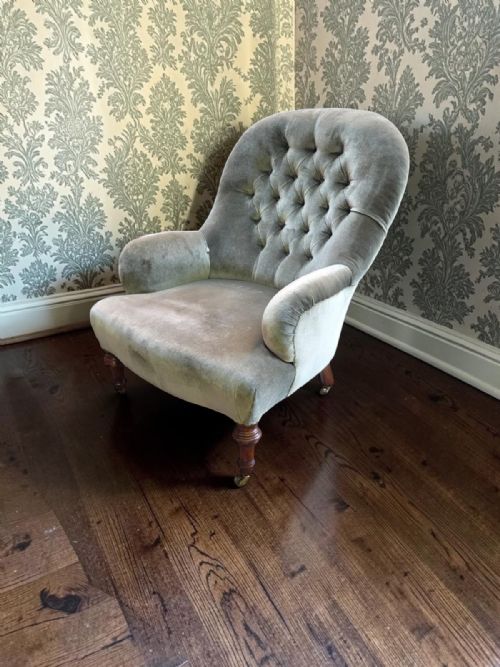
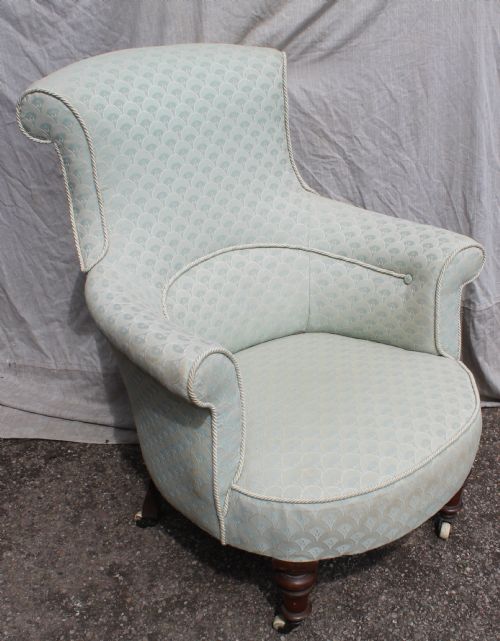
The form appears in various configurations including low salon chairs, slipper chairs, and bedroom chairs. Wooden frames feature upholstered seats, often with button backs and sprung construction.
How they were made
Frames rely on hardwoods such as mahogany, walnut, rosewood, and beech, sometimes shaped with cabriole legs or decorative inlay. Metal elements like brass castors and iron supports occasionally appear.
Upholstery employs traditional fabrics including velvet, leather, and patterned textiles stretched over buttoned backs. Hand-carved wooden details finish the structural frames.
Some diminutive armchairs were built specifically as nursery chairs, offering pint-sized comfort for smaller occupants.
What varies in quality
The refinement of the woodwork dictates much of the standard, separating simple turned legs from intricately carved walnut or inlaid mahogany. Finely executed button upholstery and robust frame joinery distinguish higher tiers.
Proportions and timber selection reveal the skill of the maker, with dense burr walnut and carefully curved frames offering superior presence.
Howard and Sons
The Edwardian Nursing Armchair Glossary
- Cabriole leg
- A furniture leg that curves outward and then tapers inward, common on period seating. This design originates from classical furniture traditions.
- Button back
- An upholstery technique where buttons are pulled deep into the padding to create a diamond pattern. This method secures the internal stuffing and adds texture.
- Bergere
- A closed-arm chair with cane work panels set into a wooden frame. It provides a lighter appearance than fully upholstered alternatives.
- Ebonised
- Wood finished with a black stain or paint to resemble ebony. This treatment was favoured during the Victorian and Aesthetic Movement eras.
- Slipper chair
- A low-seated bedroom chair traditionally used by women when putting on shoes. These pieces share a similar compact scale with nursing chairs.
Edwardian Nursing Armchair: Frequently Asked Questions
What is an edwardian nursing armchair used for?
An edwardian nursing armchair serves as a low, comfortable seat originally designed to assist mothers with nursing infants. Their compact height and supportive backs also suit bedroom and fireside placement.
Today, these chairs function well as accent seating in living rooms or studies. Their modest proportions fit easily into smaller spaces.
How do you date an edwardian nursing armchair?
Dating relies on examining the timber species, upholstery style, and frame ornamentation. Edwardian examples often feature lighter woods like mahogany or satinwood inlay, whereas Victorian pieces tend to be heavier walnut or rosewood.
Construction methods also help determine age, as machine-tooled elements gradually replaced hand-carved details toward the twentieth century. Comparing leg styles and fabric types provides further chronological clues.
Are nursing chairs comfortable to sit in?
Nursing chairs offer deep, supportive seating due to their sprung bases and padded backrests. Their low posture encourages a relaxed sitting position.
While designed with ergonomics of the past in mind, many modern users find them comfortable for reading or quiet relaxation.
What woods were used for these chairs?
Cabinet makers utilised a range of domestic and imported timbers depending on the period. Mahogany and walnut appear frequently in both Victorian and Edwardian pieces.
Other examples employ rosewood, beech, or ebonised wood, occasionally enhanced with decorative marquetry or brass hardware.