
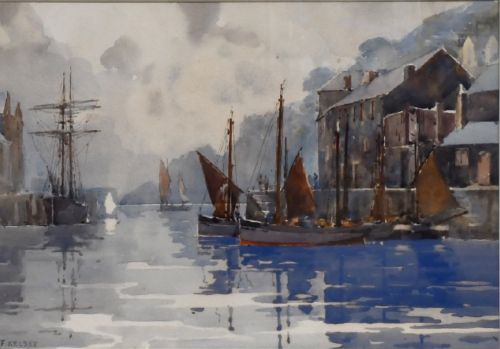


Edwardian Nautical Art
Edwardian nautical art captures the maritime world of the early twentieth century through paintings, dioramas, and carved woodwork.
Edwardian Nautical Art
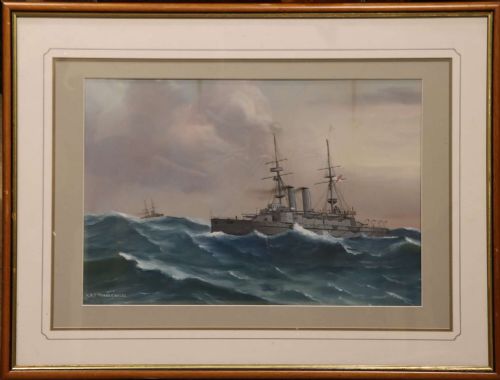
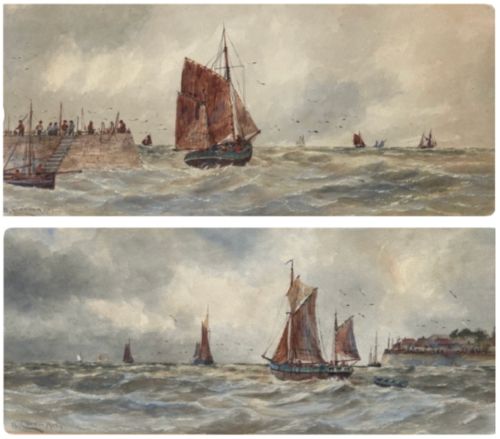
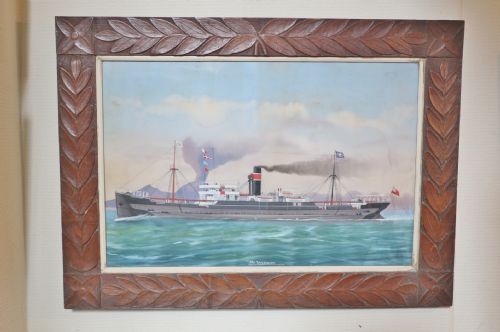
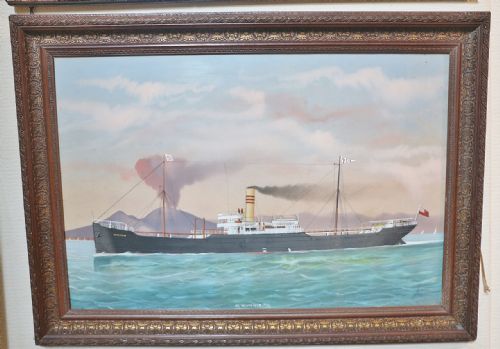
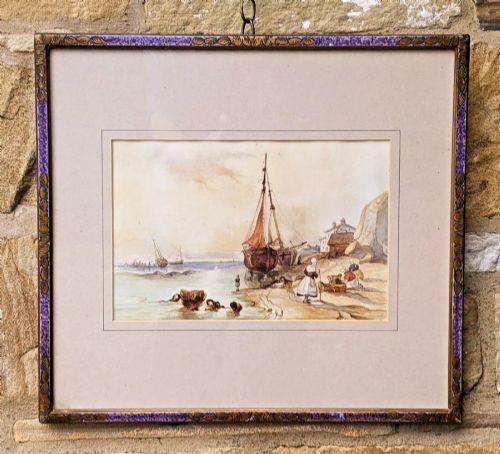
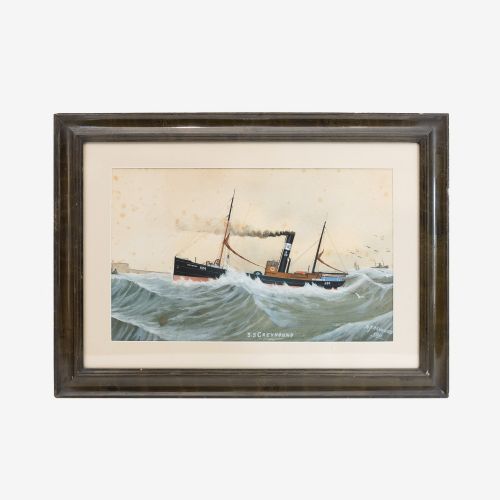
Edwardian nautical art comprises framed paintings, watercolours, gouache works, and tactile objects celebrating ships, harbours, and coastal life. When exploring edwardian nautical art, buyers encounter depictions ranging from naval vessels and steamships to local fishing luggers and trading junks.
The objects stem predominantly from the Edwardian period, flanked by late Victorian pieces and early twentieth-century creations up to the nineteen-thirties. These pieces document maritime history through artistic interpretations of British ports, foreign waters, and specific named vessels.
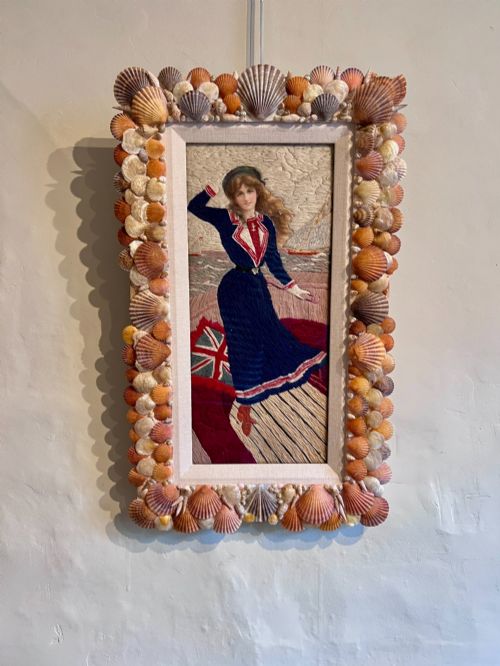
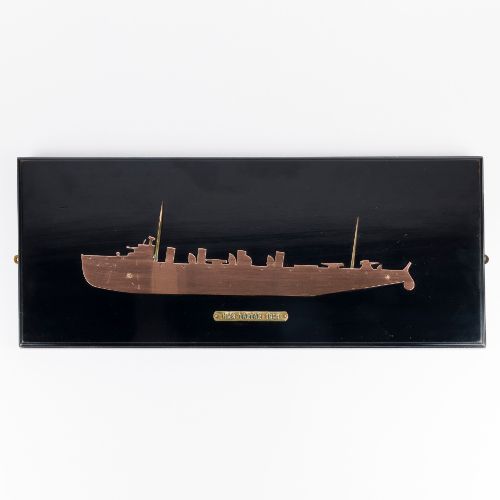
Framed artwork and oil paintings dominate the selection, alongside woolwork pictures and three-dimensional dioramas. Buyers frequently find watercolours and oils signed by period artists, alongside vernacular works produced by sailors and regional studios.
Materials and Techniques
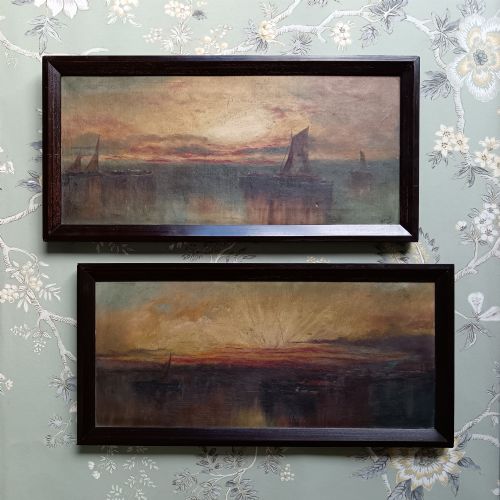
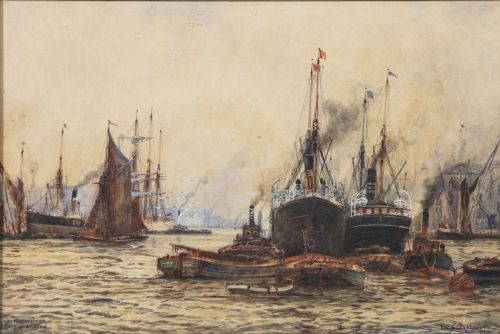
Makers utilised traditional painting grounds including canvas, paper, and wooden boards to execute watercolours, gouache, and oil paintings. Pigments were applied to capture shifting coastal light, choppy seas, and atmospheric port scenes.
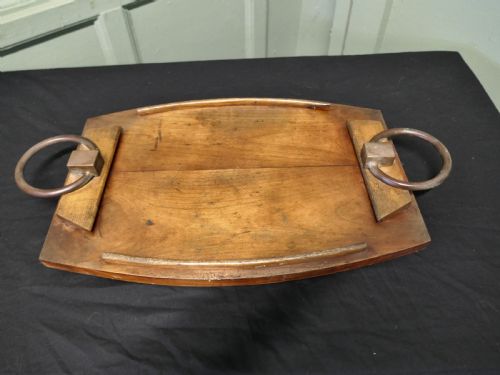
Framed pieces rely on period wood frames, often oak or gilt moulding, to house the canvas or paper works. Three-dimensional items incorporate textile elements such as woolwork yarns, alongside carved wooden components like ships' wheels and trays.
Materials employed across the works include oil on canvas, watercolour pigment on paper, carved wood, and wool yarn.
Assessing Quality in Marine Works
Quality rests upon the artist's command of maritime perspective, rigging accuracy, and the dynamic movement of water under varying weather conditions. Superior works demonstrate meticulous brushwork in the depiction of hull structures and atmospheric skies.
The integrity of the original framing and the preservation of the pigment layer influence the standing of a piece. Vernacular items like woolies and dioramas achieve distinction through intricacy of detail and the preservation of textile or structural components.
William Lionel Wyllie·Frank William Scarbrough·Frank Kelsey·Daniel Sherrin·Charles Napier Hemy
The Edwardian Nautical Art Glossary
- Woolie
- A traditional textile picture worked in wool yarn, often created by sailors to depict specific ships and naval scenes. These pieces utilise various stitch types to render the hull, sails, and sea.
- Gouache
- An opaque water-based pigment used by artists to achieve solid areas of colour and sharp detail in maritime paintings. It is frequently combined with transparent watercolour on paper or board.
- Lugger
- A small fishing vessel rigged with lug sails, commonly featured in regional British coastal art. Artists painted these working boats navigating harbours and choppy seas.
- Diorama
- A three-dimensional model depicting a sailing ship within a constructed miniature sea, often set behind glass in a wooden case. These constructions combine carved wooden hulls with painted backgrounds.
- Etching
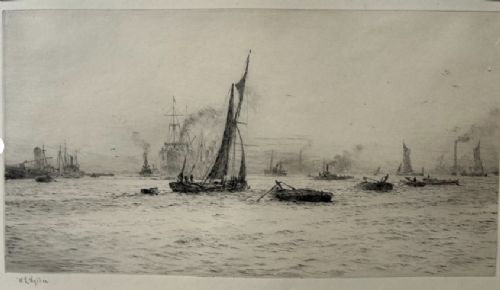
- A printmaking technique where an artist incises a design into a metal plate with acid before printing onto paper. Signed etchings offer detailed linear representations of rivers and shipping reaches.
Edwardian Nautical Art: Frequently Asked Questions
What subjects appear in these paintings?
The works depict named warships, steamships, fishing luggers, and trading junks operating in British and international waters.
Artists also recorded specific coastal ports, lighthouses, and harbour scenes from Cornwall to the Thames.
Are these pieces from the Edwardian period?
The selection centres on the Edwardian era, spanning the early decades of the twentieth century.
Some included pieces extend slightly earlier into the Victorian period or later into the nineteen-twenties and thirties.
How should framed maritime art be displayed?
These framed works require placement away from direct sunlight to protect watercolours, gouache pigments, and paper supports.
Stable indoor humidity levels help preserve original wooden frames and the structural integrity of canvas grounds.