


Edwardian Narrative Painting
Edwardian narrative painting captures human stories and domestic drama through detailed brushwork on canvas.
Edwardian Narrative Painting
Edwardian narrative painting focuses on storytelling, capturing domestic scenes, historical moments, and human interactions. When searching for Edwardian narrative painting, buyers encounter works that depict detailed interior scenes, country house settings, and character studies.
The pieces appearing on this page span the nineteenth century, the Edwardian period, and into the nineteen-twenties. Artists working in this tradition also produced Victorian genre painting, Victorian social realism, and British historical realism.
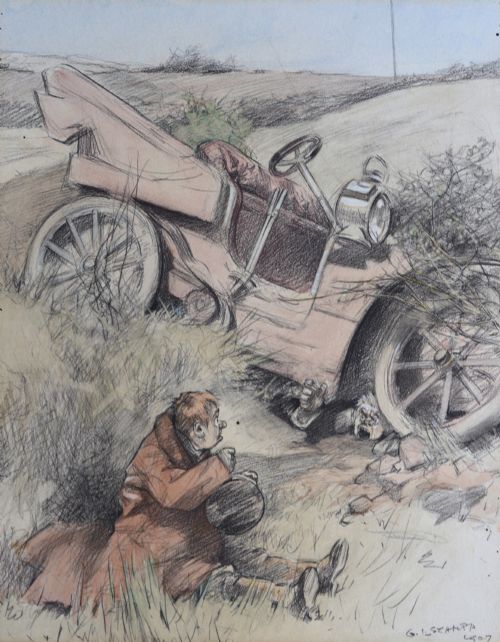
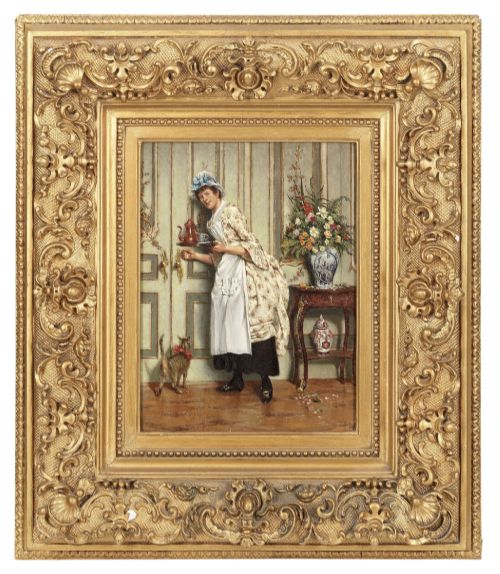
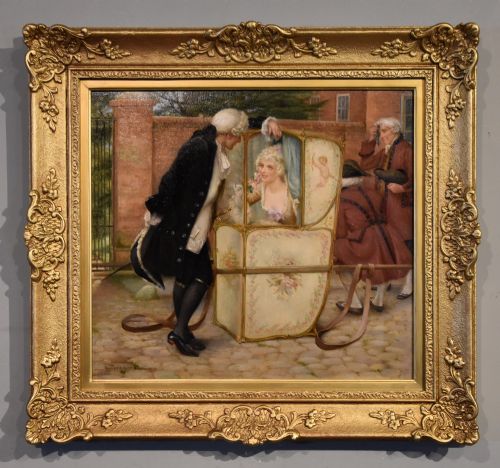
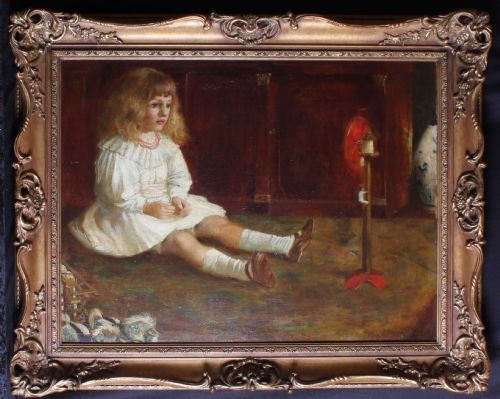
Subjects range from interior domestic moments involving children and cats to royal messengers near ships and classical figures. These works preserve a specific moment of social history through oil on canvas, watercolour, and paper.
Materials and Technique
Artists primarily used oil paint on canvas to build rich colour harmonies and fine details. Watercolours on paper also appear among these narrative works, capturing lighter scenes.
Many of these works remain housed within their original giltwood and gesso frames, which utilise carved wood to complement the pictorial subject. The technical execution relies on careful draughtsmanship, often with pencil underdrawing supporting the paint layers.
Cats and royal messengers share the canvas with children and classical nymphs across these domestic and historical stories.
Evaluating Quality
Quality in these narrative works rests upon the precision of the draughtsmanship and the psychological depth of the figures. Superior examples capture expressive interactions and detailed interior settings that draw the viewer into the story.
The handling of light and texture across textiles, skin, and surrounding objects separates accomplished academic compositions from simpler student exercises. Original framing in period giltwood and gesso also influences the overall integrity of the piece.
George Lorain Stampa·Felix Stone Moscheles·Stephen Samuel Lewin·Delapoer Downing·Byam Shaw·Charles Burton Barber·Friedrich von Kaulbach·Edwin Thomas Roberts·William Edward Frost·Andrew Young·Frank Moss Bennett·Arthur David Mccormick
The Edwardian Narrative Painting Glossary
- Genre painting
- Depiction of aspects of everyday life by portraying ordinary people contemporary to the artist engaged in common activities. These scenes often carry subtle moral or social messages.
- Giltwood
- Wood that has been covered with a thin layer of gold leaf or gold paint. This finish frequently adorns the decorative frames associated with fine art from this period.
- Gesso
- A plaster-like mixture used as a base for moulding or gilding on wooden frames. It provides a smooth surface for applying decorative relief details.
- Social realism
- Art movement that depicts the everyday conditions of the working classes and poor. These works highlight social contemporary issues without idealisation.
- Nereid
- A sea nymph from Greek mythology. Such classical subjects appear in works influenced by academic traditions.
Edwardian Narrative Painting: Frequently Asked Questions
What defines an edwardian narrative painting?
An Edwardian narrative painting tells a specific story through human figures, expressions, and settings. These works focus on domestic life, historical events, or character interactions.
Artists used oil paint or watercolour to capture precise details of clothing, interiors, and mood. The primary aim is to engage the viewer in a visual story.
How were these paintings displayed originally?
These artworks were displayed in prominent rooms of country houses and urban drawing rooms. They served as conversation pieces for visitors and family members.
Elaborate giltwood and gesso frames enhanced their presence on panelled or papered walls. The frames were chosen to complement the domestic interior style of the period.
How do I care for an oil painting on canvas?
Keep oil paintings away from direct sunlight and dramatic shifts in temperature and humidity. Stable environmental conditions prevent the canvas and paint layers from cracking.
Dust the surface gently with a soft, dry brush without applying pressure. Avoid using chemical cleaners or water on the painted surface.
How do I distinguish between victorian and edwardian works?
Victorian works often feature heavier moral tones, darker palettes, or intense social realism. Edwardian pieces can show lighter colour harmonies and more relaxed domestic narratives.
Stylistic shifts reflect changing social attitudes and artistic training across the decades. Examining the clothing, interior furnishings, and dated signatures helps confirm the period.