


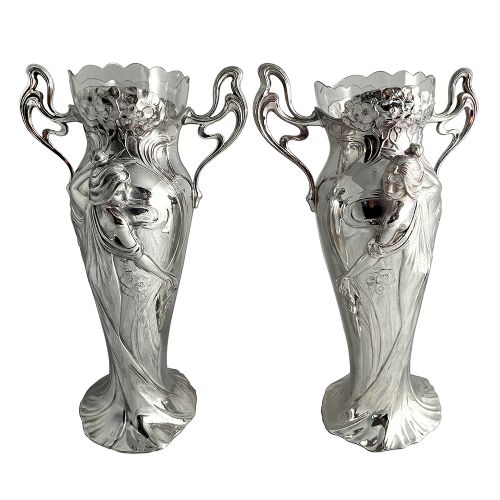


Edwardian Metal Vases
Edwardian metal vases bring tactile warmth and fluid design to a room, ranging from organic copper vessels to sleek silvered pewter.
Edwardian Metal Vases
Buyers encountering edwardian metal vases will frequently find copper and brass examples bearing distinct Art Nouveau or Arts and Crafts styling. Forms range from twin-handled vessels and jardinières to decorative urns and fireside ornaments.
The selection on this page demonstrates how makers of the period utilised various metals to create pieces for domestic display. Alongside copper and brass, silver plate and bronze appear frequently within these listings.
How they were made
Makers shaped copper and brass into vessels using hammering and chasing techniques to add textural floral decoration and organic motifs. Cast iron and bronze were also utilised to produce heavier decorative urns and figural pieces.
Many items combined metalwork with other media, such as cobalt glass inserts held within pewter overlays or silvered pewter mounts. Silver plating provided a bright reflective finish on tall vases and centrepieces intended for formal display.
Edwardian Metal Vases Retail Price Guide 2026
Typical asking prices for edwardian metal vases among the pieces listed under this phrase on Sellingantiques today, from the lower quarter to the upper quarter. They describe what is for sale here now, not the wider market.
Listings feature copper, brass, bronze, and silver plate across Art Nouveau, Arts and Crafts, and Victorian styles.
What varies in quality
The distinction between standard production and superior execution lies in the depth of hand-chased detail and the crispness of the metal casting. Pieces retaining complex surface ornamentation or integrated glass components demonstrate greater artisan skill.
Design attribution and material combination also define the upper tier of these vessels, particularly where makers applied specialised patination or mixed metals effectively. Maker marks, such as those from prominent metalwork guilds or factories, elevate the standing of a piece.
Keswick Arts and Crafts·WMF
The Edwardian Metal Vases Glossary
- Art Nouveau
- A decorative style characterised by fluid, organic lines and floral motifs. This aesthetic heavily influenced metalwork around nineteen hundred.
- Arts and Crafts
- A design movement promoting handcraftsmanship and simple forms over mass production. Pieces from this tradition often display honest construction and hammered metal surfaces.
- Jardiniere
- A large ornamental pot or stand designed to hold growing plants or flowers. These items frequently match the metalwork style of contemporary vases.
- Pewter
- A malleable metal alloy often used for decorative overlays and figural mounts during the early twentieth century. It accepts patination well, yielding soft metallic tones.
- Silver Plate
- A thin layer of silver applied to a base metal core. This technique offered the visual appeal of solid silver at a more accessible production cost.
Edwardian Metal Vases: Frequently Asked Questions
How do I clean antique copper vases?
Maintenance depends on the existing finish and whether a protective patina has formed over the decades. Gentle dusting is generally sufficient to preserve the surface integrity without removing historic character.
Harsh chemical polishes should be avoided, particularly on pieces with applied patination or chased details. Specialist conservation advice helps protect vulnerable metal surfaces from unnecessary wear.
What styles define edwardian metal vases?
The period encompasses distinct aesthetic streams, most notably Art Nouveau and Arts and Crafts movements. These styles introduced flowing plant-inspired lines and visible handcrafted textures to domestic metalwork.
Later Victorian elements and Neoclassical influences also appear alongside Vienna Secessionist designs. Such variety allows these vessels to complement both period interiors and modern spaces.
Were these vases meant for flowers?
Many vessels served a dual purpose as functional flower holders and sculptural interior ornaments. Jardinières and large twin-handled vases accommodated fresh stems, while smaller decorative urns stood purely for display.
Water tightness can vary in older metalware, particularly where seams have aged. Using a discreet internal liner protects the original interior from moisture damage.
How do I identify a WMF piece?
German manufacturer WMF produced distinct silvered pewter and glass vessels featuring figural maiden motifs and organic styling. These items often carry specific factory hallmarks stamped into the metal base.
The combination of fluid pewter overlays with contrasting glass bodies serves as a primary visual indicator. Examining the underside usually reveals the maker stamp associated with the firm.