

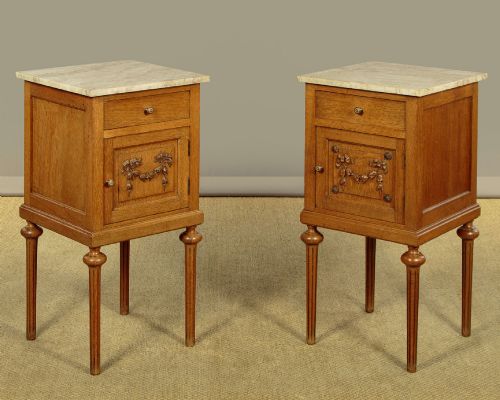
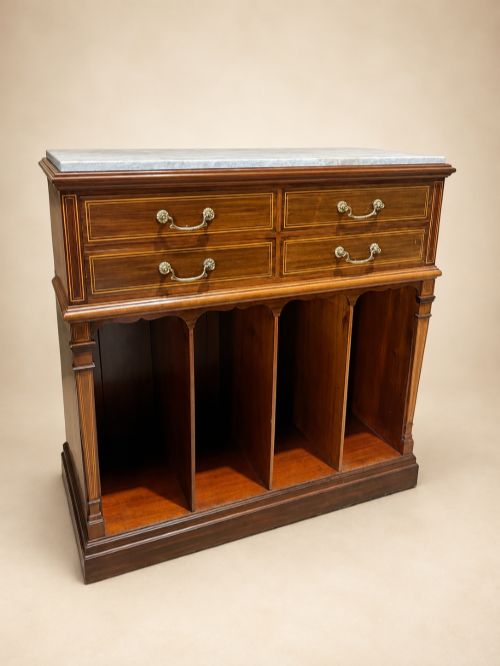
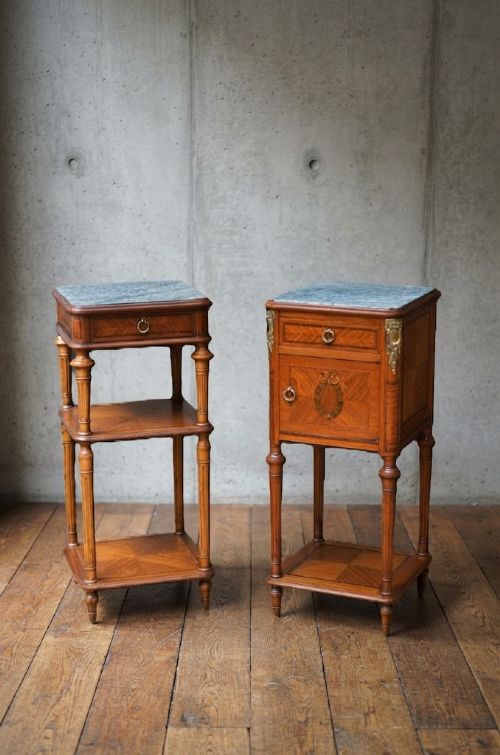


Edwardian Marble Cabinet
These edwardian marble cabinet examples combine stone tops with timber frames to provide durable surfaces for daily household use.
Edwardian Marble Cabinet
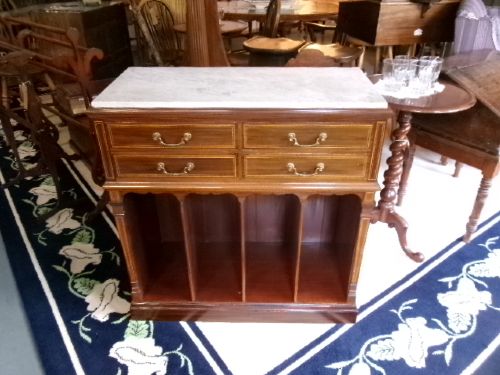
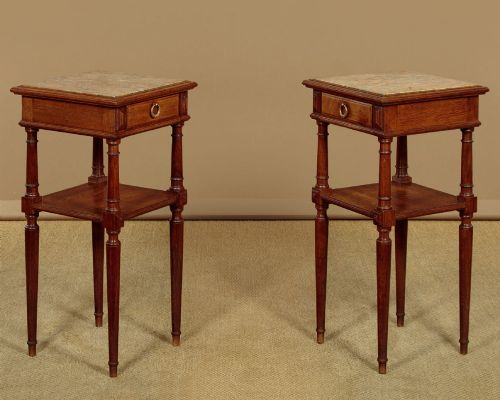
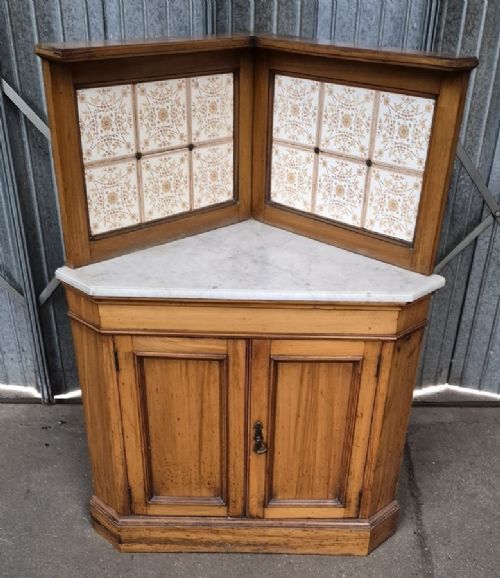
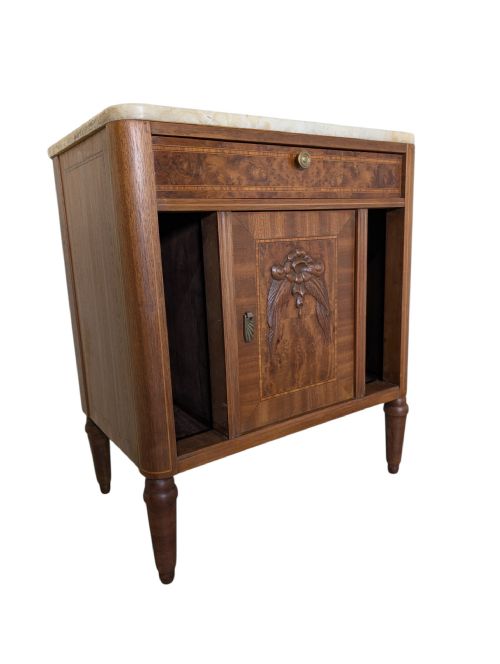
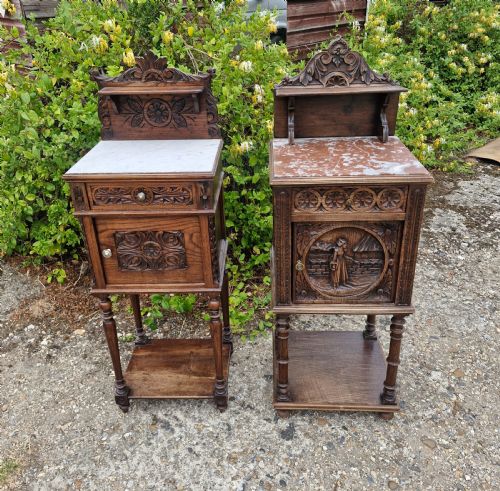
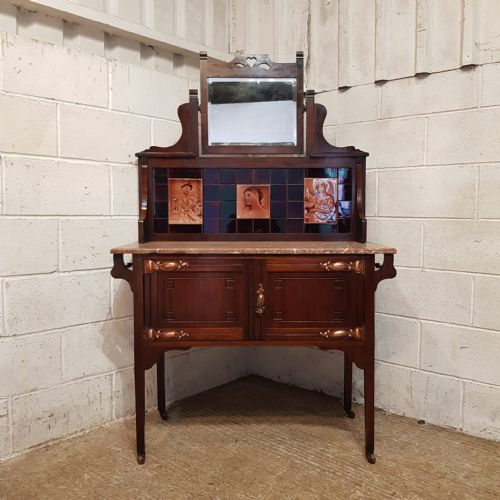
An edwardian marble cabinet most commonly appears on this page as a bedside cabinet, washstand, or side cabinet originating from the early twentieth century. These pieces bridge late Victorian utility and Edwardian refinement, frequently taking the form of compact bedroom storage with inset stone surfaces.
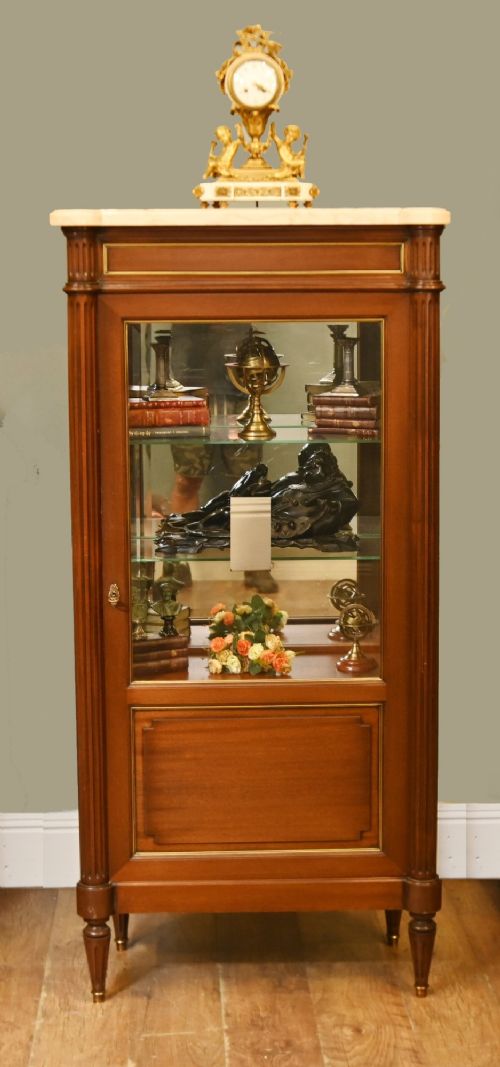
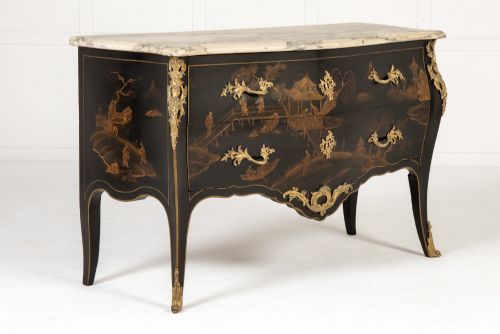
The materials and styles span Edwardian, Victorian, and revival aesthetics, including Louis XVI, Sheraton, and Art Nouveau influences. Buyers encounter walnut, mahogany, oak, and satinwood constructions paired with white or coloured marble slabs.
Materials and Construction
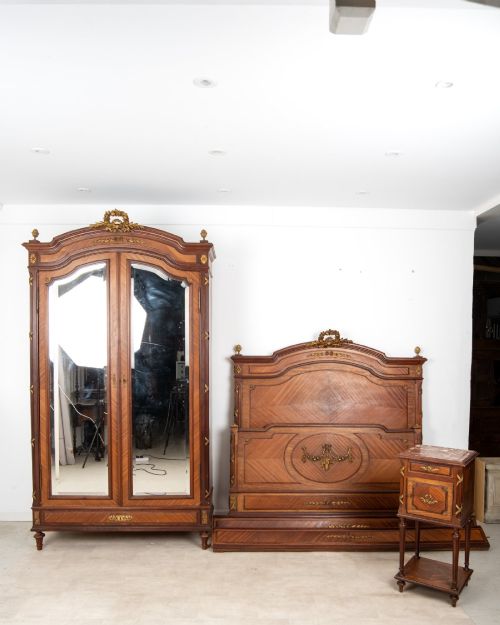
Cabinet makers utilised dense hardwoods such as mahogany, walnut, and oak for the primary frames, applying veneers, parquetry, and marquetry for surface decoration. Brass, ormolu, and ceramic elements provide hardware fittings and decorative accents.
Heavy marble slabs rest directly upon timber carcases, providing a water-resistant and hygienic working surface suited to washing and bedside storage. Joinery techniques from the period ensure structural stability beneath the weight of the stone.
Edwardian Marble Cabinet Retail Price Guide 2026
Typical asking prices for edwardian marble cabinet among the pieces listed under this phrase on Sellingantiques today, from the lower quarter to the upper quarter. They describe what is for sale here now, not the wider market.
Listings feature multiple wood types including mahogany, walnut, oak, satinwood, and ceramic components.
Judging Quality
The refinement of the timber carving, inlay work, and parquetry veneer distinguishes finer examples from standard utility furniture. Cabinet makers who employed detailed marquetry or select grain patterns produced pieces of greater visual weight.
The thickness, figuring, and colouration of the marble top also dictate the stature of the piece, alongside the integration of original brass or ormolu mounts and ceramic components.
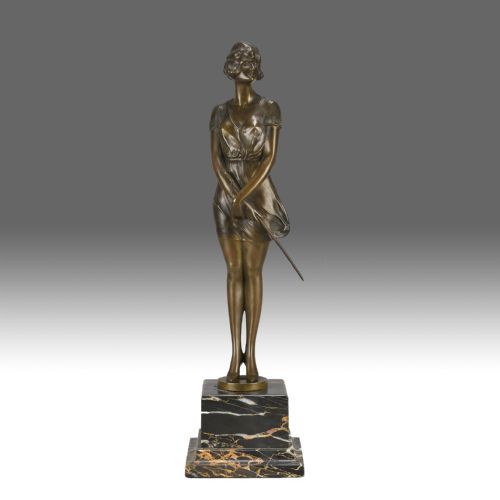
Bruno Zach·Walker and Sons·Gillows
The Edwardian Marble Cabinet Glossary
- Ormolu
- Gilded bronze mounts applied to furniture for decorative effect. These metallic embellishments appear frequently on French revival cabinets.
- Marquetry
- The art of applying pieces of veneer to a structure to form decorative patterns. Craftsmen utilised different coloured timbers to create pictorial designs on cabinet doors.
- Washstand
- A piece of furniture designed for personal washing, typically fitted with a marble top to resist water damage. These frequently double as bathroom or bedroom cabinets.
- Parquetry
- Geometric wood mosaic work used for floors and cabinet surfaces. Makers arranged small blocks of timber to form repeating patterns.
- Bombé
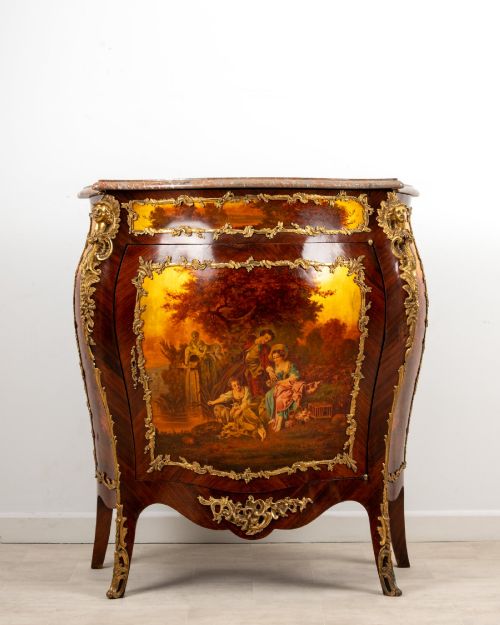
- A swelling or outward curving furniture shape characteristic of French cabinet making. This rounded profile requires specialised woodworking skill.
Edwardian Marble Cabinet: Frequently Asked Questions
What is an edwardian marble cabinet used for?
These cabinets served primarily in bedrooms as bedside storage or washstands where a waterproof stone surface was necessary for holding pitchers and basins.
Today they function as compact side tables or hallway furniture where the stone top resists everyday wear.
How do I clean the marble top?
Use warm water and a mild, non-acidic soap to wipe down the stone surface regularly.
Avoid abrasive cleaners or acidic substances like vinegar that can etch the polish on antique marble.
Are the marble tops attached to the wood?
Most period marble slabs rest by their own weight upon the timber frame rather than being permanently glued down.
This loose fit allowed makers to transport the heavy stone separately from the wooden carcase.
How do I date an edwardian marble cabinet?
Examine the secondary timbers inside the drawers and the style of the brass hardware or veneer work.
Edwardian pieces often show machine-sawn interior boards combined with hand-finished decorative details typical of the early 1900s.