
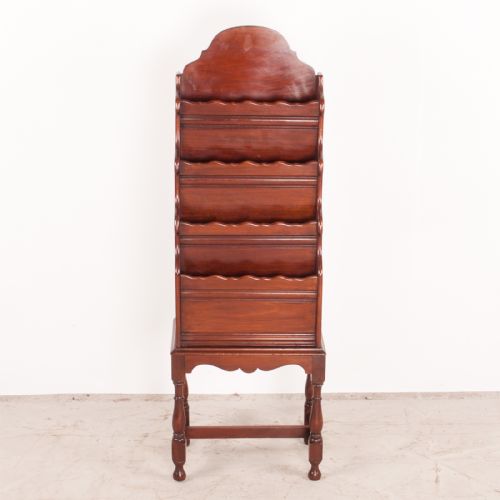
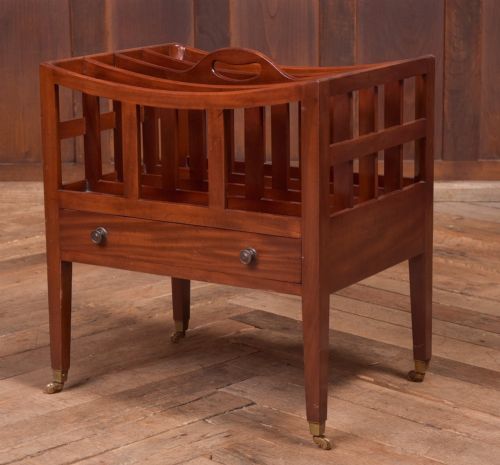
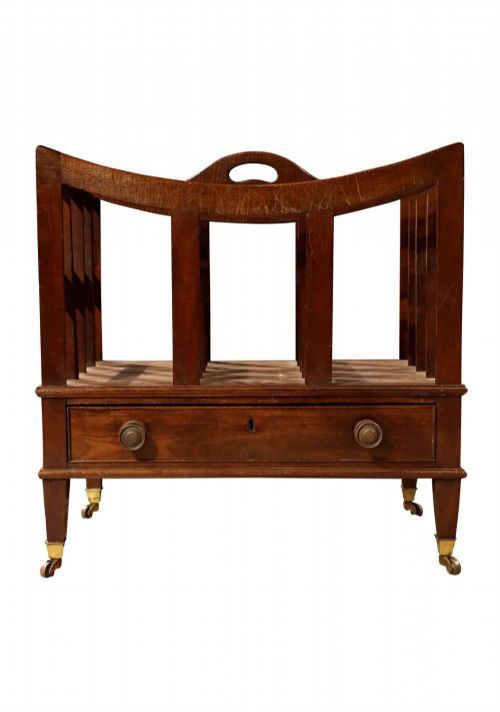


Edwardian Mahogany Music Rack
These edwardian mahogany music rack pieces combine practical storage with timber craftsmanship, offering an elegant way to organise sheets and folios.
Edwardian Mahogany Music Rack
The edwardian mahogany music rack category encompasses a variety of timber storage pieces designed primarily for holding sheet music, folios and periodicals. Most examples take the form of traditional canterburys or music cabinets featuring tiered partitions and low stands.
While the search targets the Edwardian period, listings frequently include pieces spanning the nineteenth century through to the early twentieth century. Buyers encounter forms ranging from simple magazine racks to elaborate canterburys fitted with drawers and castors.
Origins and styling reflect diverse influences from Georgian Revival to Arts and Crafts aesthetics. These variations give collectors a broad spectrum of timber tones and compartment layouts to consider for domestic spaces.
How they were made
Makers relied principally upon mahogany as the primary timber, often enhanced with contrasting satinwood and boxwood inlay work. Grain selection and polish determined the initial visual appeal of each piece.
Structural elements frequently incorporated turned wooden legs, brass castors and delicate metal fittings. Joinery techniques supported both open-slatted partitions and enclosed cabinet bodies with functional drawers.
Listings feature mahogany, brass, satinwood inlay, glass, satinwood and boxwood across periods from the nineteenth century to the early twentieth century.
What varies in quality
Quality differences emerge through the crispness of inlaid detailing and the selection of timber figures. Finer pieces demonstrate careful attention to turning on the legs and the integration of original brass castors.
Construction robustness distinguishes simpler utility items from more ambitious cabinet work. The alignment of slatted dividers and the smooth operation of fitted drawers reveal the standard of workshop execution.
Howard and Sons of London
The Edwardian Mahogany Music Rack Glossary
- Inlay
- A decorative technique where contrasting woods like satinwood or boxwood are inserted into recesses in the mahogany surface to create geometric or floral patterns.
- Castors
- Small wheel attachments fitted to the feet of the stand to allow easy movement across floor surfaces. Original brass examples add authenticity.
- Lyre-shaped
- A design motif resembling an ancient Greek lyre, frequently incorporated into the upright slats or supports of music stands.
Edwardian Mahogany Music Rack: Frequently Asked Questions
What is an edwardian mahogany music rack used for?
These pieces were originally built to hold sheet music, scores and folios near a piano or within a formal parlour. Today they serve equally well for organising magazines, books and modern periodicals in a living space.
The partitioned compartments keep papers upright and sorted, preventing curling or damage. Their compact footprints make them versatile for placing beside armchairs or against walls.
How do I distinguish an Edwardian piece from a Regency one?
Edwardian examples often display lighter satinwood inlay and softer decorative flourishes influenced by revival styles. Regency pieces tend to show bolder architectural lines, heavier turned supports and darker patination.
Examining the secondary woods, fixings and overall timber finish helps clarify the likely era of manufacture. Regional workshop practices also left subtle clues in the construction of the partitions.
Are music cabinets different from canterburys?
Music cabinets generally feature enclosed doors, shelves and internal drawers for keeping scores out of sight. Canterburys rely on open slatted partitions designed for immediate access to frequently played pieces.
Both forms belong to the same broader tradition of domestic music storage. Cabinet versions offer greater protection from dust and light exposure.
How should I care for mahogany timber?
Regular dusting with a soft, dry cloth preserves the polished surface without building up residue. Direct sunlight and sudden temperature changes should be avoided to prevent the timber from drying or warping.
Occasional application of appropriate beeswax helps maintain the depth of the grain. Gentle handling of castors and moving parts ensures the framework remains stable.