



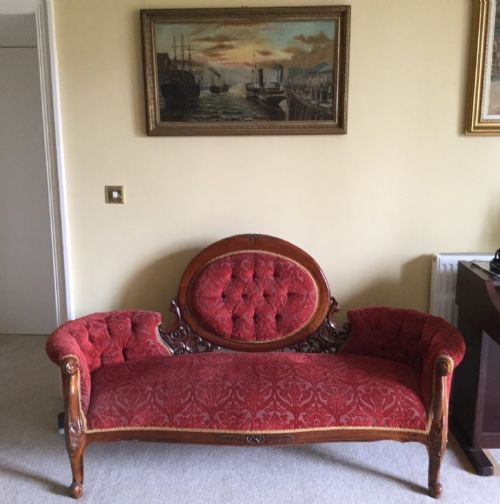


Edwardian Lounge Settee
An edwardian lounge settee brings enduring comfort and traditional craftsmanship to a room, offering generous seating rooted in early twentieth-century design.
Edwardian Lounge Settee
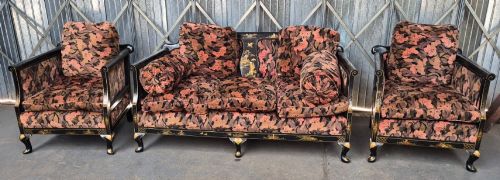
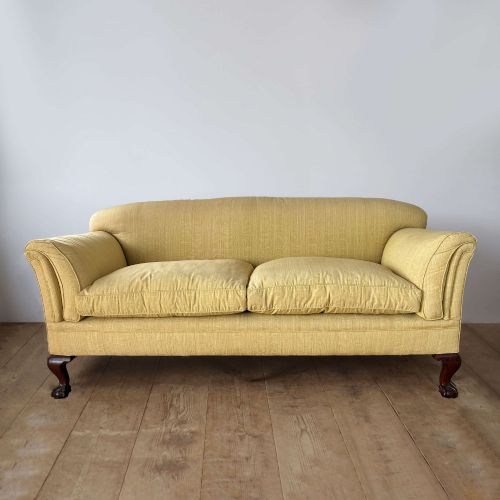
An edwardian lounge settee is a substantial form of seating designed for relaxation, typically encountered in styles ranging from formal Edwardian Chinoiserie and Georgian Revival to Arts and Crafts. These pieces bridge the gap between late nineteenth-century opulence and early twentieth-century refinement, often appearing alongside matching chairs as part of larger salon suites.
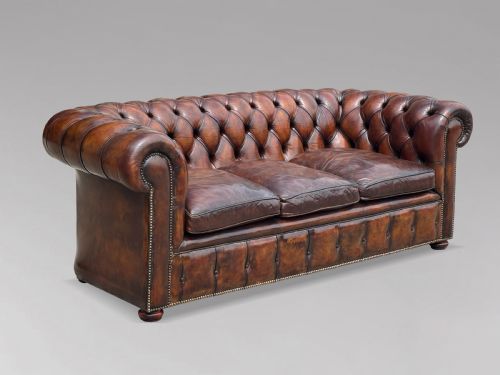
The materials and construction reflect the versatility of the period, utilising rich timbers like mahogany, walnut, and satinwood alongside supportive sprung bases. Upholstery varies from deep pile brocade and textile to hand-dyed brown leather, accommodating both formal reception rooms and comfortable domestic spaces.
How They Were Made
Makers constructed the frames using durable hardwoods such as mahogany, walnut, oak, and satinwood, frequently incorporating intricate carving, inlay, or polished finishes. These sturdy timber foundations support traditional interior stuffing materials like horsehair and feather cushions.
Upholstery techniques combined sprung seat bases with high-grade textiles, brocade, or buttoned leather secured with brass detailing. The integration of structural wood frames with complex textile work created durable furniture intended for daily drawing room use.
Edwardian Lounge Settee Retail Price Guide 2026
Typical asking prices for edwardian lounge settee among the pieces listed under this phrase on Sellingantiques today, from the lower quarter to the upper quarter. They describe what is for sale here now, not the wider market.
Listings feature periods spanning the Victorian era through the 1930s, utilising mahogany, walnut, oak, leather, and fabric.
What Varies in Quality
Quality in these settees is defined by the selection of timber and the precision of the frame construction, where solid hardwoods and refined cabinetmaking distinguish finer examples. The presence of sophisticated decorative elements, such as satinwood inlay or hand-carved details, elevates the piece above standard domestic production.
The integrity of the upholstery and stuffing methods also dictates the standard of the piece, with traditional horsehair filling and high-grade leather or brocade representing superior craftsmanship. Maker attribution, particularly pieces associated with esteemed workshops like Howard and Sons or Hampton and Sons, further differentiates the upper tier of the market.
Howard and Sons·Hampton and Sons
The Edwardian Lounge Settee Glossary
- Bergere
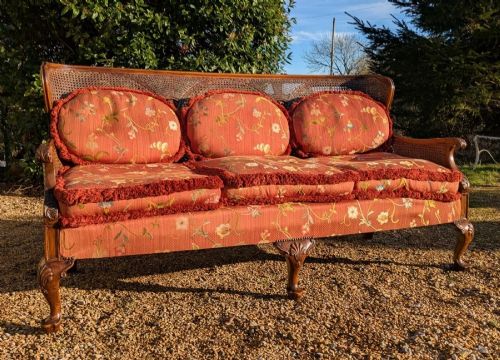
- An upholstered wooden-framed armchair or sofa where the back and sometimes sides are enclosed in canework. This style dates back to French origins but remained popular in British seating design.
- Chesterfield
- A large sofa characterised by equal height in the arms and back, traditionally upholstered in deep-buttoned leather. It is a defining form within nineteenth and early twentieth-century seating.
- Chaise Longue
- An upholstered sofa in the shape of a chair that is long enough to support the legs. These pieces often feature a single raised end for reclining.
- Satinwood
- A durable, yellowish timber native to India and Sri Lanka used for fine cabinetmaking and decorative inlay. Its lustrous grain made it a favourite for Edwardian and revival furniture.
- Brocade
- A class of richly decorative shuttle-woven fabrics, often made with coloured silk and metallic threads. It provides a tactile, textured finish frequently used for formal upholstery.
Edwardian Lounge Settee: Frequently Asked Questions
What defines an Edwardian lounge settee?
An Edwardian lounge settee is a seating piece produced during the Edwardian era, known for combining comfort with refined styles like Chinoiserie or revival designs. These settees often utilise rich timbers and diverse upholstery.
They reflect a shift towards lighter, more adaptable drawing room furniture compared to heavy Victorian predecessors. Their forms range from small walnut sofas to expansive suite components.
How were these settees used originally?
Originally placed in drawing rooms, salons, and parlours, these settees served as the primary seating for entertaining guests and family relaxation. They functioned both as decorative statement pieces and practical domestic furniture.
Larger versions often formed part of matching three-piece or five-piece salon suites. This allowed for a cohesive decorative scheme throughout formal reception spaces.
How do I care for leather upholstery?
Leather upholstery requires regular dusting and occasional conditioning to maintain its suppleness and prevent the hide from drying out. Keeping the leather away from direct sunlight and heat sources preserves its colour and finish.
Avoid harsh chemical cleaners, using instead mild, specialised leather care products recommended for antique and vintage pieces. Proper maintenance protects the natural patina developed over decades.
How can I tell Edwardian pieces from Victorian ones?
Edwardian seating generally displays lighter proportions, brighter wood tones like satinwood, and influences from Georgian revival or Arts and Crafts styles. In contrast, Victorian pieces tend to be heavier, darker in timber, and more heavily ornamented.
Details such as inlay work and simplified carved motifs often point towards the Edwardian period. Examining the underlying construction and framing materials helps clarify the date of manufacture.