







Edwardian London Painting
These edwardian london painting examples capture the capital through delicate watercolours and oils, offering a window into the city at the turn of the twentieth century.
Edwardian London Painting
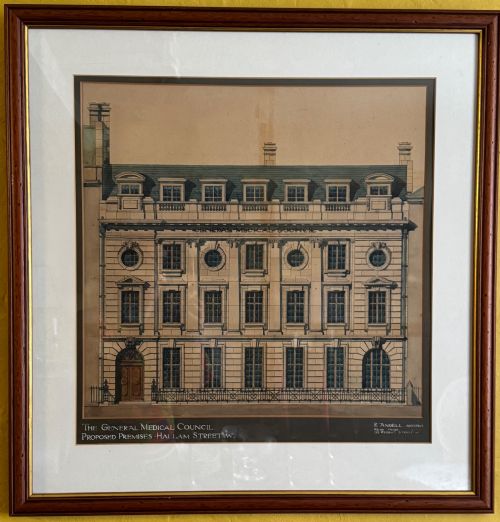
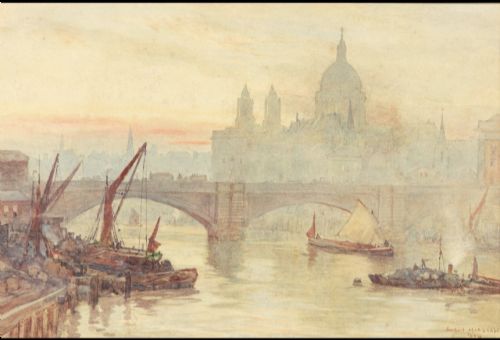
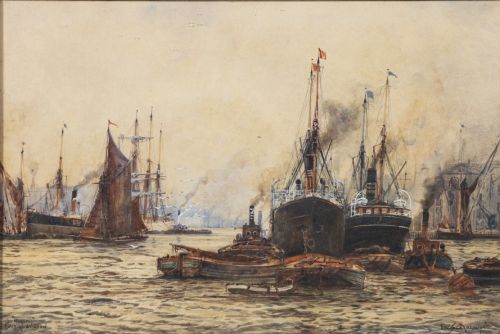
When you search for an edwardian london painting, you encounter works that record the capital's streets, rivers and landmarks during the early twentieth century. These pieces document recognisable scenes such as St Paul's Cathedral, the River Thames, Leicester Square and Whitehall.
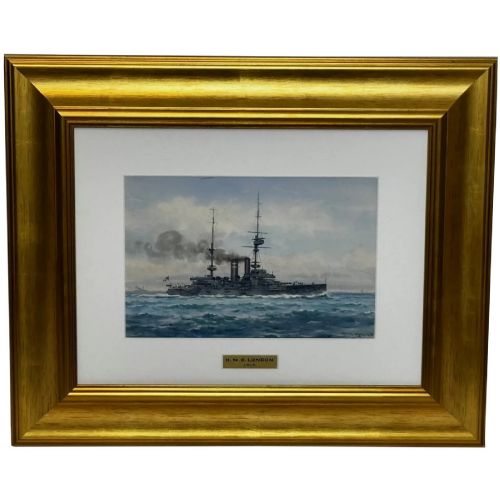
The watercolours and oils on this page are most frequently signed by notable topographical and marine artists of the period. They range from brisk harbour views of the Pool of London to serene garden studies in St James's Park.
The selection reflects both bustling maritime traffic and quiet architectural moments. Each piece brings the atmosphere of early London directly onto the wall.
How they were made
Artists of this era predominantly applied watercolour paint onto heavy paper or worked with oil on canvas. Watercolour allowed for swift, translucent capturing of London's notorious atmospheric mists and river light.
Works on paper were typically protected beneath glass and housed within traditional frames. Oil paintings on canvas relied on heavier binders to build texture across architectural stonework and river shipping.
Edwardian London Painting Retail Price Guide 2026
Typical asking prices for edwardian london painting among the pieces listed under this phrase on Sellingantiques today, from the lower quarter to the upper quarter. They describe what is for sale here now, not the wider market.
Listings feature works executed on paper and canvas using watercolour paint, glass and oil.
What varies in quality
Quality rests upon the artist's command of light and perspective when rendering complex urban topography. Superior works capture the specific haze of the capital rather than relying on flat architectural illustration.
The strength of a composition and the condition of the pigment determine the visual impact. Stronger examples retain vibrant colour tones in the skies and water without excessive fading or paper acidification.
Herbert Menzies Marshall·Frank Watson Wood·Frank William Scarbrough·Charles James Lauder·Rowland Henry Hill·David Small·Walter Duncan·Lieutenant Harold E Frecker RNR·Edward Fletcher·Beatrice Parsons·Frances E Nesbitt·William A Macdonald·Herbert John Finn
The Edwardian London Painting Glossary
- Watercolour
- A paint consisting of colour pigment suspended in a water-soluble vehicle, used widely on paper for atmospheric topographical views.
- Oil on Canvas
- A painting medium where pigments are bound in a drying oil, allowing for rich texture and depth in larger maritime scenes.
- Topographical
- Pertaining to the accurate depiction of specific places, buildings and landscapes, characteristic of urban watercolours.
- Marine Watercolour
- A work focused specifically on ships, rivers, harbours and maritime activity executed in water-based pigments.
Edwardian London Painting: Frequently Asked Questions
What subjects appear most often in these paintings?
The works frequently depict the River Thames, bridges, cathedrals and royal parks across the capital. Artists gravitated towards recognizable landmarks such as St Paul's Cathedral and Westminster.
Shipping scenes around the Pool of London also recur regularly among marine artists of the period. These compositions document the bustling commercial activity of the Edwardian port.
How do watercolours differ from oils in this group?
Watercolours are painted on paper and tend to emphasise light, atmosphere and the misty quality of the city air. They offer a transparent and immediate record of urban weather.
Oils are worked on canvas and provide denser colour saturation with visible texture. This medium suits larger river vistas and heavier architectural studies.
How should these works on paper be framed?
Works on paper require conservation mounting behind glass to protect them from airborne pollutants and ultraviolet light. Acid-free materials prevent the paper from yellowing over time.
Keeping them away from direct sunlight preserves the delicate washes of pigment characteristic of Edwardian watercolours.
How do you date an Edwardian London painting?
Dating relies on signatures, artist exhibition records and the specific architectural details visible in the urban landscape. Changes to the Thames bridges and waterfronts help establish a chronological window.
Many pieces bear the artist's signature and inscriptions naming the exact London location depicted.