



Edwardian Lead Crystal Decanter
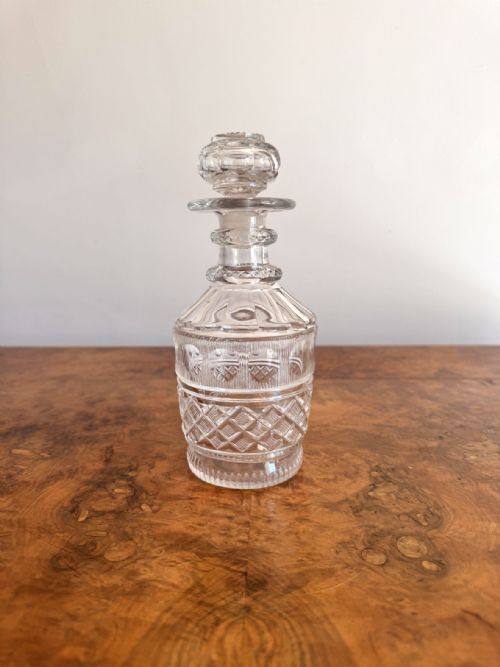
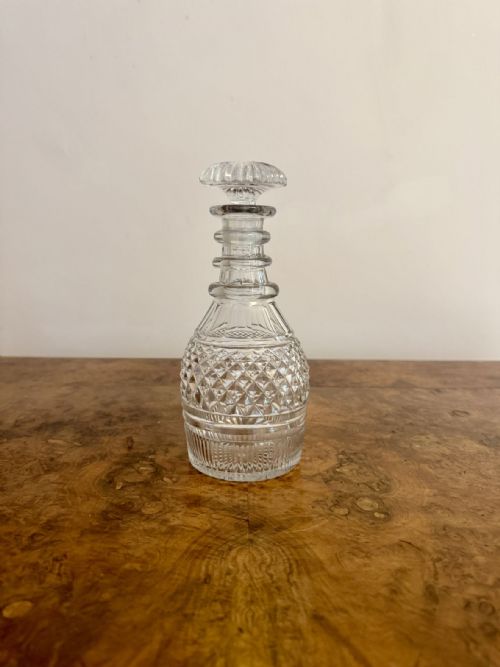
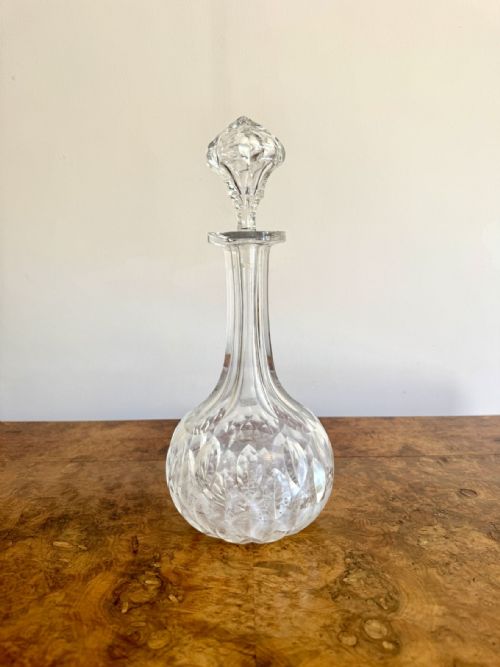
An Edwardian lead crystal decanter brings heavy brilliance and precise wheel-cut patterns to the dining table or sideboard.
Edwardian Lead Crystal Decanter
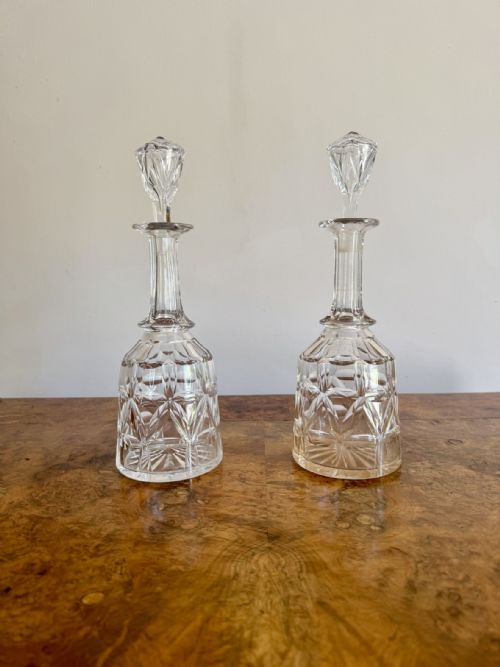
An edwardian lead crystal decanter is a serving vessel designed for holding spirits and wine during the early twentieth century. These vessels appear mainly as single bottles, pairs, or trios dating from the Edwardian period and the broader nineteen hundreds.
The selection on this page centres on practical barware forms, including spirit decanters, ewers, jugs, and carafes. Most examples show heavy clear cut glass construction with matching stoppers, while occasional pieces feature engraved spirit labels.
While the core of the inventory dates to the Edwardian era, related pieces stretch back to the eighteenth and nineteenth centuries. Buyers encounter both simple blown carafes and heavily decorated cut crystal jugs from these overlapping periods.
What varies in quality
The depth and crispness of the wheel-cut facets separate standard production from finer output. Superior pieces show sharp edges and deep incisions that catch the light directly, whereas lower quality work appears shallow and rounded.
Weight and balance dictate the feel of the vessel in the hand, with dense lead crystal providing a reassuring heft. The presence of a matching original stopper cut specifically for the neck adds substantial merit to the piece.
Edwardian Lead Crystal Decanter Retail Price Guide 2026
Typical asking prices for edwardian lead crystal decanter among the pieces listed under this phrase on Sellingantiques today, from the lower quarter to the upper quarter. They describe what is for sale here now, not the wider market.
Some nineteenth-century drinkers apparently needed explicit glass signage to distinguish between whisky and brandy.
James Powell
The Edwardian Lead Crystal Decanter Glossary
- Lead crystal
- Glass containing a significant proportion of lead oxide, which increases clarity, weight, and light dispersion. This material allows for deeper and sharper decorative cutting than standard glass.
- Optically blown
- A technique where molten glass is inflated inside a ribbed mould to create subtle internal patterns. The vessel is then removed and finished by hand.
- Ewer
- A large jug with a wide spout and a curved handle, used historically for serving water or wine. These pieces share stylistic traits with standard decanters.
- Carafe
- An unthemed glass bottle with a flared neck used for serving wine or water at the table. These vessels typically lack stoppers.
- Spirit decanter
- A specific bottle form intended for holding liquors like whisky or brandy, often accompanied by engraved text. Pairs and trios of these bottles frequently fit into fitted wooden boxes or stands.
Edwardian Lead Crystal Decanter: Frequently Asked Questions
How do I clean an old decanter?
Fill the vessel with warm water and specialised cleaning beads, then swirl gently to lift interior residue. Avoid harsh thermal shocks by maintaining gradual temperature changes during washing.
Dry the interior thoroughly by inverting the bottle on a specialised rack. Leave the stopper resting beside the neck rather than inside while stored.
Are these decanters safe for daily use?
Heavy lead crystal handles most spirits safely over short periods. However, prolonged storage of high-proof alcohol in antique vessels is discouraged.
Hand washing remains essential to protect the surface finish and prevent thermal cracking. Dishwashers subject the glass to harsh detergents and excessive heat.
How can I date an Edwardian decanter?
Examine the base for signs of hand-polished pontil marks or smooth wear consistent with early manufacture. Heavier cutting styles and specific neck profiles align with the nineteen hundreds.
Compare the stopper shank to the interior neck grind for matching hand-fitted numbers. Original stoppers fit flush and share the same wear patterns as the body.
Why do some decanters have engraved labels?
Etched inscriptions like whisky or brandy identified specific contents when multiple bottles sat together on a tray. These markings helped servants or hosts select the correct spirit quickly.
The script was often applied using copper wheel engraving directly onto a flat polished panel. This lettering remains crisp and distinct on better quality pieces.