




Edwardian Lacquer Mirror
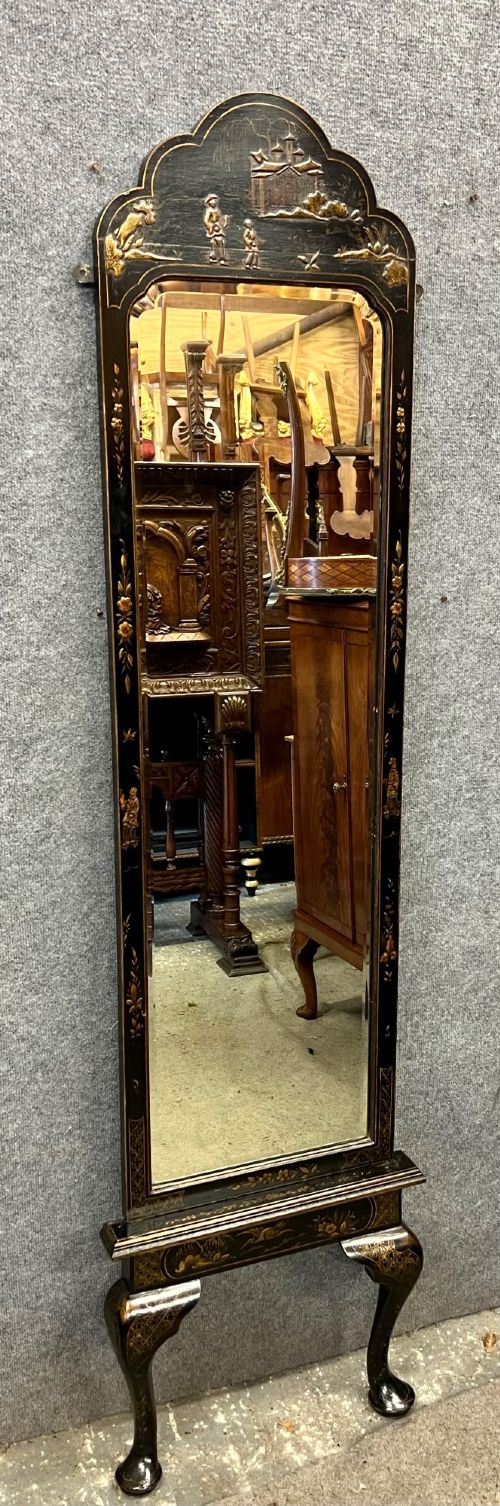
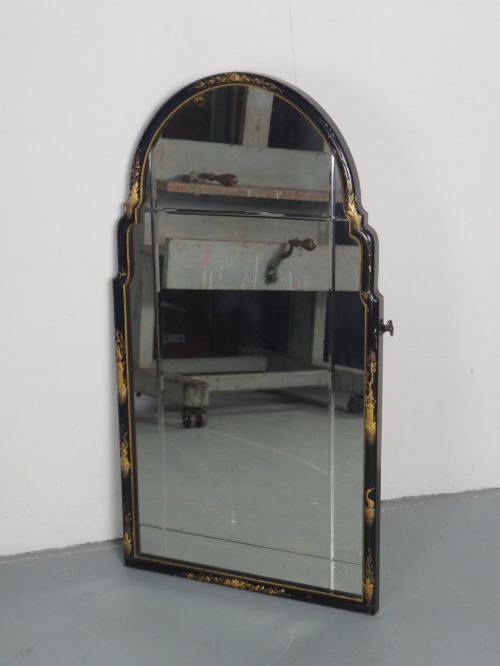
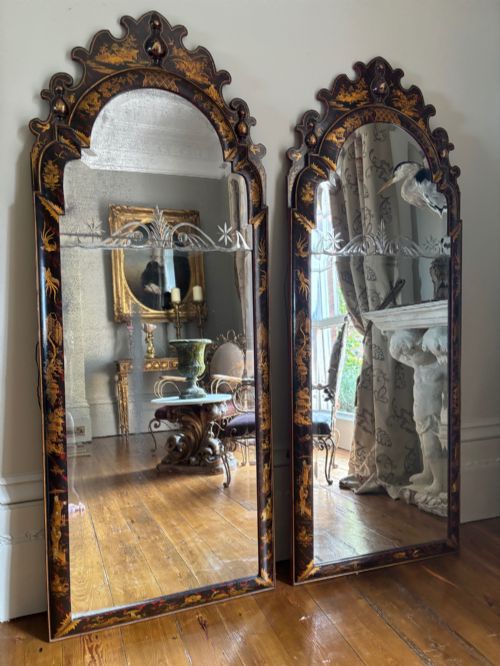
These edwardian lacquer mirror pieces bring painted Chinoiserie and black lacquer surfaces into a room, offering both practical reflection and decorative depth.
Edwardian Lacquer Mirror
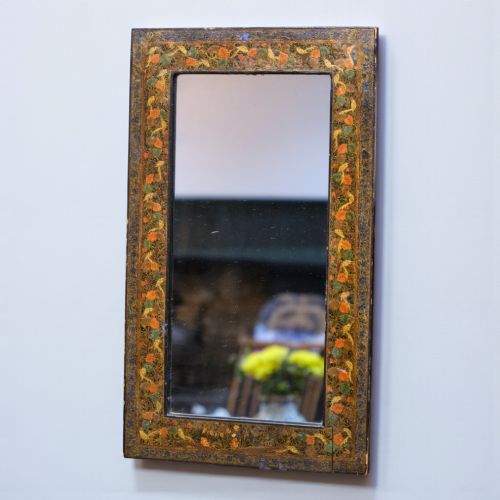
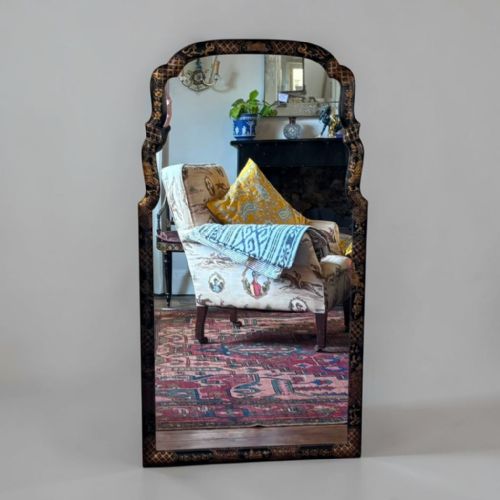
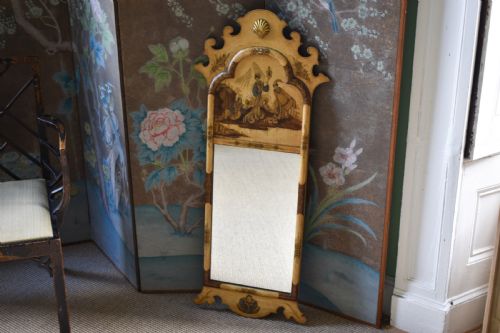
When you search for an edwardian lacquer mirror, you encounter wall mirrors, cheval mirrors, and overmantel pieces finished in black lacquer or ebonised wood. These items draw heavily on Chinoiserie and Queen Anne Revival styles, alongside Kashmiri influences seen around 1900.
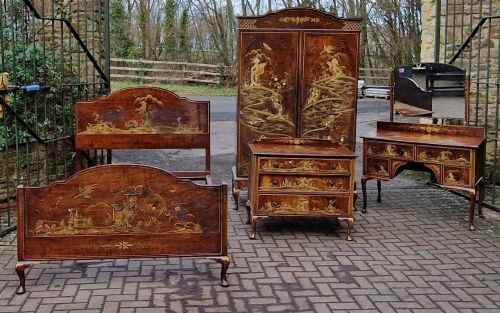
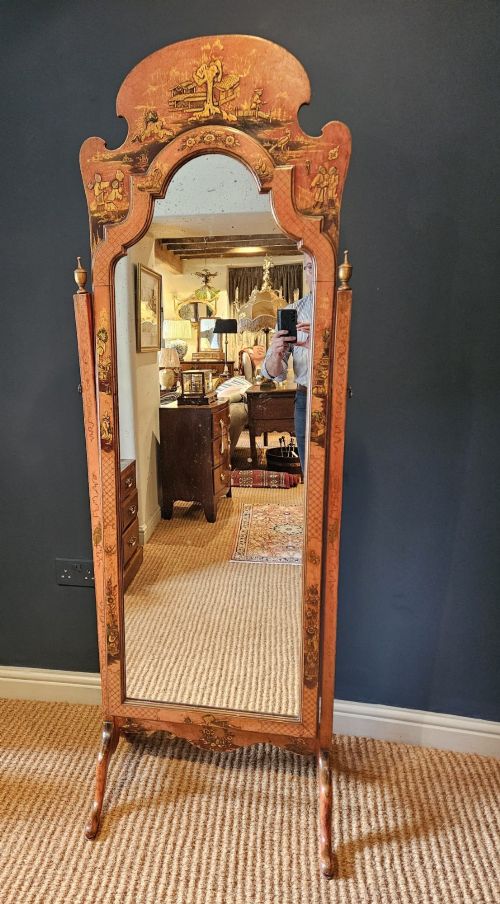
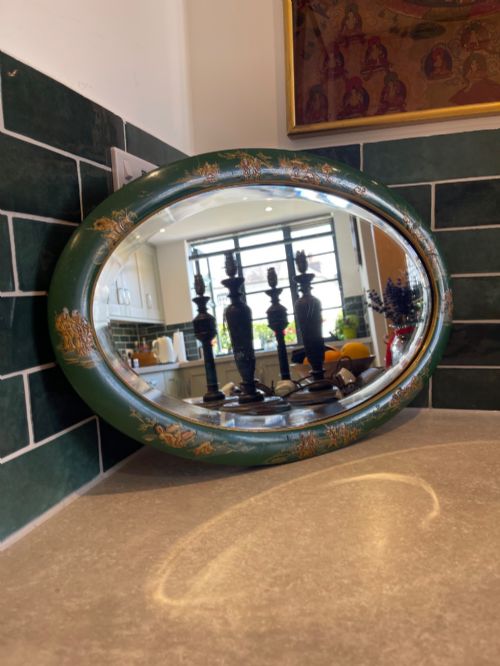
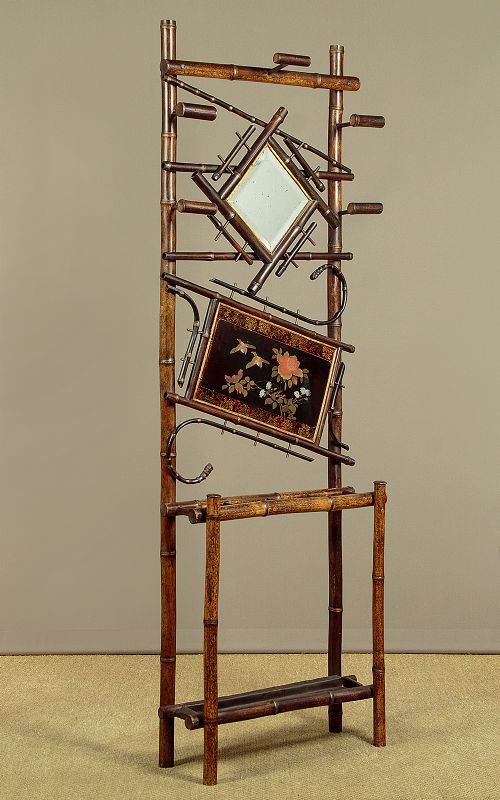
The versions most commonly met on this page span from the late nineteenth century into the 1930s, including Edwardian and Aesthetic Movement designs. Forms range from small wall-hung ovals to large cheval mirrors and bedroom furniture suites.
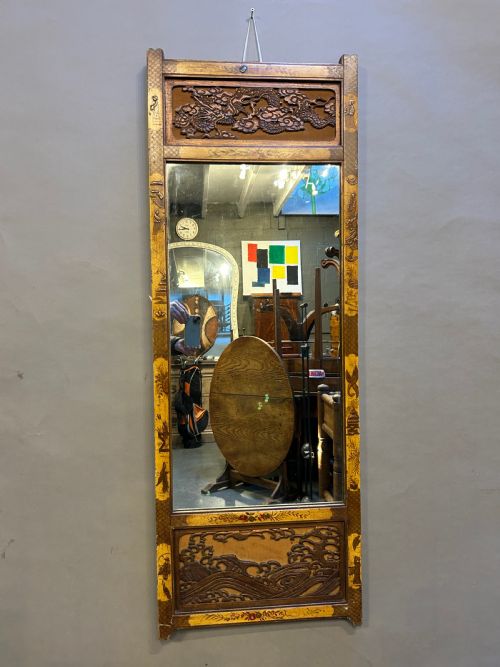
Makers of this period adapted traditional Oriental motifs onto British home furnishings, creating decorative focal points for halls and bedrooms. The structural forms mirror classic furniture shapes while carrying distinctive painted surface decoration.
Materials and construction
These items rely on wooden foundations, frequently using ebonised wood or lacquered timber as the base for applied decorative schemes. Gold leaf and painted pigments form the intricate Chinoiserie scenes across the frames.
Mirror glass is set within constructed wooden surrounds, sometimes incorporating overmantel configurations or free-standing cheval frames. The application of lacquer requires multiple layered coats to achieve a deep, reflective surface before any gilt detailing is added.
Edwardian Lacquer Mirror Retail Price Guide 2026
Typical asking prices for edwardian lacquer mirror among the pieces listed under this phrase on Sellingantiques today, from the lower quarter to the upper quarter. They describe what is for sale here now, not the wider market.
One Edwardian overmantel mirror manages to combine strict black lacquer with a playful heart-shaped glass.
Assessing quality in lacquer mirrors
The refinement of the painted Chinoiserie decoration dictates much of the visual distinction across these pieces. Finer examples display meticulous hand-painted detail in the gold leaf and pictorial motifs, whereas simpler items rely on more repetitive patterns.
The condition and depth of the black lacquer finish also separate standard production from superior examples. Smooth, even surfaces without excessive craquelure or loss to the underlying wood indicate better preservation and original craftsmanship.
The Edwardian Lacquer Mirror Glossary
- Chinoiserie
- European theatrical interpretations of Chinese and East Asian artistic traditions, popular in furniture decoration. This style frequently employs gold motifs set against a black lacquer background.
- Cheval mirror
- A full-length plate glass mirror suspended on a vertical swivelling frame between two upright posts. These large pieces allow the glass to tilt to various angles.
- Ebonised wood
- Timber treated with a chemical stain or finish to simulate expensive ebony. This dark, dense appearance forms a common base for decorative gilding.
- Overmantel mirror
- A large glass fixture designed to be hung specifically above a fireplace mantelpiece. They often feature shaped frames such as ovals or hearts.
- Aesthetic Movement
- A nineteenth-century design current that prioritised visual beauty over narrative or moral themes. It drew inspiration from Japanese art and natural forms.
Edwardian Lacquer Mirror: Frequently Asked Questions
Where should I hang an edwardian lacquer mirror?
These mirrors function well in hallways, living rooms, and bedrooms where the dark lacquer and gold details can catch ambient light. Placing them opposite a window helps brighten darker corners of a room.
Because many examples feature ornate Chinoiserie scenes, they serve as focal points above mantelpieces or console tables. Ensure the wall fixings match the weight of the wooden frame before hanging.
How do I clean a lacquered mirror frame?
Dust the wooden frame gently with a soft, dry microfibre cloth to prevent scratching the delicate lacquer finish. Avoid chemical sprays or water, which can damage the aged surface and underlying gilt.
For the glass itself, apply a mild glass cleaner directly to the cloth rather than the mirror to prevent liquid from seeping into the wooden rebate.
Are these mirrors genuinely from the Edwardian period?
The pieces span a timeline from the late nineteenth century through the Edwardian era and into the 1930s. Stylistic cues such as Queen Anne Revival shapes help indicate the design lineage.
Construction methods, backing boards, and the natural ageing of the lacquer and gold leaf provide further clues to dating an individual item accurately.
What is the difference between a wall mirror and an overmantel?
Wall mirrors are generally lighter and designed to be mounted securely at eye level on any flat wall space. Their proportions suit narrower wall sections or placement above furniture.
Overmantel mirrors are typically wider and heavier, proportioned specifically to sit above a fireplace hearth. They often incorporate shaped tops, such as hearts or ovals, to anchor the room's central architectural feature.