

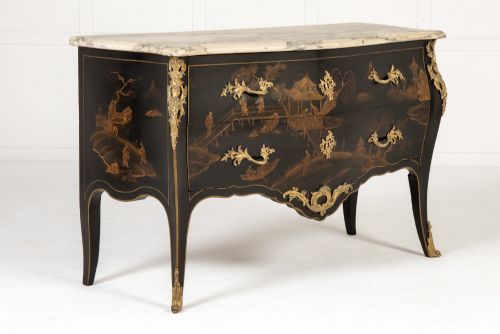


Edwardian Lacquer Cabinet
An edwardian lacquer cabinet brings oriental narrative scenes and rich black or cream finishes directly into a traditional British interior.
Edwardian Lacquer Cabinet
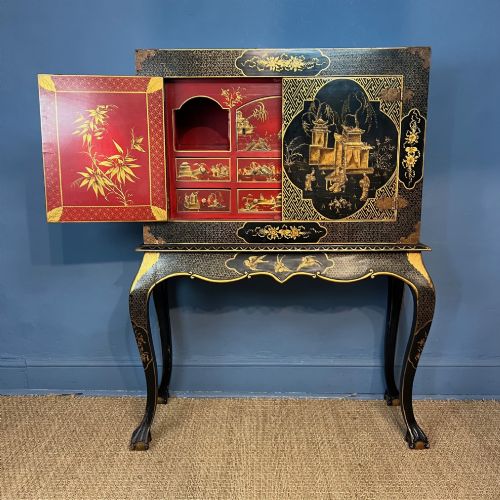
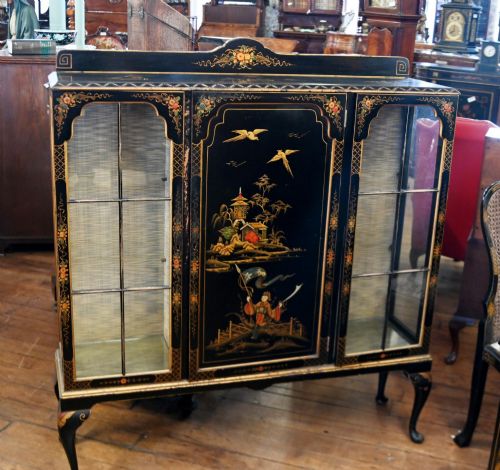
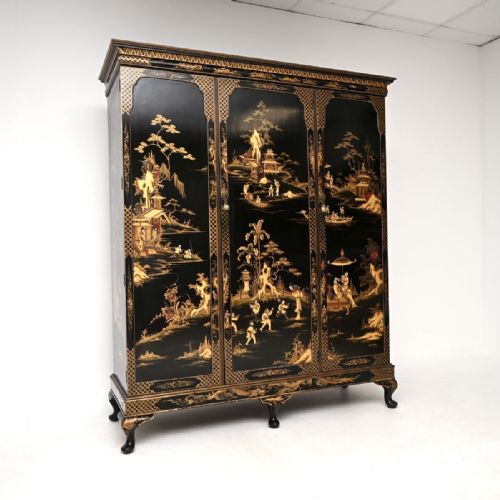
An edwardian lacquer cabinet combines late nineteenth and early twentieth century form with decorative painted surface schemes. You will encounter side cabinets, tall display pieces, and bureau bookcases spanning the Edwardian era and adjacent decades.
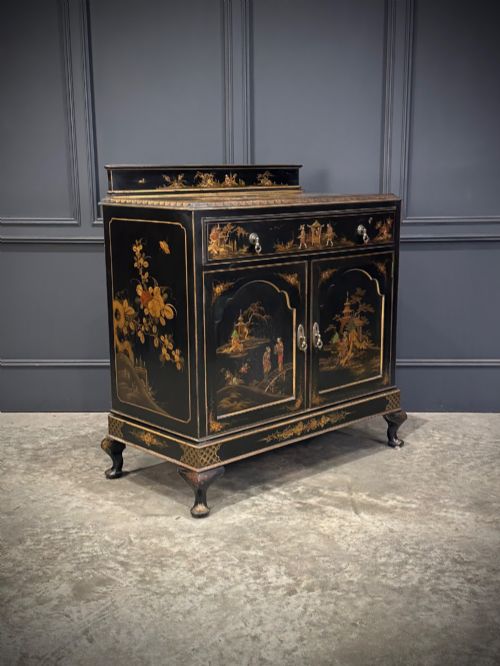
The decorative language relies heavily on Chinoiserie and Japanned motifs, depicting pavilions, figures, and landscapes in gold leaf or contrasting pigments. These pieces originate from domestic English workshops as well as Japanese Meiji period export production.
Forms vary from narrow corner units and cabinets on carved stands to low commodes and bureau bookcases. The underlying structure utilises timber, bamboo, or papier mache, finished with layered lacquer.
Materials and construction
Makers built the foundational carcase using timber, bamboo, or papier mache, often mounting display cabinets and side units on dedicated stands. Surfaces received coats of lacquer to form a smooth ground before artists applied gold leaf and detailed pigments.
Brass hardware, including hinges, drop handles, and escutcheons, provides structural contrast to the dark or pale lacquer body. Glass panels appear in doors designed for the display of ceramics and curiosities.
Edwardian Lacquer Cabinet Retail Price Guide 2026
Typical asking prices for edwardian lacquer cabinet among the pieces listed under this phrase on Sellingantiques today, from the lower quarter to the upper quarter. They describe what is for sale here now, not the wider market.
A pale cream Japanese export cabinet proves that Edwardian taste occasionally fancied its orientalism dipped in sunlight.
Assessing quality and execution
The depth of the lacquer finish and the intricacy of the painted Chinoiserie scenes separate standard utility items from finer decorative works. Superior examples feature crisp hand-painted motifs with raised details in gold leaf rather than simple printed transfers.
The quality of the joinery in the underlying cabinetwork, alongside the stability of the stand and the patination of the brass mounts, dictates the overall integrity of the piece.
Hille for Harrods
The Edwardian Lacquer Cabinet Glossary
- Chinoiserie
- European artistic interpretation of Chinese and East Asian decorative styles, popular in furniture and interior design. This style manifests through painted landscapes, figures, and architectural motifs.
- Japanned
- European imitation of Japanese and Chinese lacquerwork achieved through layers of varnish and metallic dusting. The technique creates a hard, glossy surface often decorated in gold on a dark or pale ground.
- Shodana
- A traditional Japanese multi-shelved cabinet designed for displaying small art objects and treasures. These pieces often feature asymmetrical compartments and intricate lacquer decoration.
- Bijouterie table
- A glass-topped display table designed to showcase small valuable items and jewellery. They frequently incorporate bamboo or turned timber frames alongside glazed compartments.
Edwardian Lacquer Cabinet: Frequently Asked Questions
What is an edwardian lacquer cabinet?
An edwardian lacquer cabinet is a storage or display piece featuring glossy painted finishes and orientalist Chinoiserie decoration. These cabinets reflect the period taste for exotic motifs integrated into British home interiors.
They serve as focal points in drawing rooms or hallways, combining decorative surface art with practical enclosed shelving.
How do I care for lacquer furniture?
Protect lacquer surfaces by keeping them away from direct sunlight and maintaining stable room humidity. Dust gently with a soft, dry cloth without applying modern chemical polishes.
Avoid placing damp items or heavy heat sources directly onto the lacquer finish to preserve the integrity of the varnish.
How do I distinguish Edwardian from Victorian pieces?
Edwardian lacquer pieces often display lighter colour palettes, such as pale cream alongside traditional black, reflecting changing interior tastes around nineteen hundred. Victorian examples tend towards heavier ebonised finishes and denser decorative arrangements.
Examining the construction timbers and hardware styles helps confirm whether a piece belongs to the late nineteenth century or the early Edwardian period.
Where were these cabinets placed in homes?
These cabinets sat prominently in reception rooms, drawing rooms, and studies where guests could admire the decorative painted scenes. Tall display cabinets housed porcelain collections, while side cabinets provided surface space for lamps and decorative objects.
Smaller bureau bookcases combined writing surfaces with enclosed storage for correspondence and books.