







Edwardian Knife Set
These edwardian knife set pieces offer exceptional utility and period elegance for formal dining, featuring fine steel blades and decorative handles.
Edwardian Knife Set
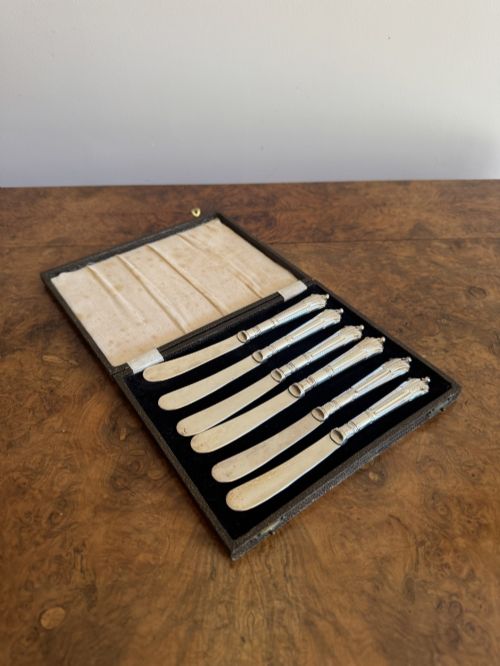
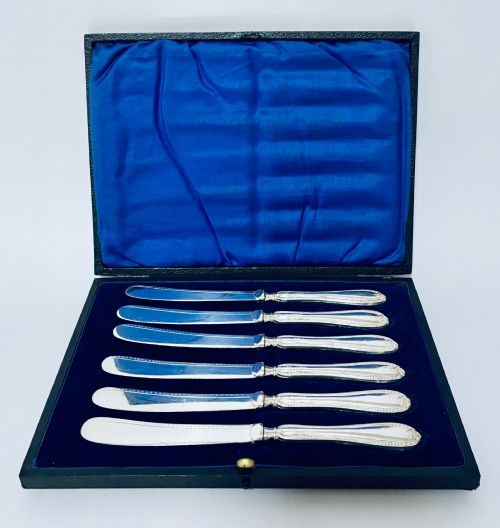
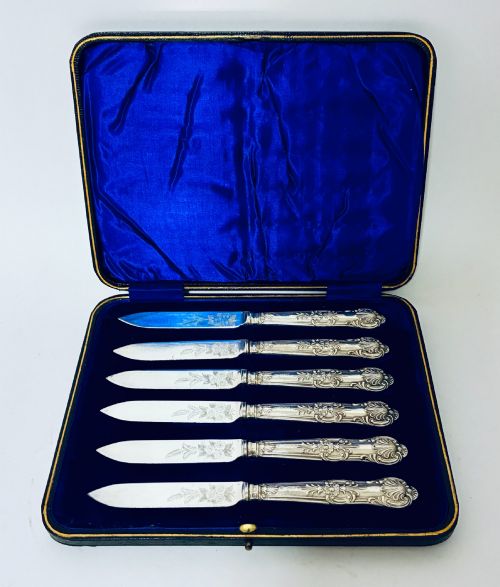
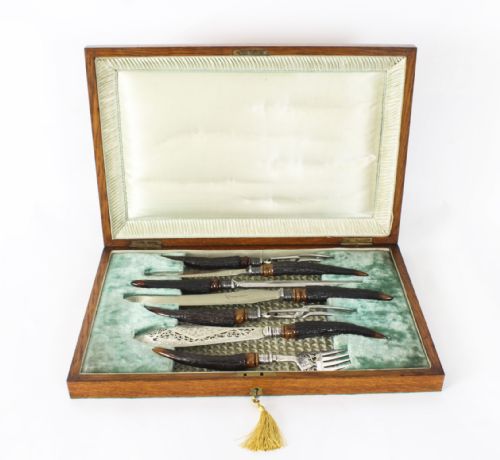
An edwardian knife set brings together matching tableware items designed for specific dining tasks, ranging from butter knives and fruit knives to fish servers and carving sets. The selection here spans the Edwardian period alongside adjacent Victorian and George V eras, reflecting the formal dining habits of the early twentieth century.
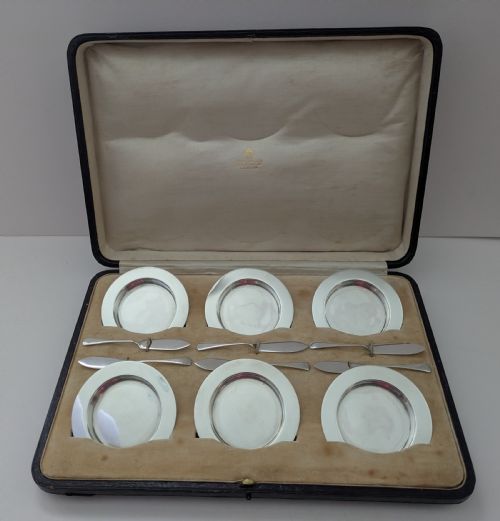
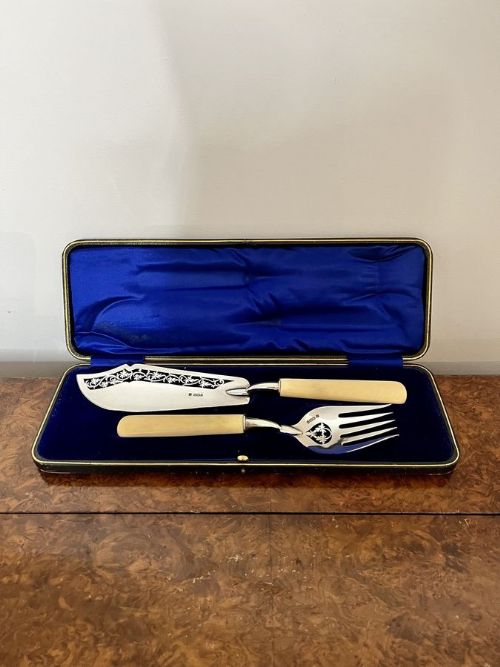
Buyers will encounter cased sets housed in fitted wooden boxes lined with velvet and silk, alongside boxed groupings of butter dishes and knife rests. The forms include complete fish cutlery services as well as smaller sets of six handled knives intended for fruit or butter.
The aesthetic bridges late Victorian ornateness and clean early twentieth-century design. Most pieces originate from English workshops and silversmiths active during the first two decades of the nineteen hundreds.
Materials and construction methods
Makers utilised durable steel for blades and carving implements to ensure a functional cutting edge, pairing them with sterling silver or silver plate for ferrules and mounts. Handles frequently incorporated natural materials such as mother of pearl and antler horn, shaped and pinned securely to the tang.
Presentation boxes employed solid wood construction, often oak, lined internally with fitted fabric such as silk and velvet to secure each utensil safely. Silversmiths applied hallmarks to metal components in cities including London and Sheffield to denote metal purity and origin.
Edwardian Knife Set Retail Price Guide 2026
Typical asking prices for edwardian knife set among the pieces listed under this phrase on Sellingantiques today, from the lower quarter to the upper quarter. They describe what is for sale here now, not the wider market.
Object forms span butter dishes, fish servers, carving sets, knife rests, and boxed cutlery services originating from English makers.
Assessing quality in tableware
Superior sets demonstrate careful matching of natural handle materials, where mother of pearl exhibits consistent iridescence and antler horn retains distinct texture. The execution of chased or engraved decoration on silver blades and ferrules reveals the skill of the individual silversmith.
The integrity of the original fitted case adds considerable distinction, particularly when the internal silk and velvet linings remain intact alongside working clasps and hinges. Heavier gauge silver plating and robust steel construction separate standard utility cutlery from finer presentation pieces.
Asprey & Co.·The Goldsmiths & Silversmiths·Waring & Gillows
The Edwardian Knife Set Glossary
- Sterling silver
- A silver alloy containing 92.5 percent pure silver by mass, widely utilised in quality tableware and marked with standard assay office symbols.
- Silver plate
- A layer of silver applied to a base metal core, commonly used in nineteenth and early twentieth-century cutlery sets to provide the appearance of solid silver.
- Mother of pearl
- The iridescent internal layer of mollusc shells, carved into smooth handle scales for fine fruit and butter knives.
- Antler horn
- Natural deer antler utilised for carving set handles, valued for its organic texture and robust grip during meat preparation.
- Cased set
- A collection of tableware housed in a custom-fitted wooden box designed specifically for storage and presentation.
Edwardian Knife Set: Frequently Asked Questions
What is an edwardian knife set used for?
These sets served specialised dining functions, including spreading butter, slicing fruit, serving fish courses, or carving joints at the dinner table.
Many were designed specifically for formal domestic hospitality and presented in fitted wooden boxes for safekeeping between meals.
How do I clean mother of pearl handles?
Wash the pieces gently in warm soapy water using a soft cloth, avoiding harsh chemical detergents or abrasive sponges that might dull the surface.
Dry them thoroughly immediately after washing to protect both the handle material and the metal blade from moisture damage.
Can I use antique cutlery daily?
Many silver-bladed or steel-bladed pieces remain fully functional for modern dining, though hand washing is essential to preserve their finish.
Careful handling ensures these historical utensils continue to serve practical purposes during meals rather than remaining purely decorative.
How do I identify Edwardian cutlery?
Look for hallmarks stamped on the metal components that indicate assay offices in cities such as London or Sheffield alongside specific date letters.
The overall design style typically exhibits the refined restraint characteristic of the period between the Victorian era and the First World War.