


Edwardian Kneehole Writing Table
These edwardian kneehole writing table examples combine compact proportions with fitted pedestals, offering practical work surfaces rooted in period craftsmanship.
Edwardian Kneehole Writing Table
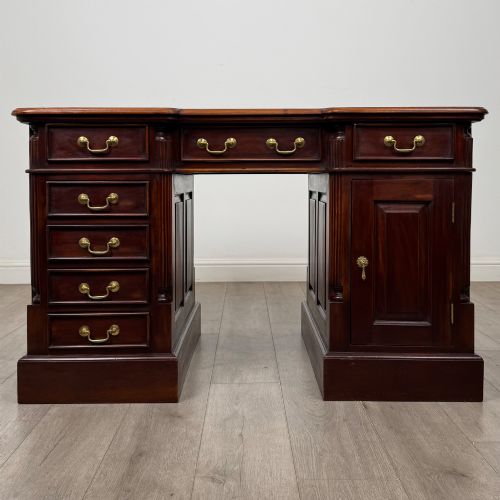
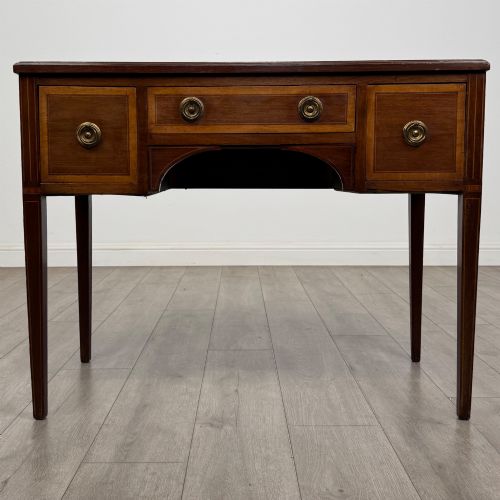
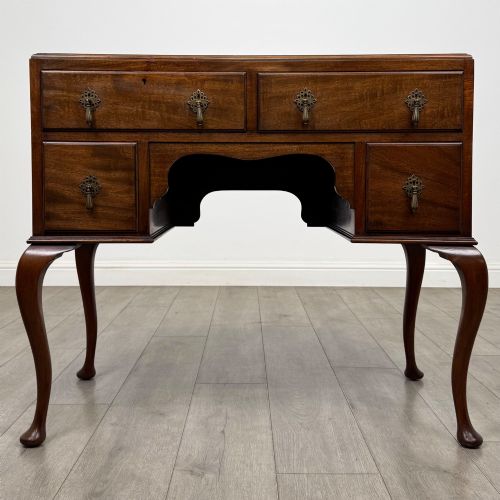
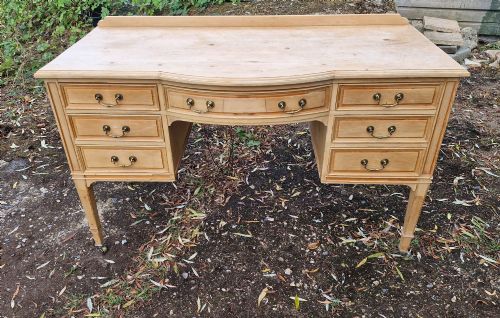
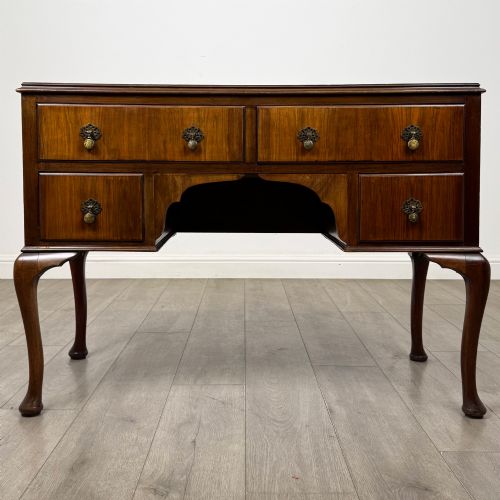
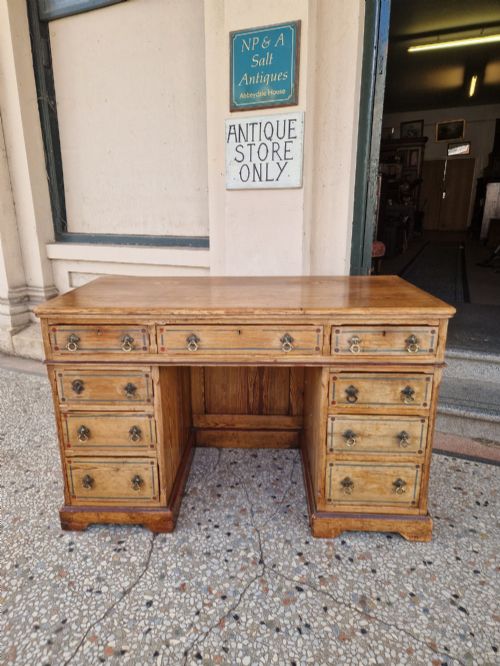
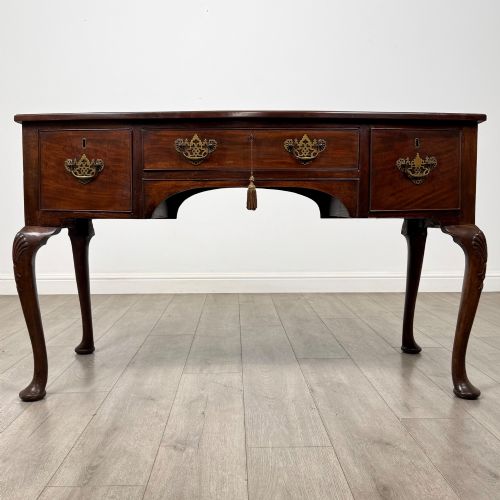
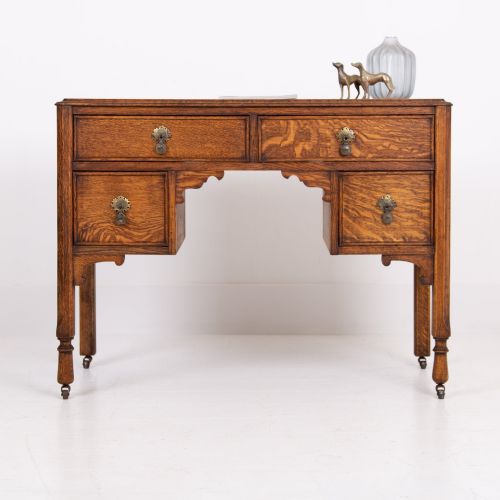
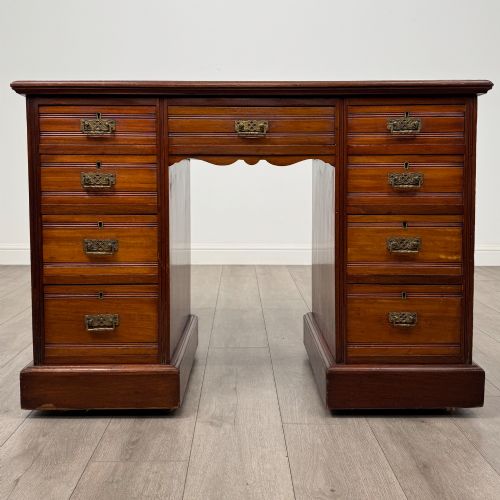
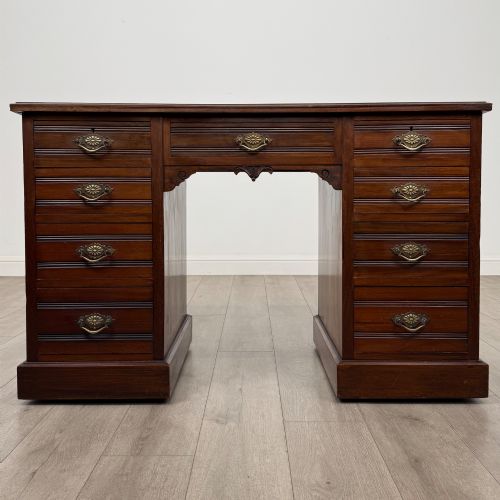
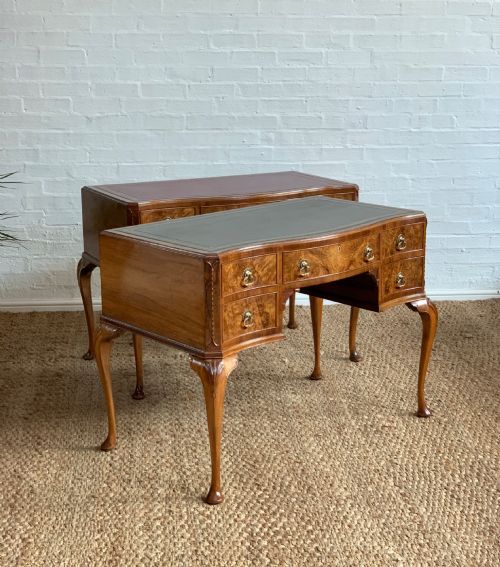
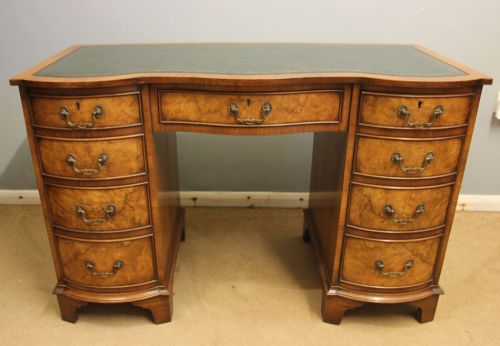
An edwardian kneehole writing table provides a central recess for the user, flanked by banks of drawers that form the pedestal supports. The pieces found here predominantly date from the Edwardian era and surrounding decades, manifesting in varied timber selections.
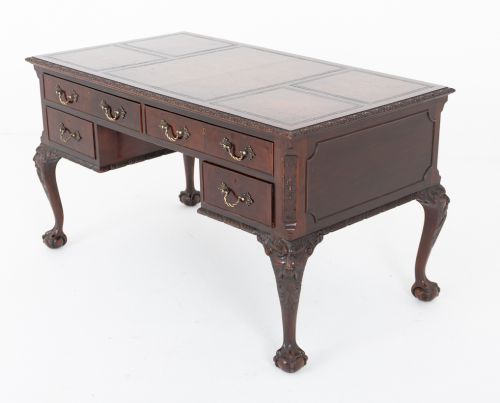
Most examples function as compact desks or writing tables, often incorporating inset leather writing surfaces and multiple smaller drawers above the kneehole space. Buyers encounter designs ranging from straightforward mahogany constructions to more elaborate revival styles.
The form bridges domestic utility and formal reception spaces, appearing in forms from modest pine and oak to figured walnut and mahogany veneers. These desks serve modern studies just as effectively as they accommodated twentieth-century correspondence.
Materials and construction methods
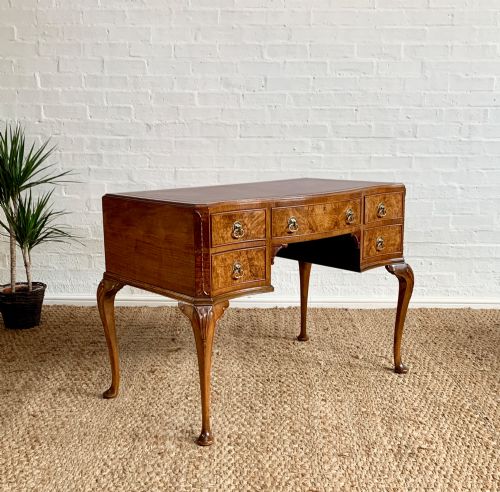
Cabinetmakers constructed these pieces primarily using solid mahogany, walnut, and oak, frequently applying decorative veneers such as burr walnut or satinwood inlay across drawer fronts and tops. Secondary timbers like pine appear within internal drawer framing and structural linings.
Hardware typically involves cast brass drop handles or knobs, while writing surfaces frequently feature hand-tooled leather inserts bordered by subtle gilding. Joinery relies on traditional dovetailed drawer construction and precise framing to support the pedestal weight.
Listings feature woods spanning mahogany, walnut, burr walnut, oak, pitch pine, and satinwood, reflecting diverse Edwardian and revival cabinet preferences.
Distinguishing quality across examples
Quality reveals itself in the selection of timber figures, where book-matched burr walnut veneers or finely grained solid mahogany distinguish superior examples from plain utility pieces. The crispness of inlaid stringing and the depth of carved details, such as Chippendale or Queen Anne revival motifs, further separate standard workshop output from exceptional cabinet work.
Internal construction standards dictate longevity, visible in the tightness of dovetail joints, the smooth running of pedestal drawers, and the retention of original brass hardware and leather inserts. Maker attribution, through stamped signatures or paper labels, adds documented provenance to the physical execution.
Wylie & Lochhead Glasgow·maples of London·Gill & Reigate·James Shoolbred of London·Trollope & sons
The Edwardian Kneehole Writing Table Glossary
- Kneehole
- A recessed central space beneath a desk top, designed to accommodate the user's legs while seated. This arrangement allows drawers to flank the sitter on both sides.
- Pedestal desk
- A heavy freestanding desk comprising two supporting columns of drawers beneath the main surface. The central kneehole separates these two drawer banks.
- Inlay
- A decorative technique where contrasting woods, brass, or shell are fitted flush into the primary surface. Satinwood inlay frequently provides linear contrast on darker mahogany bodies.
- Veneer
- A thin layer of figured timber applied over a secondary structural wood base. Burr walnut veneers provided decorative richness while conserving scarce timber resources.
Edwardian Kneehole Writing Table: Frequently Asked Questions
How do I use an edwardian kneehole writing table today?
These tables adapt readily to modern home offices or living spaces, providing surface area for laptop use and correspondence alongside concealed drawer storage.
Their compact proportions mean they fit into tighter architectural spaces where larger partner desks would overwhelm the room.
Are these desks comfortable for daily work?
Kneehole desks offer adequate legroom in the central recess, though clearance height can vary compared to modern office furniture.
Checking the floor-to-underside clearance ensures standard seating fits comfortably beneath the central drawer.
How do I distinguish Edwardian from Victorian examples?
Edwardian versions often display lighter timbers, delicate satinwood inlay, and refined revival styling inspired by Sheraton or Chippendale designs.
Victorian counterparts tend toward heavier proportions, darker finishes, and sturdier structural massing without the lighter decorative veneer work.
What maintenance do the leather writing surfaces require?
Original or replacement leather inserts benefit from occasional treatment with appropriate conservation balms to prevent drying and cracking.
Avoiding direct sunlight helps preserve the hand-tooled gilt borders and prevents uneven fading across the writing surface.