


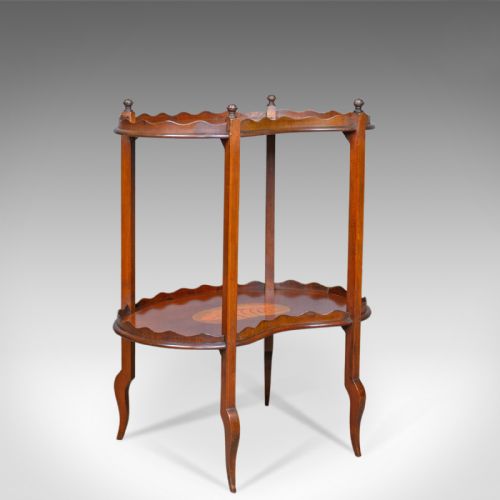

Edwardian Kidney Side Table
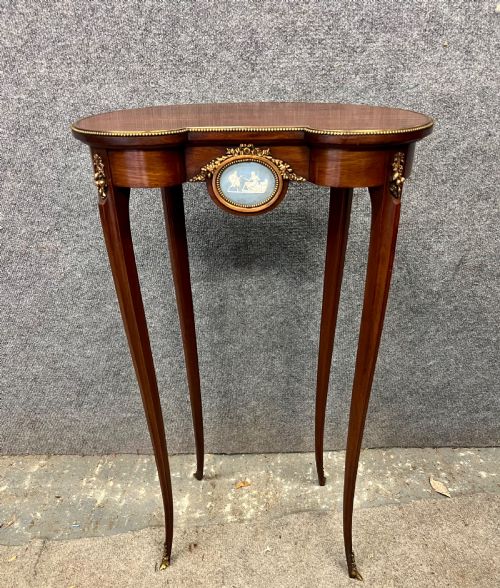
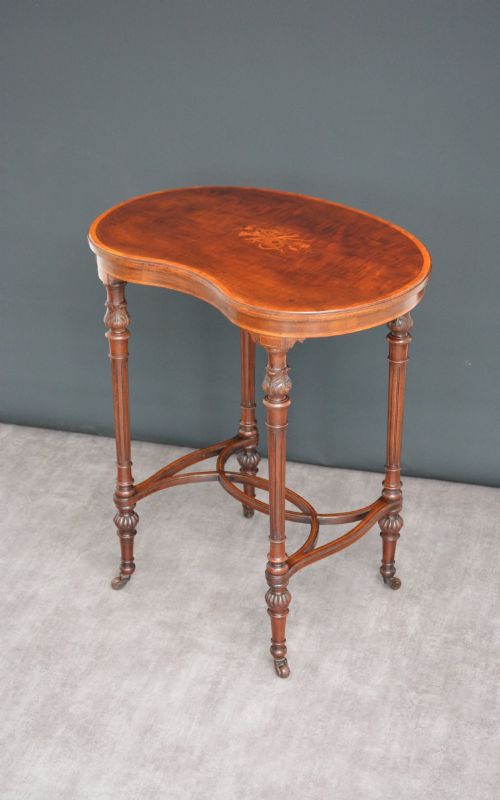
An edwardian kidney side table brings a distinctive curved silhouette and refined inlaid timber to a room.
Edwardian Kidney Side Table
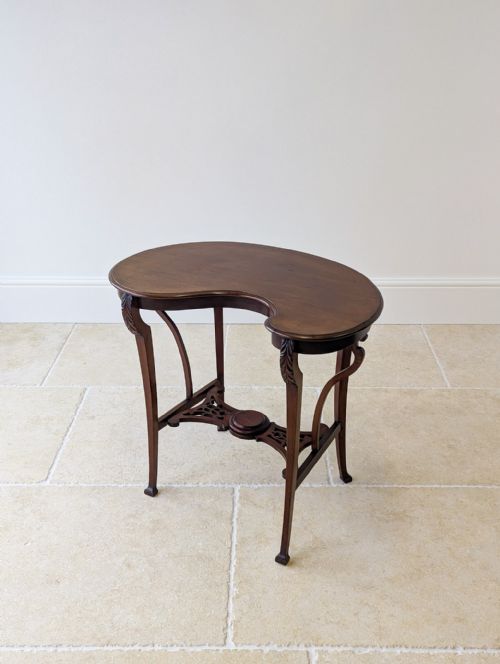
An edwardian kidney side table is defined by its characteristic curved outline, designed to fit comfortably against the body or tuck neatly beside a chair. When searching this phrase, buyers encounter pieces primarily from the Edwardian period and late Victorian era, though earlier nineteenth-century examples also appear.
These tables serve various practical functions around the home, appearing as occasional tables, small writing desks, display pieces, or lamp tables. The Edwardian versions frequently utilise lighter timbers and delicate stringing, reflecting the popular revival styles of the time.
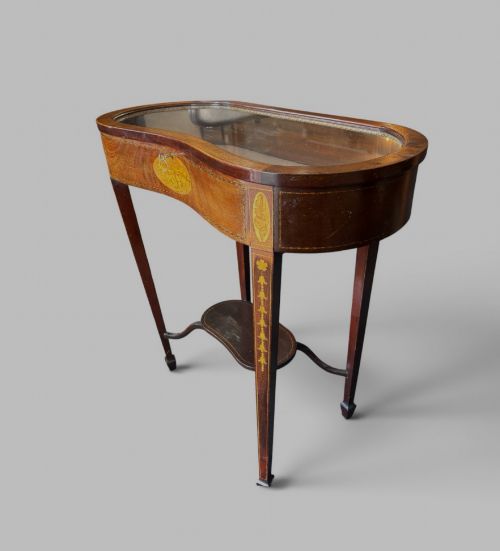
Most examples found on this page display the classic kidney top supported by slender legs, sometimes linked by a low stretcher. Mahogany forms the backbone of these offerings, often enhanced with satinwood, boxwood, or marquetry details.
How They Were Made
Cabinet makers constructed these tables using a timber carcass, predominantly mahogany, rosewood, or burr walnut, shaped into the distinct curved form. Satinwood and boxwood were frequently employed for contrasting inlay work and intricate marquetry panels across the top.
Many examples incorporate fine brass details, such as gallery rails or castors, alongside glass panels on display variants. The construction relies on traditional joinery methods to manage the curved rails and secure slender legs firmly to the underside.
Some tables include tiny pull-out trays designed for holding inkwells or cups during quiet moments of letter writing.
What Varies in Quality
The distinction between standard pieces and exhibition quality examples rests on the ambition of the timber selection and the precision of the inlay. Richly figured burr walnut or meticulously cut marquetry panels signal superior workshop production compared to simpler veneered surfaces.
Finishing details also separate the tiers of quality, visible in the crispness of the stringing, the choice of secondary timbers, and the refinement of any brass mounts or glass fittings. Subtlety in the curve and well-proportioned supports indicate a more thoughtful design process.
The Edwardian Kidney Side Table Glossary
- Kidney shape
- A curved furniture top resembling the organ, designed to curve around the user when seated at a desk or table. This form gained immense popularity during the late nineteenth and early twentieth centuries.
- Marquetry
- Decorative veneer work forming pictures or patterns using various coloured woods, shells, or ivory set into a ground veneer. It frequently decorates the top surface of better Edwardian tables.
- Stringing
- Thin lines of contrasting timber inlaid into channels cut into the main surface of the furniture. This linear detail defines borders and highlights the curved edges of the top.
- Sheraton Revival
- A late nineteenth and early twentieth-century style emulating the lighter, neoclassical furniture designs associated with George Sheraton. Pieces in this style often feature satinwood inlay on mahogany.
- Whatnot
- An open set of tiered shelves used for displaying ornaments or books. Examples occasionally incorporate the kidney shape into their tiered design.
Edwardian Kidney Side Table: Frequently Asked Questions
What is an edwardian kidney side table used for?
These tables function primarily as decorative occasional pieces, serving beside chairs for lamps, drinks, or books. Many Edwardian versions also double as compact writing surfaces for correspondence.
Their narrow profile allows them to sit comfortably in smaller spaces where a standard rectangular table might obstruct movement.
How do I identify an Edwardian piece?
Edwardian tables generally display lighter timbers, delicate satinwood or boxwood inlay, and Sheraton Revival influences. The construction often uses mahogany or walnut with restrained, elegant proportions.
Victorian counterparts from earlier in the nineteenth century tend to be heavier in build, sometimes featuring darker rosewood or burr walnut.
Are these tables sturdy enough for daily use?
Despite their slender appearance and curved legs, these tables were built for domestic life in drawing rooms and boudoirs. Careful placement away from heavy traffic preserves their structural integrity.
Routine use for lamps or small decorative items remains well within their capacity.
What woods were used to make them?
Mahogany forms the primary material for the majority of these tables, frequently paired with satinwood and boxwood for decorative stringing. Rosewood and burr walnut also appear across various nineteenth-century and Edwardian examples.
Inlaid marquetry often combines several contrasting timbers to create floral or geometric motifs on the top.